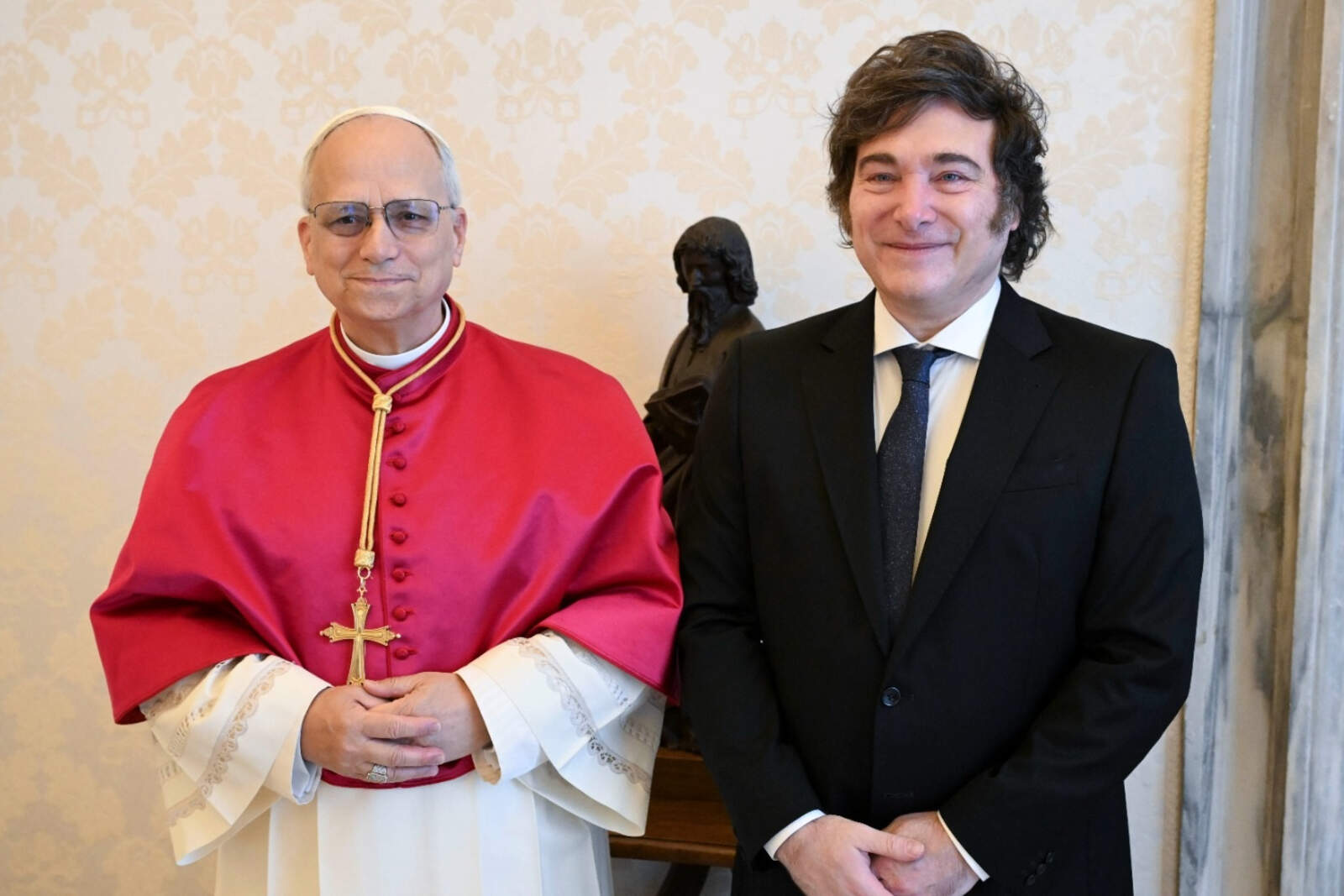
Within the framework of Christmas celebrations, President Javier Milei exchanged letters with authorities of the Catholic Church in Argentina, in an institutional gesture that aimed to reinforce values of coexistence, social peace, and the common good, in a year marked by deep economic and political transformations.
The exchange of letters took place with the Argentine Episcopal Conference, and it had a formal and respectful tone, far from any confrontation. Both sides highlighted the importance of Christmas as an opportunity to reflect on the country's situation and the role of institutions in building a more orderly and supportive society.
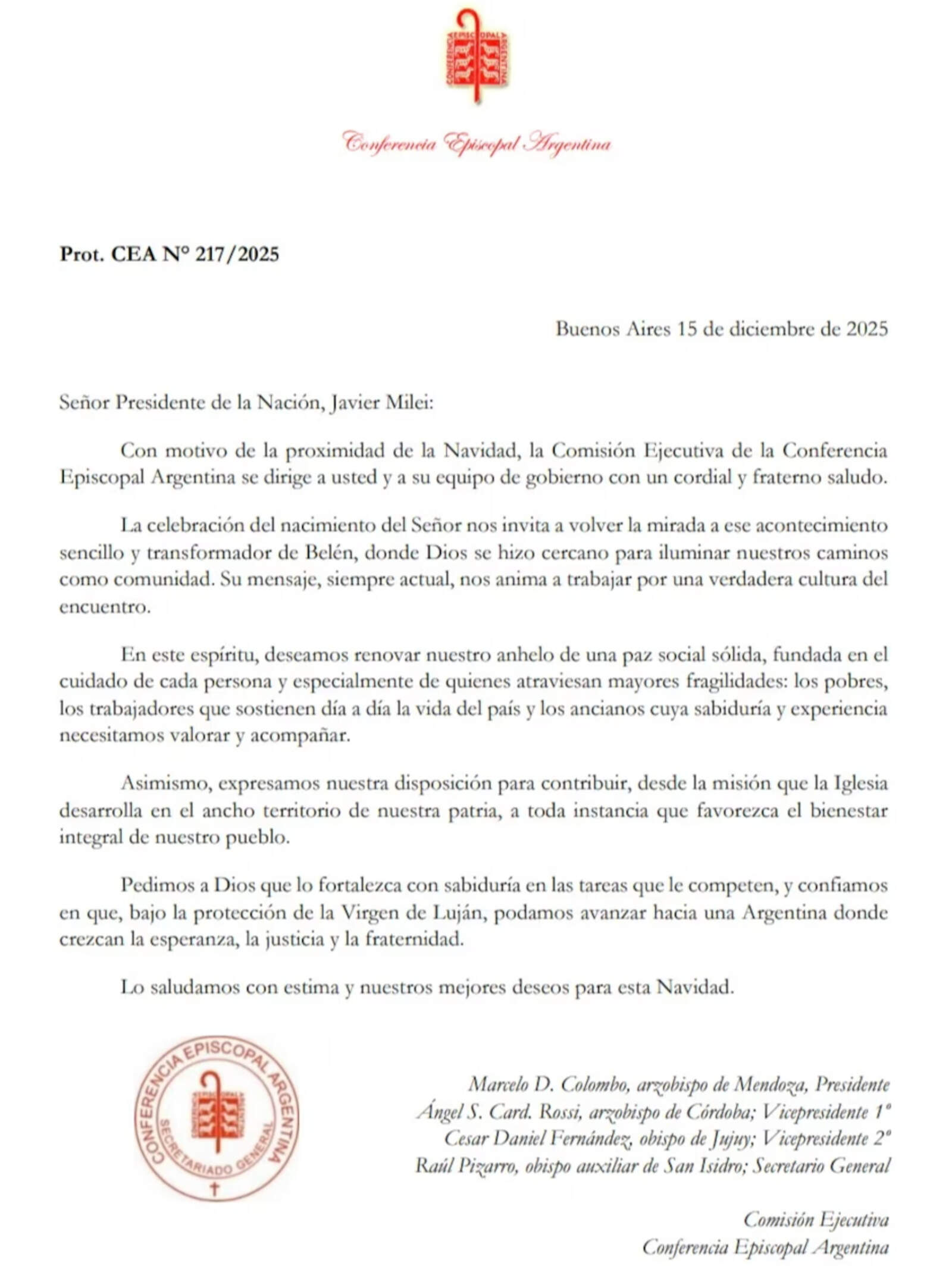
Carta de la Conferencia Episcopal Argentina.
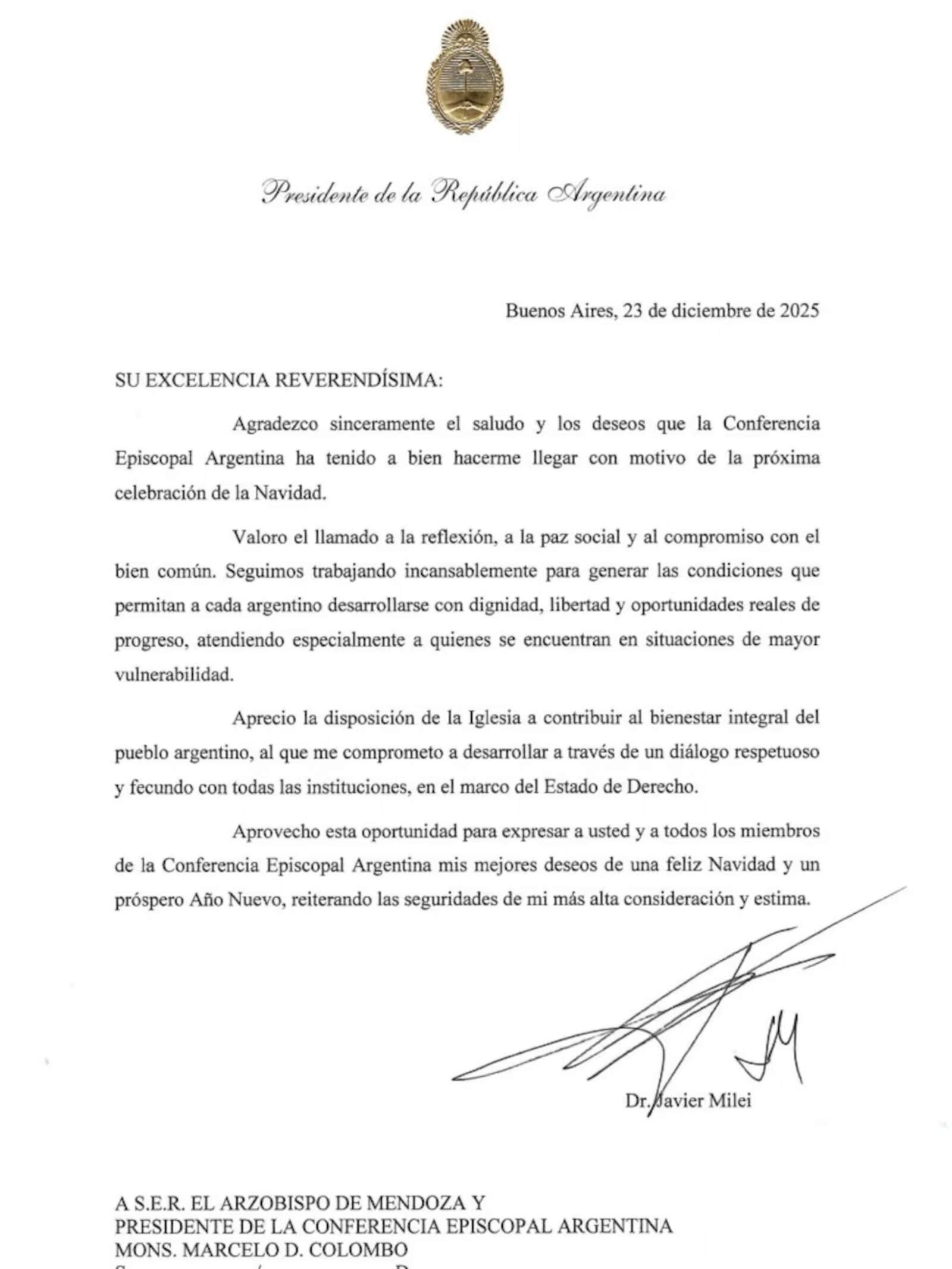
In his message, the President expressed wishes for peace and well-being for all Argentines, and he emphasized the need to strengthen individual and collective commitment to the common good. In line with his vision of government, Milei placed emphasis on personal responsibility, respect for the law, and the moral and institutional reconstruction of the country, elements that he considers indispensable to emerge from decades of decline.
From the Church, the bishops issued a message focused on social harmony and dialogue, stressing the importance of addressing the needs of the most vulnerable sectors and of promoting peace in a context of economic tensions. The text also referred to the value of understanding among different social and political actors, without entering into partisan definitions or questioning the Government's direction.
Carta de Javier Milei a la Conferencia Episcopal Argentina.
The gesture acquires relevance in a year in which Milei's administration moved forward with deep structural reforms, many of them resisted by sectors that benefited from the status quo for years. In that scenario, the exchange of messages with the Church falls within a logic of institutional respect and recognition of the role that each actor plays in public life, without this implying renouncing one's own convictions.
From Casa Rosada, officials emphasize that dialogue with different institutions is part of a strategy to normalize the relationship between the State and civil society, after years in which politics used those spaces for partisan purposes. True social peace is not decreed, but is built on clear rules, economic stability, and a State that stops suffocating those who produce and work.