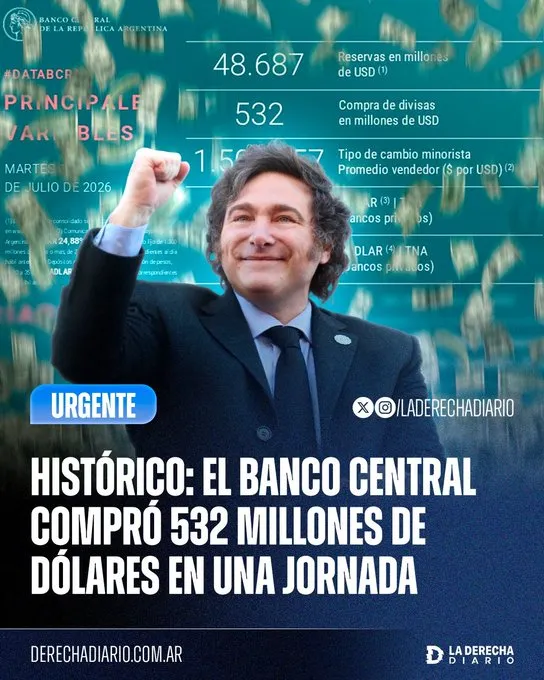
The BCRA completed the third highest purchase recorded in history in a single day, strengthening international reserves and consolidating a streak of 126 consecutive days with a net buyer balance
In detail by sectors, the success of the program translates into direct relief for Argentines:
Food and non-alcoholic beverages: just a 1.3% increase.
Clothing and footwear: a marginal rise of 0.4%.
Basic Food Basket (CBA): increased by only 1.3%.
With a cumulative inflation of 16.8% in the first half and a year-on-year variation that dropped to 33.5%, the government of Javier Milei demonstrates with compelling data that the battle against inflationary cancer is being won. Today's historic day, with USD 532 million entering public coffers, is the definitive proof that Argentina has left the abyss behind to embrace lasting stability.
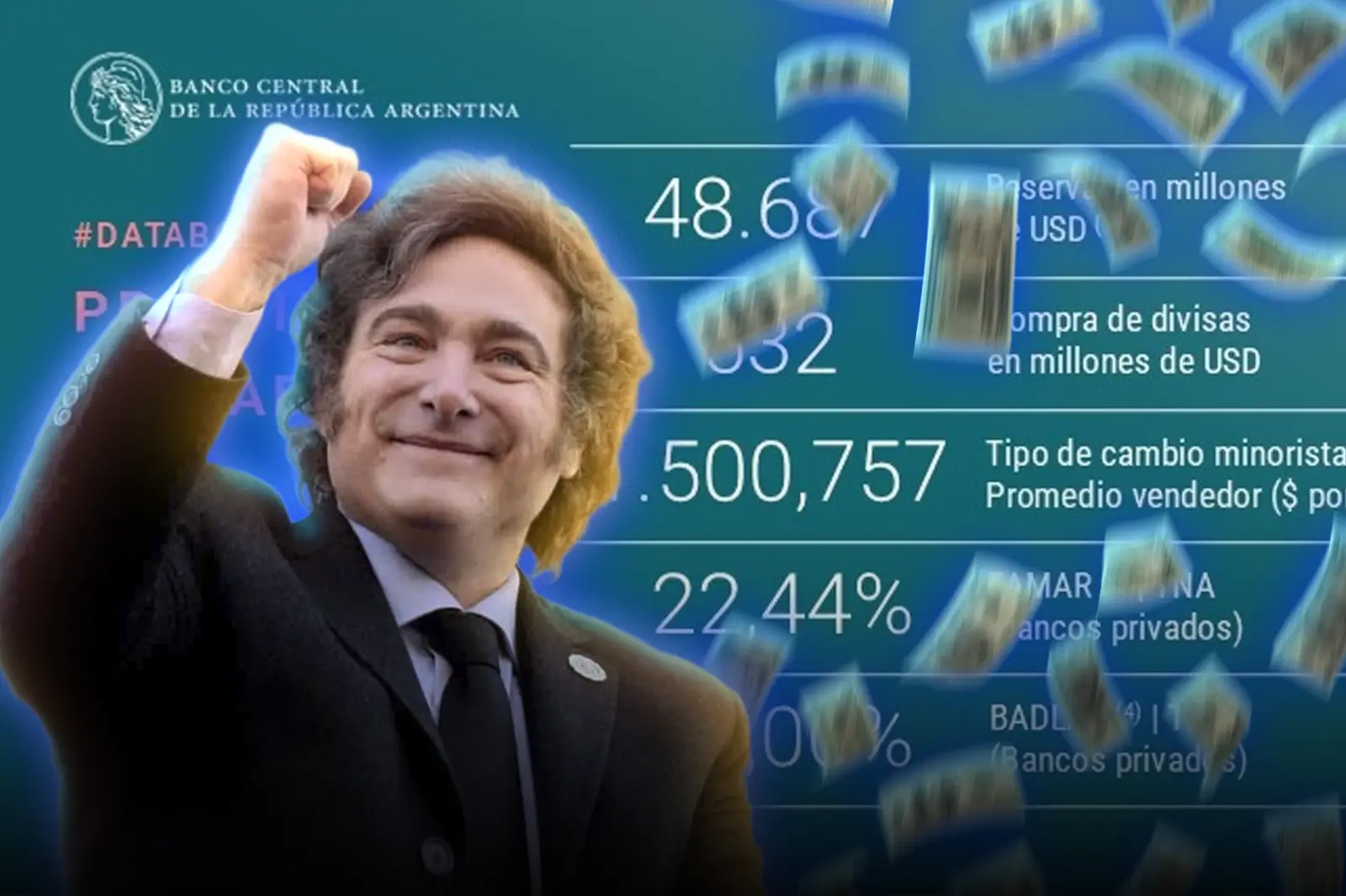
On a day that will be etched in the annals of the financial history of the country, the Central Bank of the Argentine Republic (BCRA), led by Santiago Bausili, acquired the impressive amount of 532 million dollars in reserves. This milestone not only represents the highest figure so far in Javier Milei's term, but also stands as the third largest purchase recorded in Argentine history in a single day.
Thanks to this overwhelming performance, the gross reserves of the entity ended at the impressive sum of USD 48.687 billion, which implies an increase of USD 482 million in just 24 hours.
The president, Javier Milei
This resounding success is framed within a strategy of reserve accumulation that has already met the targets set for the year 2026 ahead of schedule. The monetary authority has managed to maintain a buying balance for 126 consecutive days, accumulating more than USD 12.000 billion so far this year.
Since the beginning of the fourth phase of the economic program in January, total purchases have reached USD 12.267 billion, surpassing the lower limit of the initial target which ranged between USD 10.000 and USD 17.000 billion.
The strength of the model became evident even during the month of June, when the Government applied fine-tuning to limit pressure on the currency. In that month, official intervention deliberately decreased, allowing the wholesale exchange rate to rise by 5%, surpassing the inflation rate for the first time since October 2025.
Despite this strategic move and increased demand for foreign currency, the Central Bank managed to capture USD 1.418 billion in June. This dynamic has gained new momentum in July, where the amount acquired has already reached USD 1.102 billion in just two weeks.
To safeguard this process of stabilization, the Milei-Bausili duo has implemented an unprecedented monetary coordination:
The BCRA expanded the issuance of pesos strictly to support foreign currency purchases.
The National Treasury absorbed the excess liquidity through the placement of debt in local currency, avoiding traditional sterilization and stabilizing prices.
The agro-export sector, the engine of recovery, liquidated USD 3.007 billion in June through CIARA and CEC, a 12% increase from the previous month.
The president, Javier Milei
The results of this shock plan are irrefutable on the price front. The inflation rate in June fell to 1.9%, its lowest level in 10 months, consolidating a sustained reduction under the administration of La Libertad Avanza. Even more striking is the core inflation, which plummeted to 1.6% monthly, the lowest record since July of last year.