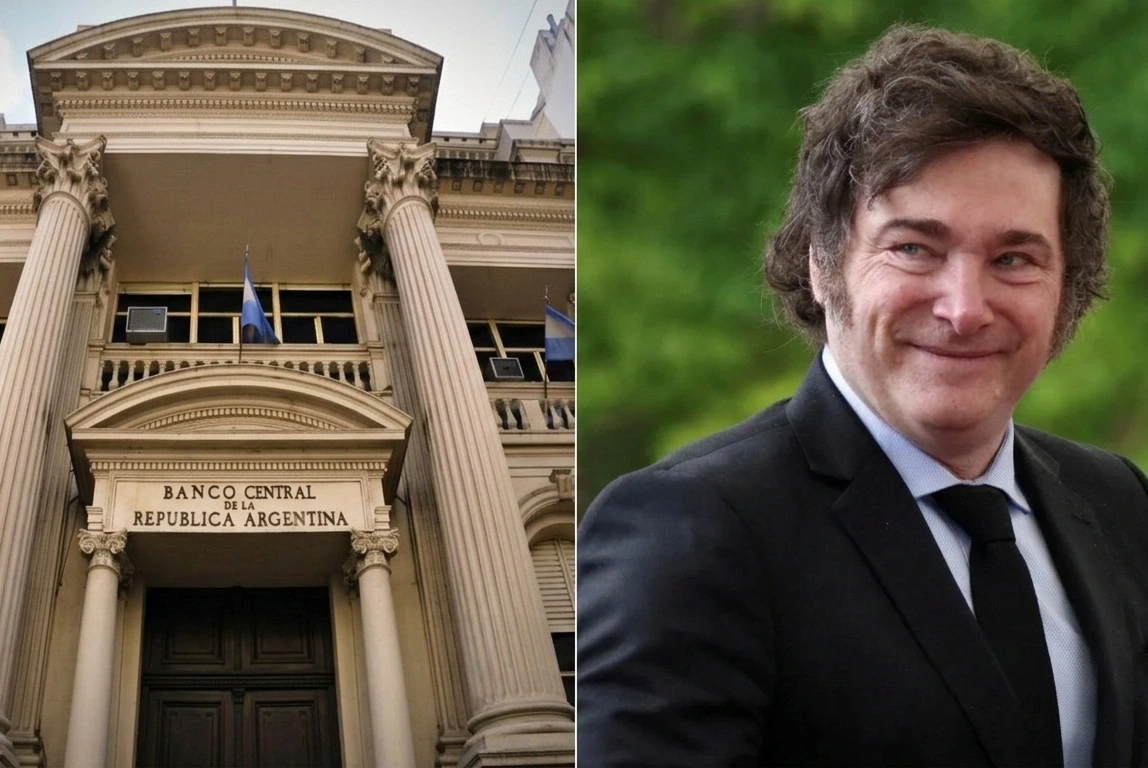

In the midst of the process of macroeconomic reorganization promoted by the current administration, the Central Bank of the Argentine Republic continues to consolidate its position in the foreign exchange market with a sustained accumulation of currencies.
The monetary authority managed to chain 68 consecutive days with a buying balance, reflecting an active policy aimed at strengthening reserves and stabilizing expectations.This Thursday, the agency acquired USD 75 million, bringing the cumulative total so far from 2026 to USD 5.925 million, a figure that is already well over half of the annual objective. Under the new monetary scheme in force since January, the Central Bank's performance shows a marked acceleration: just a few days ago, it had completed a purchase of USD 457 million, the second highest since the beginning of management, only below the USD 468 million recorded on April 4
.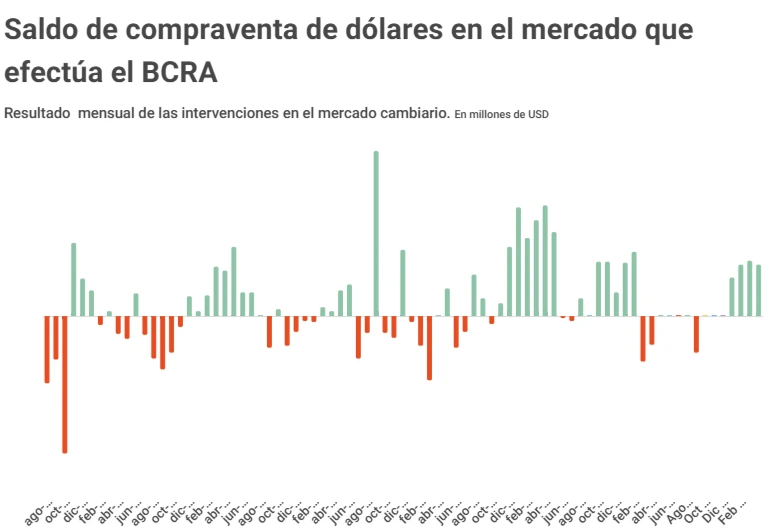
In terms of targets, the Central Bank has already reached 59% of its full-year purchase objective, although the accumulation of international reserves was partially conditioned by external debt payments.
At this point, the Treasury acquired part of the foreign exchange from the BCRA itself to fulfill commitments, limiting the net growth of foreign assets.Even so, the coordinated scheme between monetary policy and fiscal policy made it possible to sustain the pace of intervention. While the BCRA issued pesos without resorting to sterilization instruments, the Treasury absorbed liquidity by placing securities in local currency, avoiding inflationary and exchange rate pressures. This delicate balance evidences a comprehensive strategy that seeks to consolidate stability without holding back the recovery
.Official projections are ambitious: the net balance of purchases could be between USD 10,000 and USD 17 billion in 2026, depending on the demand for pesos and the availability of foreign exchange. Along these lines, the president of the BCRA, Santiago Bausili, pointed out that the final result will be mainly determined by these structural factors
.At the close of the last round, international reserves reached USD 45,631 million, with a daily increase of USD 4 million. It should be remembered that in February they had reached a maximum of USD 46,905 million, the highest level since 2018 and a record within the current administration.
The recent changes respond both to debt payments in foreign currency and to fluctuations in the valuation of assets such as gold and bonds, influenced by the international context.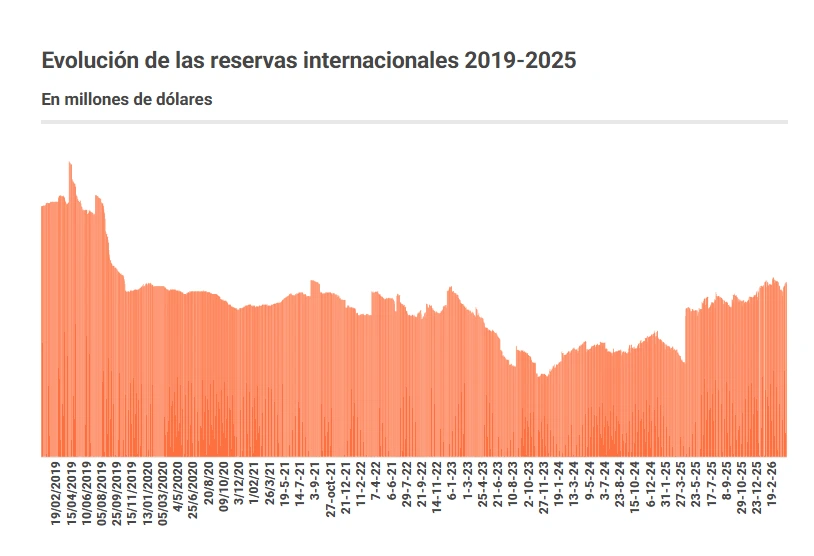
Exchange stability in an orderly market In
parallel, the foreign exchange market showed signs of stability.The wholesale dollar fell by $1 and closed at $1,358 for sale, on a day with a trading volume of USD 401.7 million, more than USD 100 million below
the previous round.According to Nicolás Merino, after “setting lows of the last few days of $1,345”, the price “managed to stabilize and operated for most of the time around $1,350. In the final stretch, with just a few minutes left before closing, a sudden rebound was observed that allowed practically the entire intraday decline to be cut, ending at $1,358, very close