

Chile made significant progress in its citizenship policy by limiting the principle of jus soli, in a measure that directly impacts the children of foreigners in an irregular situation.
As of April 13, 2026, Circular No. 014 of the Civil Registry established that children of illegal immigrants or considered “transiting foreigners” will no longer automatically receive Chilean nationality at birth.
What changes with the new regulations
Until now, Chile applied a broad criterion of jus soli, granting practically automatic citizenship to those born in its territory.
With the new provision:
Children of immigrants in an irregular situation do not automatically access nationality
. Foreigners without formal residence are also excluded
. The criterion of “transient” in migratory matters is redefined
The change seeks to close a mechanism that, according to different sectors, encouraged
illegal immigration.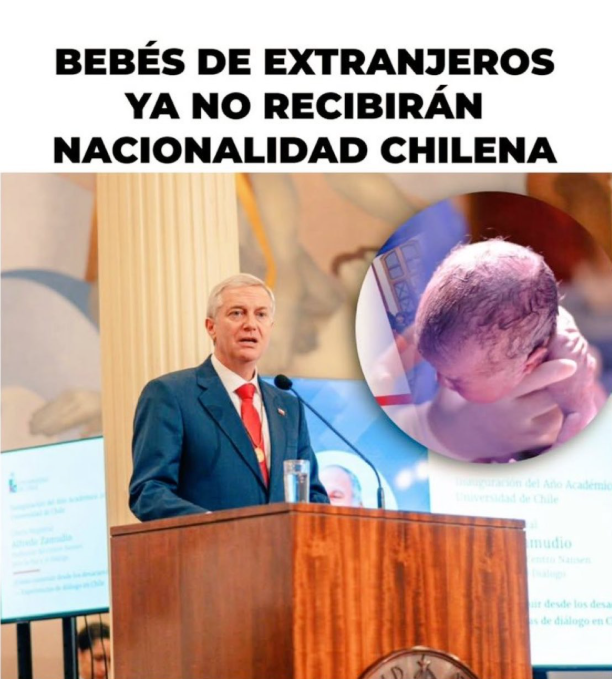
A shift in migration policy The
measure is part of a regional context where several countries began to review their migration policies due to the increase in irregular flows
.In the Chilean case, the new criterion aims to:
Strengthen the control of migratory entry
Avoiding abuses of the citizenship system
Prioritize the institutional order
Political impact and support for Kast's agenda The
tightening of citizenship rules aligns with the historical statements of José Antonio Kast, who has insisted on the need to curb illegal immigration and regain State control over its borders