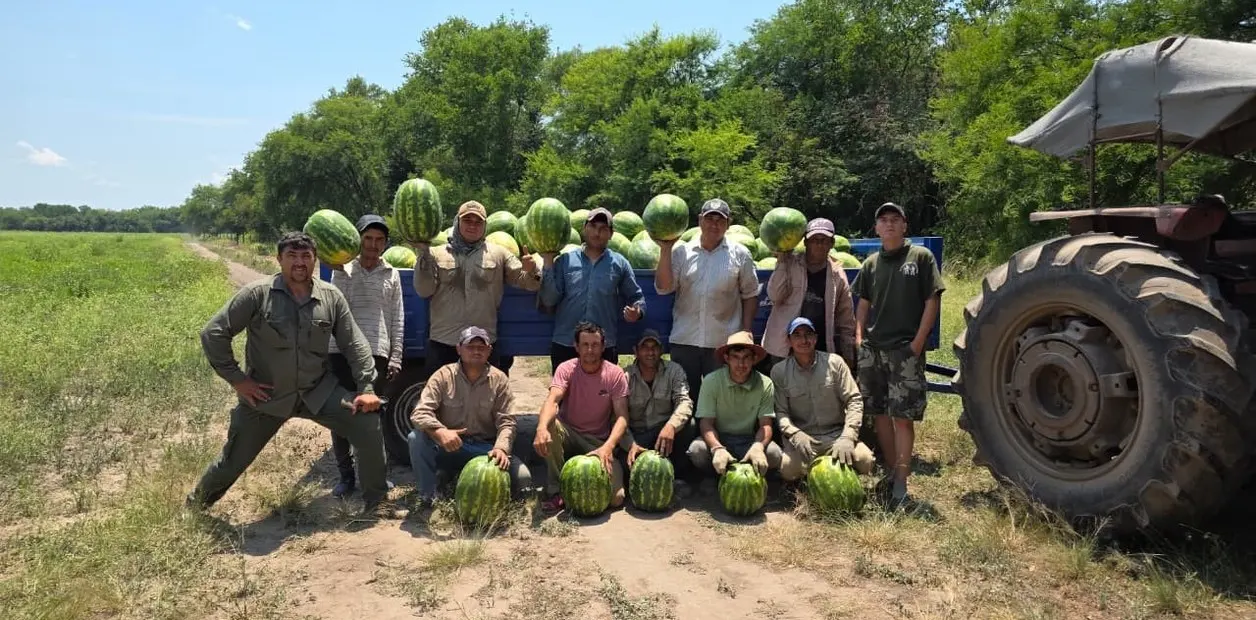






The decisive shift towards free trade led by President Javier Milei in Argentina continues to yield historic results for regional economies. The collapse of the Kirchnerist regulatory model has given way to a new era where economic deregulation unleashes the true productive potential of the country, achieving commercial milestones that until recently were buried by state interventionism. The paradigmatic case of this private triumph is that, after the unlocking of exports driven by President Milei, a producer from Chaco sent 56 tons of watermelons to Uruguay.
This remarkable commercial feat was successfully carried out from northern Argentina to Montevideo, Uruguay, using the logistics of two trucks carrying 28,000 kilos of fruit each. The shipment was organized over two consecutive days: on November 10, 2026, the first truck departed from the farm located in Paraje La Esperanza, in the town of Juan José Castelli, province of Chaco, while the second truck set off on Wednesday, November 11 at 5:19 PM. The entire load consisted of the production achieved by Javier Detzel (the owner’s cousin) and his son Luciano Detzel, consolidating the work of the family business.
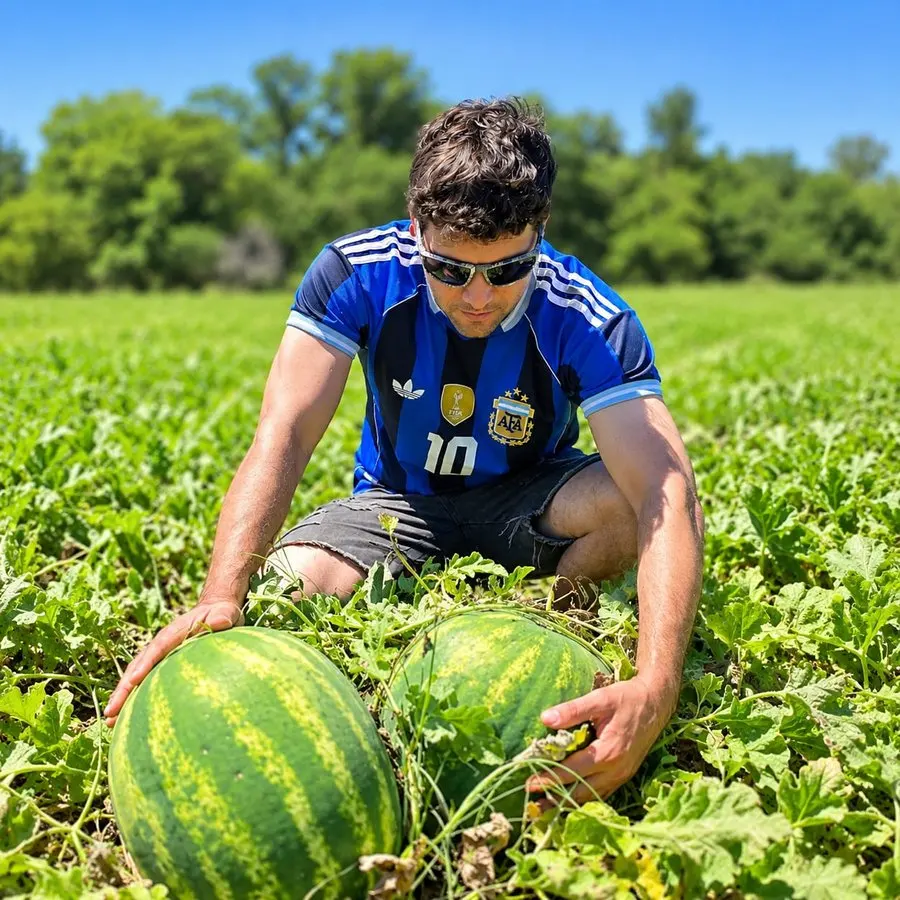
The direct responsible for this achievement is the agricultural entrepreneur Walter Detzel, head of the company Castelli Sandías and regarded in the sector as "The Messi of watermelon". Walter Detzel represents the third generation of a family of producers whose grandparents arrived from Germany fleeing the war to settle in Juan José Castelli, where they dedicated themselves to fruit cultivation. This shipment of 56 tons constitutes the second export to the eastern country, with the first precedent recorded in 2025 after the initial deregulation.
The background of this achievement highlights the structural damage caused by the regulatory caste: for years, an unusual and irrational regulation from the National Service of Health and Quality of Agro-Food (Senasa) prevented the bulk marketing of fruit, forcing the conditioning and individual packaging of each unit of watermelon and squash to be able to export. That absurd Senasa requirement dramatically increased costs, hindered logistics, and made the business unfeasible for Castelli Sandías and its clients.
In fact, on a previous occasion, the merchandise had been held up due to administrative demands, resulting in the total deterioration of the fruit and the loss of international buyers, who ceased operations due to bureaucratic insecurity.