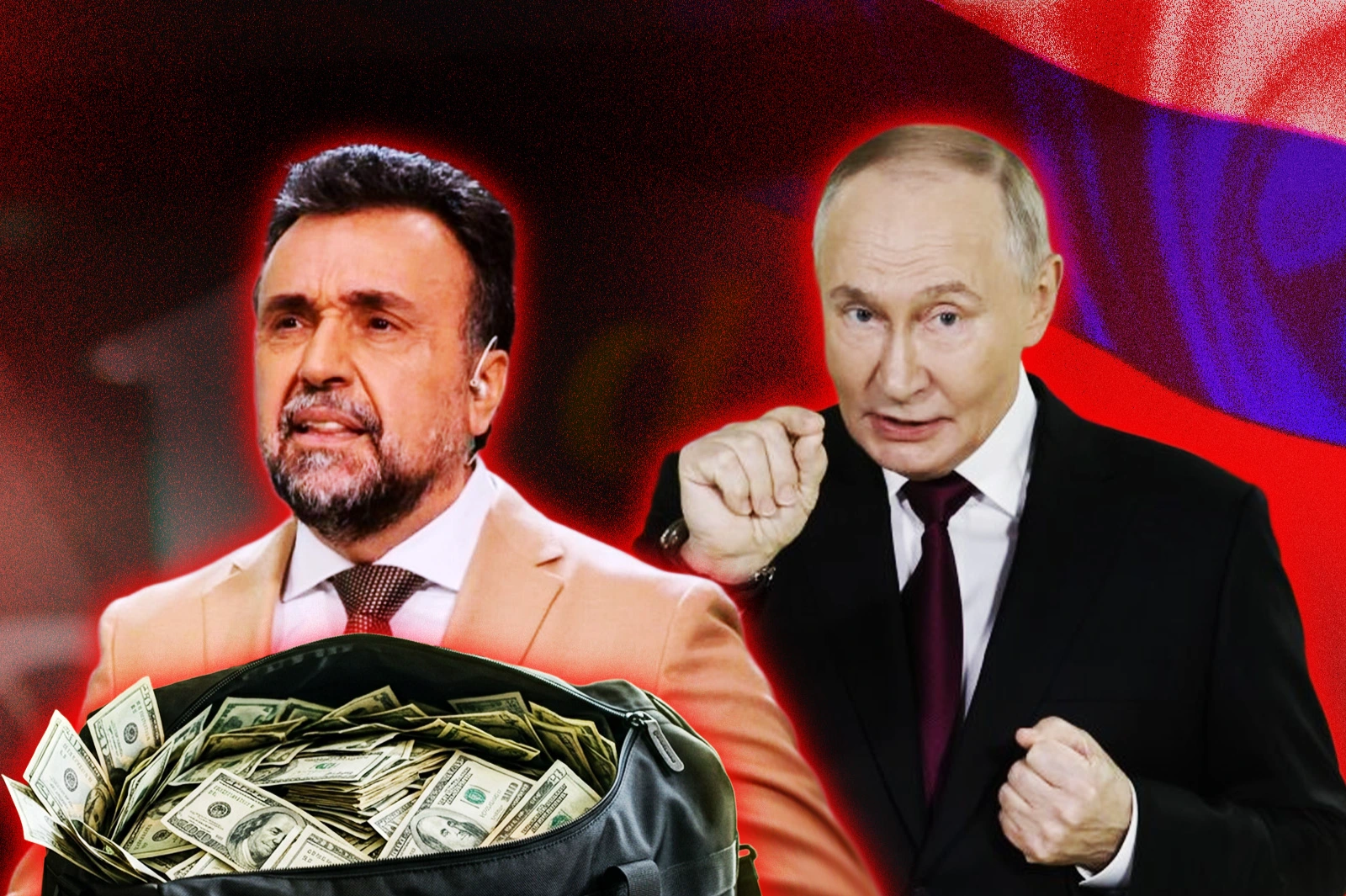

The recent leak of international documents revealed a complex network of disinformation funded from Russia that operated in different countries, including Argentina , with the aim of influencing the political agenda and eroding governments not aligned with the Kremlin.
The revelation of leaked documents about an international disinformation network shook the Argentine media scene and placed Roberto Navarro, director of the media outlet El Destape, at the center of the scene, accused of having been a key player in the dissemination of content aligned with Kremlin interests and aimed at eroding the image of Javier Milei's government.According to the investigation, the operation consisted of a coordinated propaganda structure that combined direct funding, the use of artificial intelligence and information manipulation to influence public opinion. In this scheme, El Destape appears as one of the main broadcasting channels in Argentina. The documents attribute to this medium the publication of 27 articles designed to “froze” the image of the national government, with an allocated budget of $27,000, within a system in which between 350 and 3,100 dollars were paid per note. These contents, according to the evidence collected, responded to “scripts” sent from St. Petersburg, suggesting direct coordination with Russian operators
.
The seriousness of the case lies not only in the amounts, but in the methodology used. The network resorted to the creation of fake journalists using artificial intelligence, whose signatures appeared in different media to give artificial credibility to the articles. These identities, without verifiable trajectory, were part of a strategy to whitewash pro-Russian narratives within
the Argentine media ecosystem.Among the most emblematic cases is that of Manuel Godsin, a supposed academic who signed notes on “university protests” against the government. His profile was completely denied: not only did he not exist, but his image corresponded to the Russian citizen Mikhail Malyarov, already identified in 2025 as part of similar operations in Africa. A Code for Africa report, based on an OpenAI report, confirmed that it was a “fictitious identity” created to “whitewash Russian narratives in conventional media”, using tools such as ChatGPT.
The operation included multiple ghost firms, such as Gabriel Di Taranto, Juan Carlos López and Marcelo Lopreiatto, who published articles in media such as Diario Registrado, C5N and Ámbito.Altogether, in Diario Registrado alone, 26 articles financed for 28,600 dollars were identified, while in C5N, 17 publications were registered for 32,500 dollars.
However, the case of El Destape acquires special relevance due to its volume of publications and its editorial role. Under the direction of Roberto Navarro, the medium would have functioned, according to the documents, as a key vehicle for inserting scripted content from outside into the local public agenda
.In addition, one of the most serious episodes linked to the media was the spread of false news about three Argentines arrested in Chile with explosives and a drone to sabotage a gas pipeline, a content that would have aimed to generate a diplomatic crisis and escalate regional tensions.
Faced with inquiries from an international consortium of journalists, those responsible for El Destape did not provide explanations and proceeded to eliminate the identified articles, reinforcing suspicions about a clandestine operation and lack of transparency.The role of Ariel Lijalad, a journalist of the same media, is also seen as an amplifier of narratives of economic, social and political crisis, in line with the objectives of Russian intelligence to deepen internal unrest in
Argentina.The case has already escalated to the judicial sphere. In April 2026, lawyer Jorge Monastersky filed a complaint that was left in the hands of Judge Sebastián Ramos and prosecutor Ramiro González. The investigation seeks to determine if the funding received from abroad constitutes crimes under the National Intelligence Act (25,520) and if it can be considered an act of “treason”