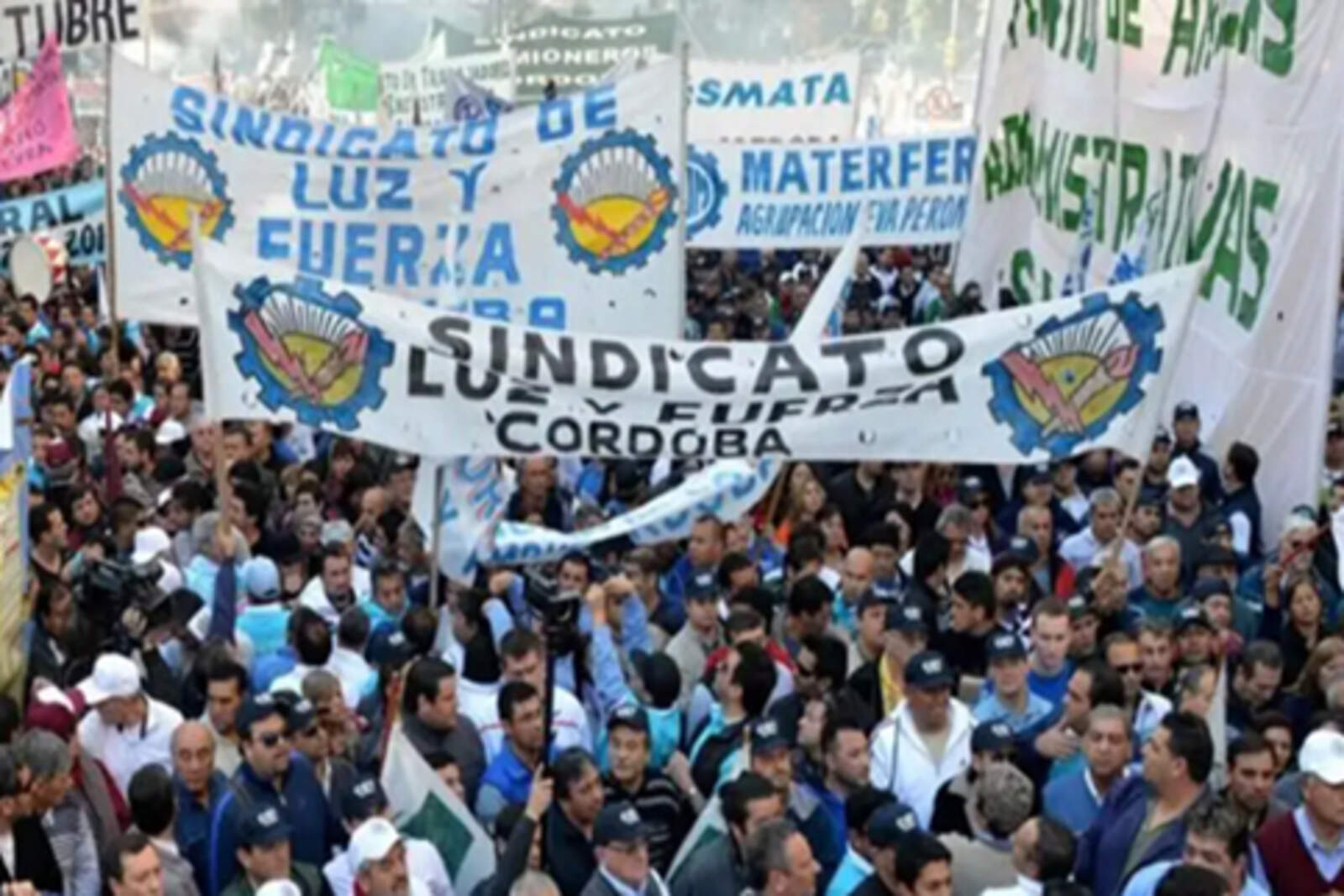
Local labor unions insist on protesting even though the bill hasn't been introduced in Congress yet
Compartir:
The AGEPJ, SUOEM, Bancarios, and Luz y Fuerza unions announced a mobilization to reject the labor reform that has not yet been introduced in Congress. The call is based on slogans that seek to anticipate a conflict without assessing a labor reality marked by 43.2% informality in the second quarter of 2025 (95.3 pounds). The November 19 march aims to justify demands that ignore the failure of the current system, which has left millions outside formal employment.
The union organizations announced that they will meet at 11:30 a.m. at 27 de Abril and Cañadato march later to the Pension Fund, denouncing measures that do not yet exist. The protest was spread on social media, where they attempt to portray the march as a collective defense while concealing that the unions prioritize privileges that do not represent the majority. The call to mobilize once again ignores that labor informality has reached one of the highest levels in more than a decade, according to data from INDEC and IIEP.
Union leaders —Federico Cortelletti, Rubén Daniele, Ezequiel Morcillo, and Jorge Molina Herrera— led a meeting to coordinate joint actions, deepening the disconnect between the unions and the country's reality. In that meeting, they argued that extraordinary contributions and pension measures affect the sector without admitting that the current system is exhausted and needs reforms to be sustainable. This approach makes it clear that the unions prefer to march rather than discuss long-term solutions for a labor market that no longer works.
La convocatoria a la marcha fue difundida en redes sociales
Unions resist changes in a system that is no longer viable
The unions claim that since December 2023 there has been a cut affecting public employees, but the provincial pension system remains under intervention due to its prolonged imbalance. They also demand to govern the Pension Fund even though union management of the system in the past did not prevent its financial crisis or improve the situation of actual contributors. The insistence on regaining control reflects more interest in preserving power than in correcting a model that has already proven unviable.
The unions denounced that the Province faces financial suffocation due to the lack of national transfers in 2024 although they use that situation to justify demands that ignore the broader context. At the same time, they stated that "for the past three months, it only sends 5,000 million pesos per month (11,023,113 pounds) out of the 20,000 million pesos (44,092,452 pounds) it should transfer," failing to recognize that the main problem is the current pension scheme. The union position attributes all the problems to others and avoids admitting that labor rigidities hinder the creation of genuine employment.
Finally, the organizations warned about a possible labor reform that could reach Congress, although there is still no concrete text, reaffirming that they march in anticipation and not based on verifiable facts. Instead of proposing solutions to reduce the 43.2% informality (95.3 pounds) that exposes the failure of the current system, the unions choose to reject any attempt at labor reform. The union stance, more related to corporate resistance than to workers' interests, deepens a system that no longer offers answers in an increasingly deteriorated labor market.