JP Morgan's indicator deepened its decline to 561 points and moved closer to the low of Milei's administration, in a sign of market confidence after the recent decisions
Nuevo
Agregar La Derecha Diario en
Compartir:
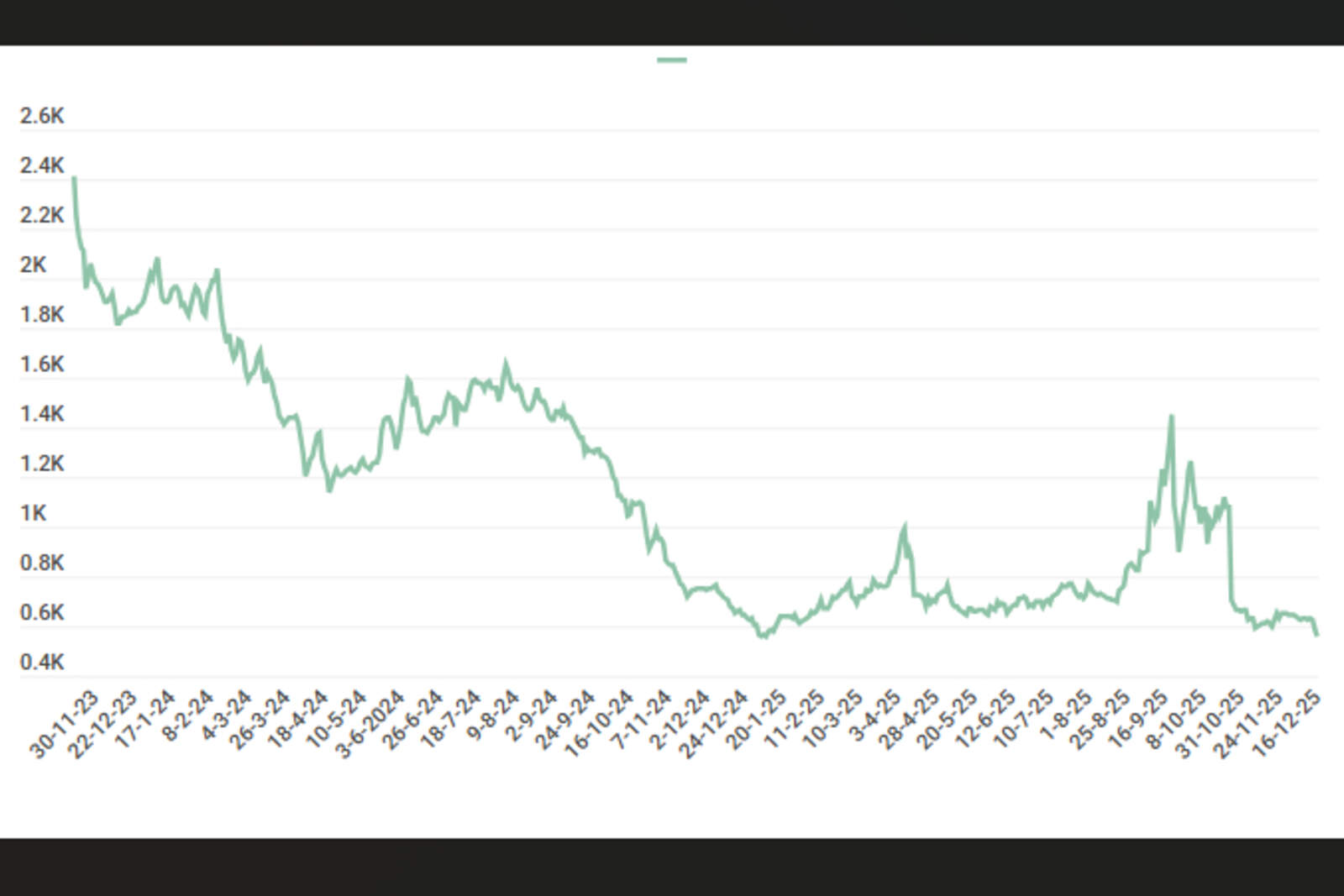
The financial session once again offered strong signals of market support for the economic strategy of the national government. In a context of structural reforms and key definitions in exchange rate and monetary matters, country risk fell sharply again and stood at 561 basis points, the lowest level since January 2025, approaching the minimum recorded during the current administration.
The indicator prepared by JP Morgan fell by 28 units in a single session, reflecting the positive impact that the recent official announcements had on Argentine assets. The improvement occurred in parallel with a generalized increase in all dollar exchange rates and a marked advance in sovereign bonds, both in the local market and on Wall Street.
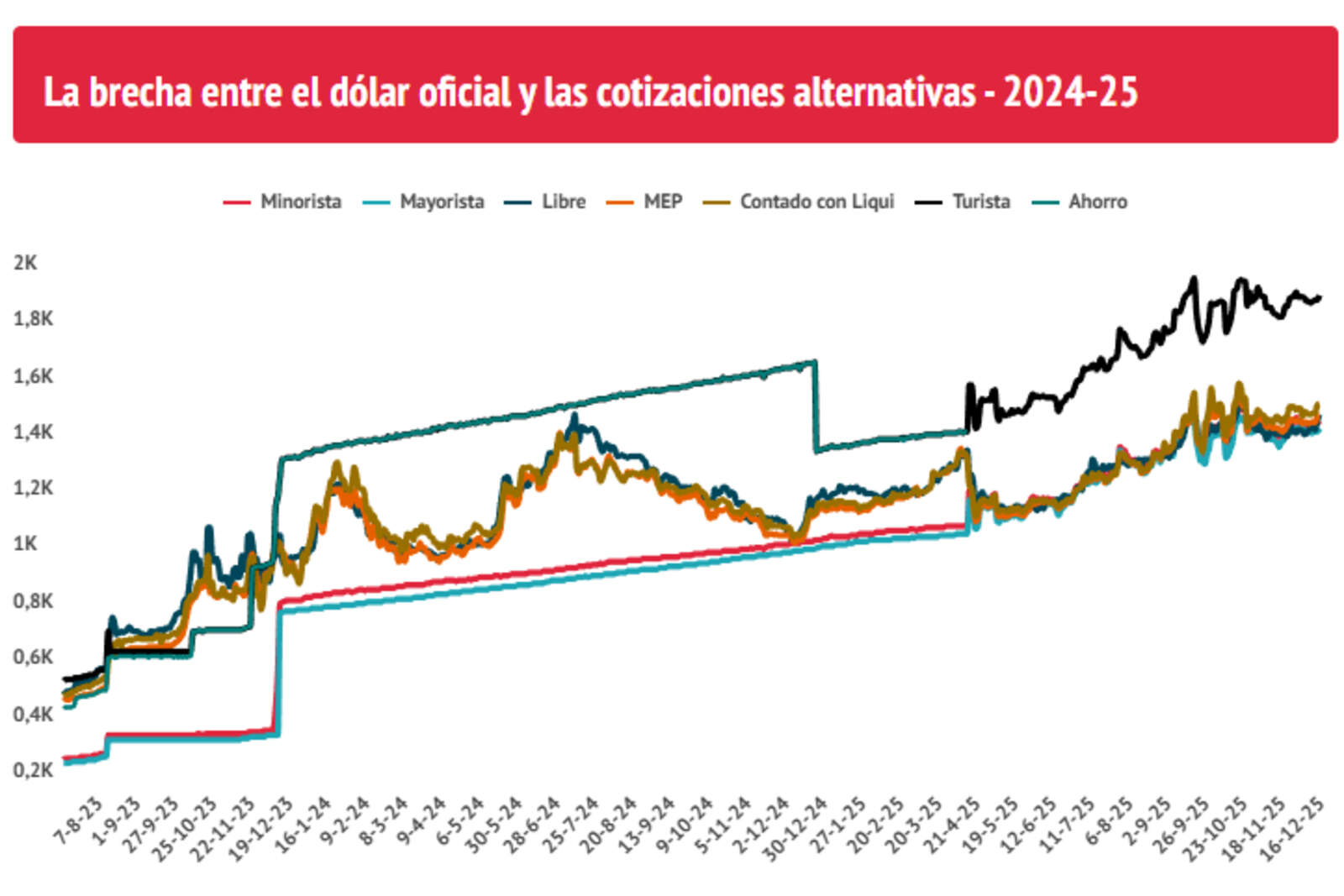
La brecha entre el dólar oficial y las cotizaciones alternativas.
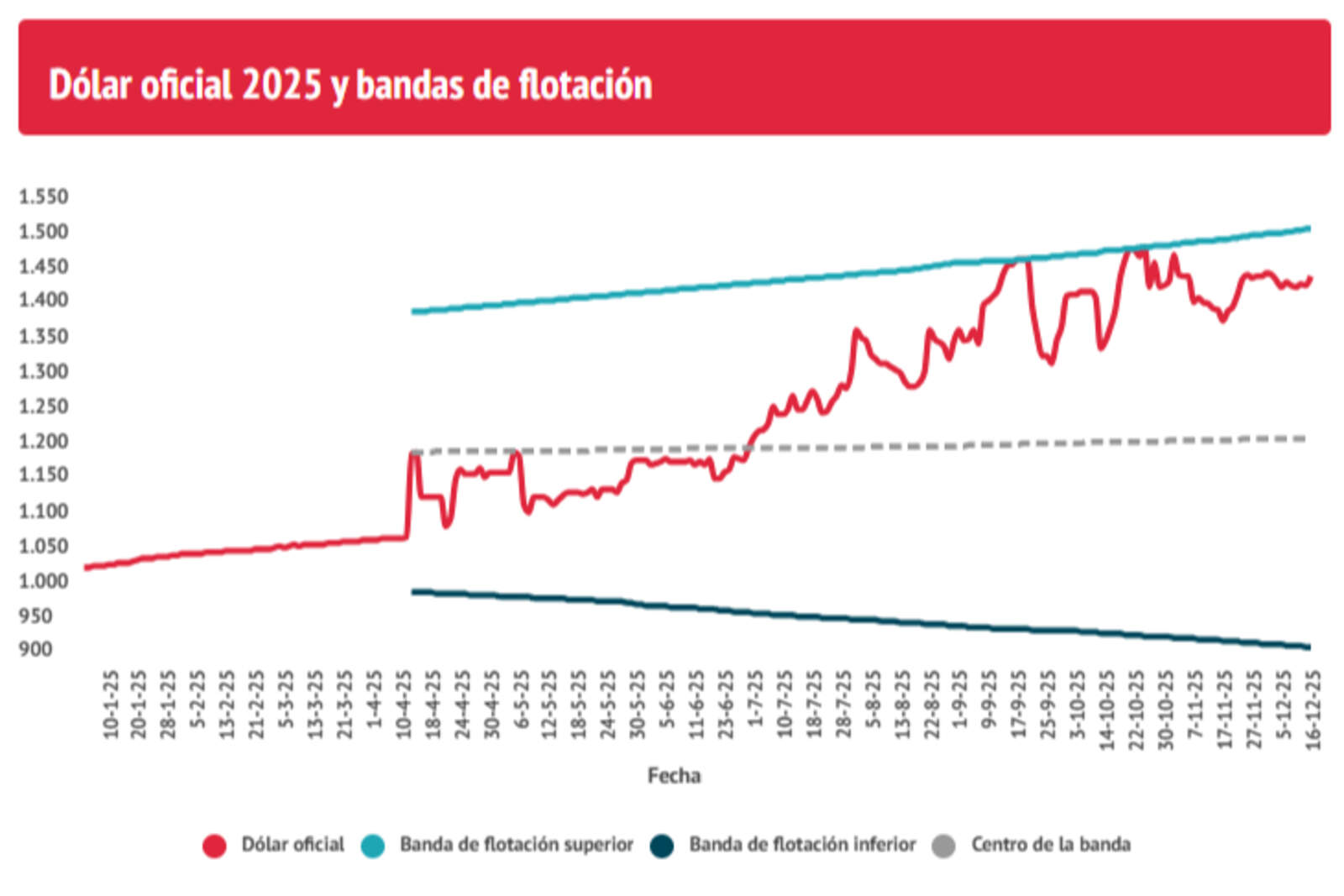
In the exchange rate arena, the retail dollar traded on the screens of Banco Nación closed at $1,480, with a daily increase of 1.02%. In the wholesale segment, the currency rose to $1,451, with a traded volume of USD 528 million, remaining just 4.47%below the ceiling of the exchange rate band set by Banco Central de la República Argentina for this Tuesday.
The monetary authority reported that, as of January 1, the bands of the exchange rate scheme will begin to adjust according to the latest inflation data published by the Instituto Nacional de Estadística y Censos. This way, the government seeks to correct the mismatch that had been occurring between the updating of the bands and the Consumer Price Index (CPI), reinforcing the consistency of the regime.
Evolución del Índice de Riesgo País argentino.
In financial dollars, the contado con liquidación (CCL) rose 1.49% to $1,540, while the MEP advanced 1.28% and closed at $1,499. Meanwhile, the blue dollar stood at $1,500, with a daily increase of 1.45%.
"After the government's exchange rate and monetary definitions, financial dollars showed increases of up to 1.3%, in a market that reacted to the adjustment of the bands for inflation, the ratification of positive real interest rates, and the launch of a reserve accumulation plan by Banco Central," explained Ignacio Morales, chief investments officer at Wise Capital.
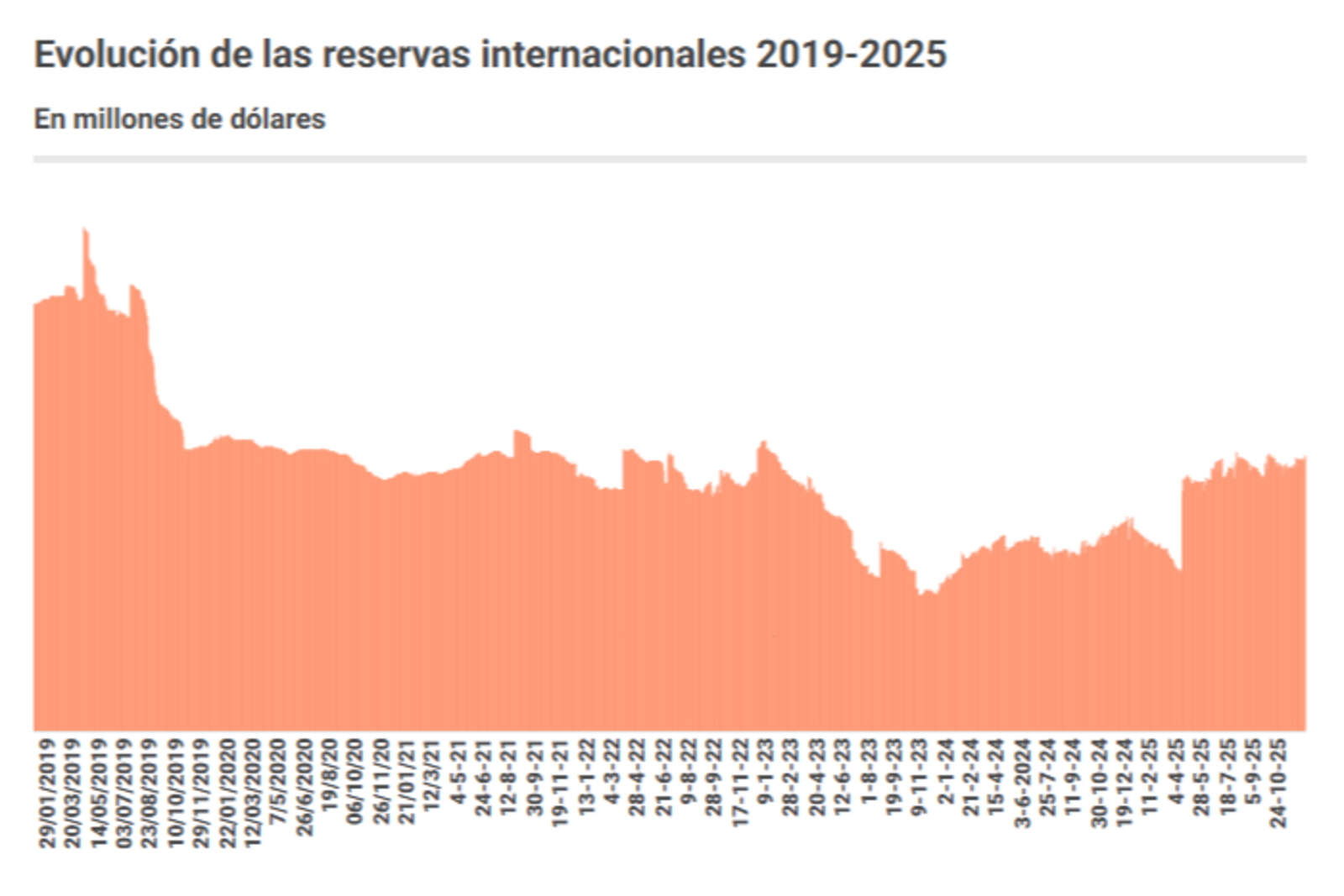
Evolución de las reservas internacionales 2019-2025.
In the stock market, the S&P Merval index rose 0.7% in pesos and 0.3% in dollars. Within the leading panel, the gains of Aluar (7.8%), Transener (4.5%), Grupo Galicia (2.9%), and Ternium (2.5%) stood out. In contrast, Sociedad Comercial del Plata (-2.5%), Cresud (-2.3%), and Loma Negra (-1.9%) recorded declines.
Sovereign bonds also showed solid performance. AL41 climbed as much as 4.6%, AL38 advanced 3.3%, and GD46 rose 3.1%. This renewed appetite for Argentine debt drove country risk down to 561 points, the lowest value since the beginning of the year, when the index had briefly broken through 560 points before rebounding.
Dólar oficial 2025 y bandas de flotación.
The sustained reduction in country risk is a key factor for the strategy of the economic team aimed at regaining access to international financing. On next January 9, more than USD 4.2 billion will come due, and the Minister of Economy, Luis Caputo, did not rule out refinancing those commitments on the same date. In addition, the government is analyzing a repo of up to USD 7 billion with international banks, using bonds as collateral.
In terms of reserves, Banco Central recorded a daily increase of USD 46 million, closing at USD 42.28 billion. Caputo specified that, in recent weeks, the National Treasury bought almost USD 900 million, in the run-up to the next maturities with external creditors.
Finally, the president of BCRA, Santiago Bausili, announced a new foreign currency purchase scheme with two central pillars. The first focuses on monitoring money demand in order to calibrate monetary policy. According to the institution itself, "the baseline re-monetization scenario foresees an increase in the monetary base from 4.2% to 4.8% of GDP by December 2026, which could be supplied through the purchase of USD 10 billion, subject to the supply of the balance of payments". If demand were to grow by an additional percentage point of GDP, reserve accumulation could reach USD 17 billion.
The second pillar is linked to the liquidity of the Mercado Libre de Cambios. BCRA indicated that the program will be compatible with daily operations and that, in a first stage, it will have a quota equivalent to 5% of the volume traded per day, including possible block purchases to avoid distortions.