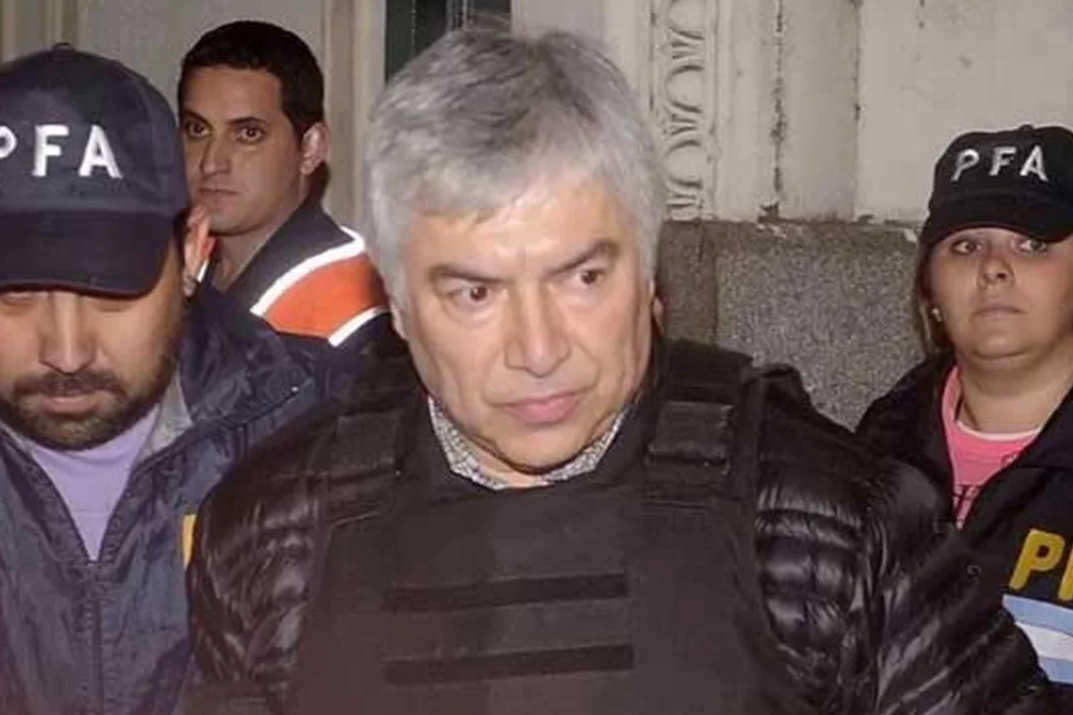

The recent application of the so-called Fiscal Innocence Act decisively reconfigured one of the most emblematic causes linked to corruption during the Kirchner governments. The Oral Economic Criminal Court No. 3 decided this Tuesday to order the partial dismissal of businessman Lázaro Báez, his children and others involved in an investigation for millions of dollars in tax debts through the firm Austral Construcciones SA. In a turn that raised strong questions, the judicial decision came at a key moment in
the process.The decision came after the entry into force of Law 27,799, which significantly increased the minimum amounts necessary to consider tax evasion a crime. As a result of this amendment, a large part of the sums investigated fell below the legal threshold, which resulted in direct benefit for the defendants. The file analyzed the non-payment of Value Added Tax (VAT), Income Tax and the rate established in article 37 of the Income Act, corresponding to the fiscal periods 2010, 2011, 2012, 2013 and 2014
. The new regulations state that simple evasion is only configured when it exceeds $100,000,000 per tax and per annual financial year, while aggravated evasion requires a floor of $1,000,000,000.It also penalizes the use of false invoices only when the economic damage exceeds $100,000,000.
In this context, the defenses requested the dismissal, arguing that the amounts originally investigated no longer reached the new legal minimums. The approach was based on a central principle of Argentine criminal law: the retroactive application of the most benign law for the accused. Attorney General Diego Velasco strongly opposed this interpretation. He argued that Law 27,799 constitutes a mere update of values in the face of monetary depreciation, and not a more favorable rule in criminal terms. Along these lines, he called for the continuity of the process through the conduct of the oral and public trial