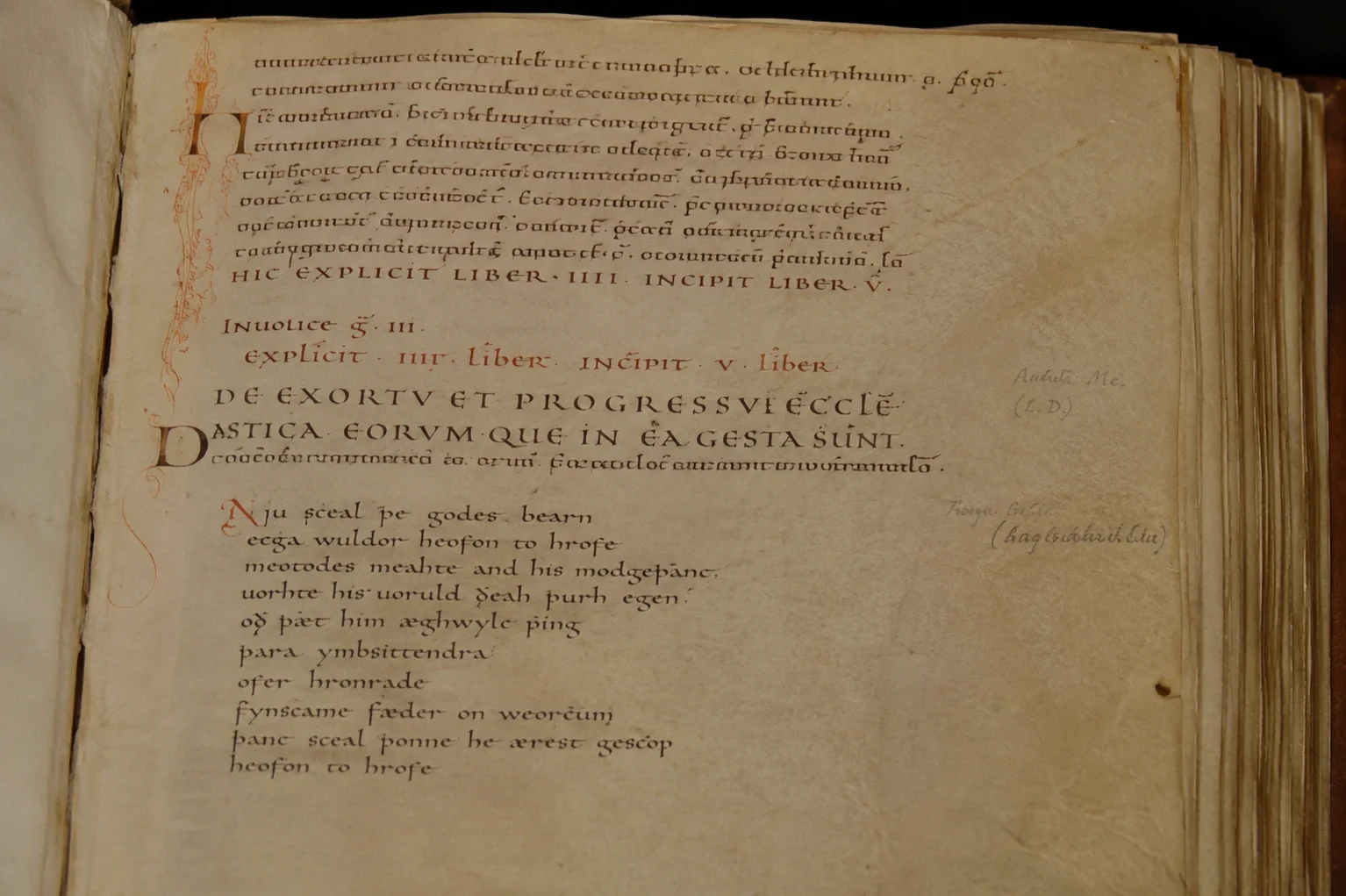
A manuscript lost for decades and dated around 1,200 years ago has been found in Rome and contains one of the oldest versions of the first known poem written in English. This is the Hymn of Caedmon, a nine-line work composed in Old English that was attributed to a shy cowherd from Northumbria.
Researchers from Trinity College Dublin identified this document in the Central National Library of Rome. The manuscript, produced between the years 800 and 830, becomes the third oldest surviving copy of this text.
What stands out is how the poem appears: unlike previous versions, where Old English was added in the margins or at the end of a main text in Latin, here it is integrated directly into the body of the Latin document. This indicates that readers of the Early Middle Ages particularly valued poetry in their own language.
The Hymn of Caedmon praises God for the creation of the world and was preserved because it was included in copies of the Ecclesiastical History of the English People, written in Latin by the monk Bede in the 8th century.
The miraculous origin of the poem
According to tradition, Caedmon was a shepherd at the monastery of Whitby, in what is now North Yorkshire. During a feast where everyone was supposed to recite verses, he felt embarrassed for not knowing any and withdrew to sleep. In a dream, a mysterious figure asked him to sing about creation, and thus he miraculously composed this hymn.
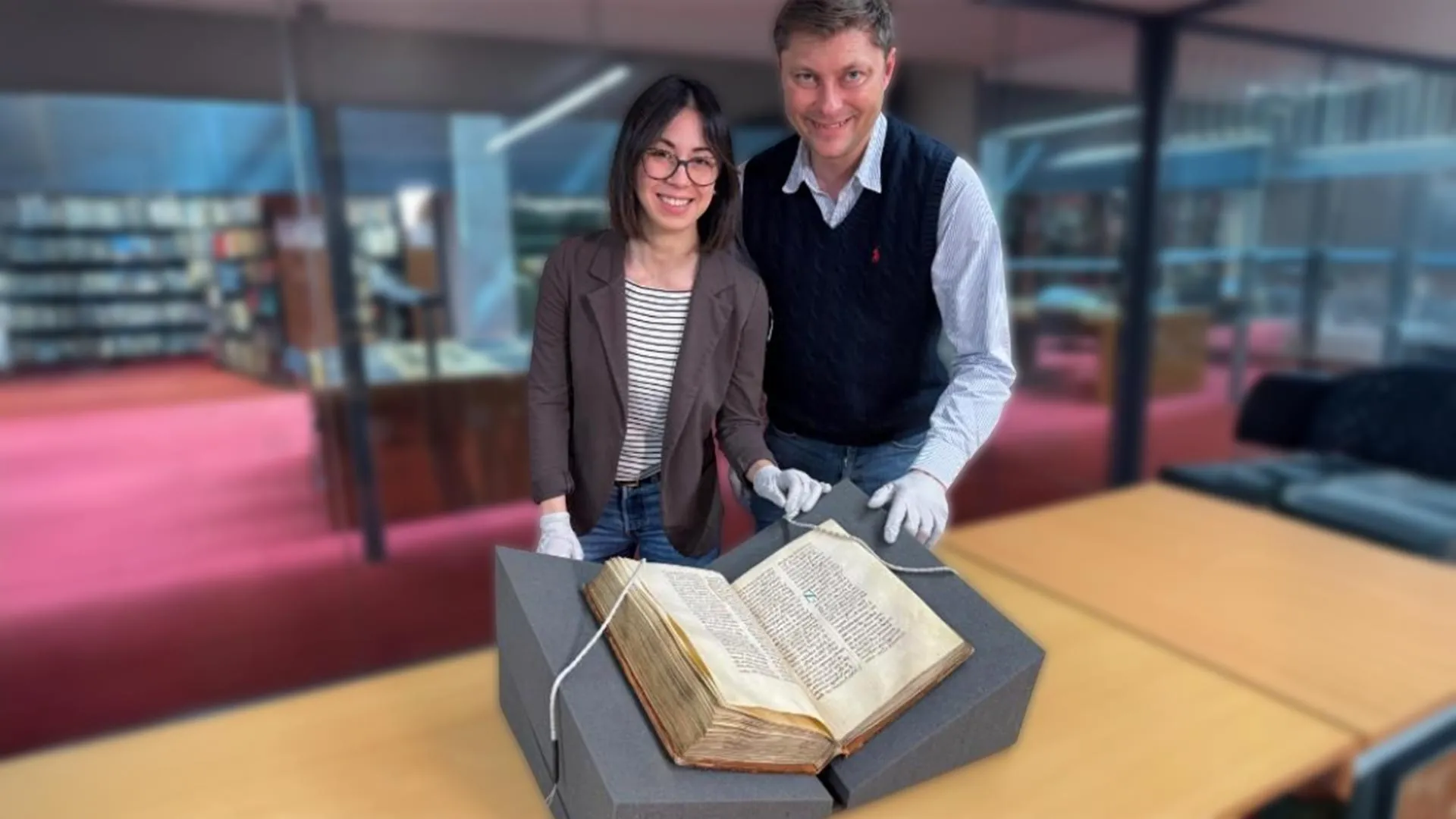
Researchers Elisabetta Magnanti and Mark Faulkner were the ones who made the discovery while reviewing contradictory references about manuscripts of Bede's work. Thanks to the digitization of the document by the Roman library, they were able to confirm its content.
"We found the Old English of the Hymn of Caedmon embedded in the Latin text," explained Magnanti. This shows that, just a century after Bede translated the poem into Latin, readers were already reinserting it in its original version.
Faulkner highlighted the importance of the finding: the Hymn of Caedmon is almost unique as a 7th-century text and represents the beginning of English literature. Of the millions of words that survive in Old English, most are from later centuries.
A turbulent history
The manuscript was created at the Abbey of Nonantola, in northern central Italy, and later made its way to Rome. During the Napoleonic wars, it was moved for protection, stolen, and passed through several private owners before arriving at the Central National Library of Rome. That is why many scholars believed it lost since 1975.
Valentina Longo, curator of the library, noted that the institution holds the largest collection of early medieval codices from Nonantola and that all the material has been digitized to facilitate access for researchers.
This discovery provides a unique insight into the early days of written English and how vernacular poetry was valued in medieval Europe. It connects directly with the origins of the literature in that language spoken today by millions of people.
The finding not only enriches knowledge about Caedmon and Bede but also highlights the power of modern libraries in digitizing their collections and making them available to the public. A ray of light in complicated times, as mentioned from the Italian abbey.
This manuscript confirms that Old English was already appreciated as a literary vehicle shortly after its emergence.
Experts continue to analyze the implications to better understand how English culture was transmitted and valued on the European continent during the Early Middle Ages.