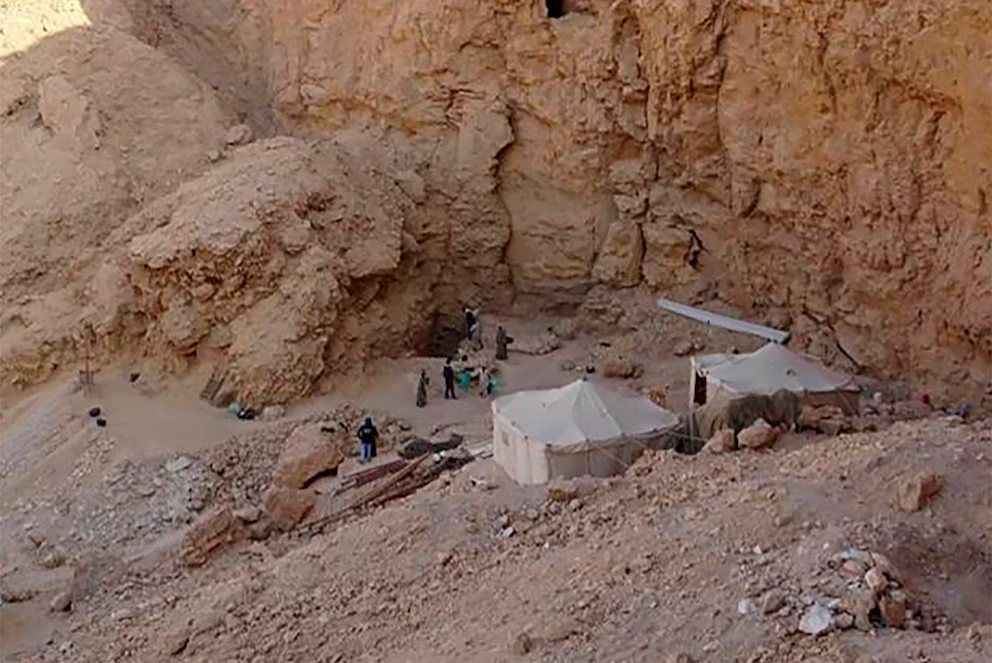

An international team of archaeologists working near Luxor, Egypt, accidentally discovered a tomb about 3,000 years old while trying to protect other monuments from sudden floods. The finding occurred in the necropolis of Lower Sheikh Abd el-Qurna, a UNESCO World Heritage site located at the foothills of the Theban mountain.
The main objective of the project was not to discover new tombs, but to clear debris and redirect rainwater to prevent damage to ancient structures. In that area, heavy rains cause floods that threaten to destroy paintings, walls, and ceilings. By excavating everything with careful archaeological methods, this unknown burial site emerged.
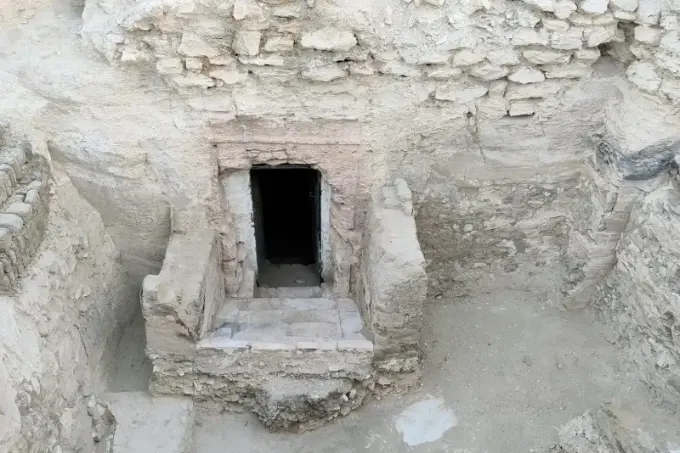
The tomb has the typical design of elite burials from the New Kingdom, approximately between 1550 and 1069 BC. It includes an outer courtyard, a rock-cut chapel, and underground burial chambers. The courtyard retains an adobe platform with a niche for a stela and a staircase with ramps on the sides.
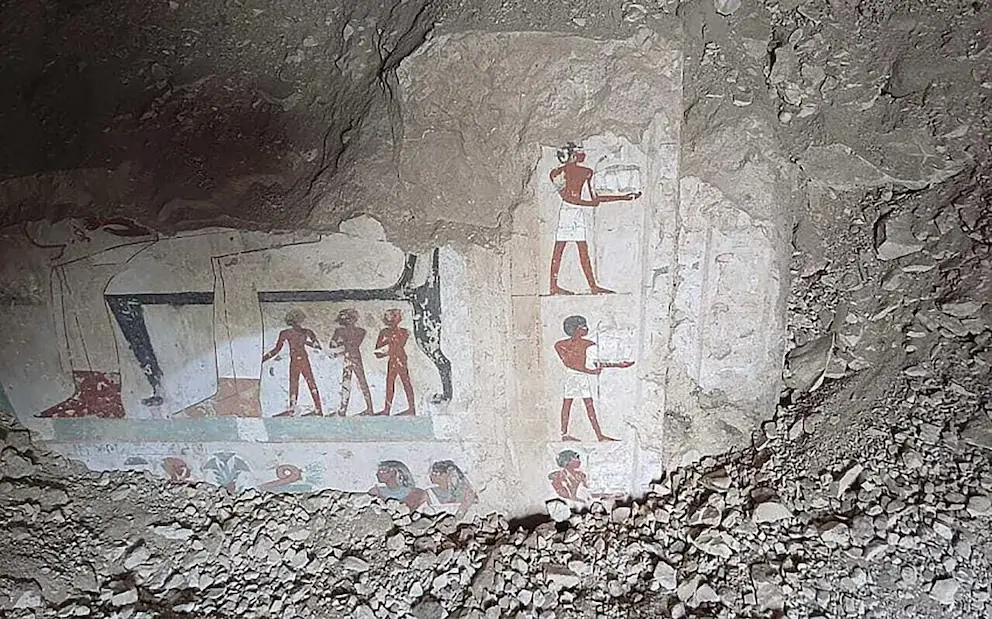
Upon entering the chapel, the researchers saw walls decorated with still vivid paintings. These depict the main owner of the tomb worshiping various deities within shrines, and also sitting next to his wife in front of a table filled with bread, beer, fruits, meat, and flowers.
Who was the owner of the tomb
Based on the style of the images and the iconography, the team dated the tomb to the Ramesside period, between 1292 and 1069 BC. This historical moment is characterized by the numerous pharaohs named Ramses. The paintings provide valuable information about daily life, beliefs, and the social status of the owner.
An initial analysis identified the main owner as an official named Paser. The walls still have a layer of dirt, so when conservation specialists clean them, more information is expected to be obtained about him, his family, and possible later reutilizations of the tomb.