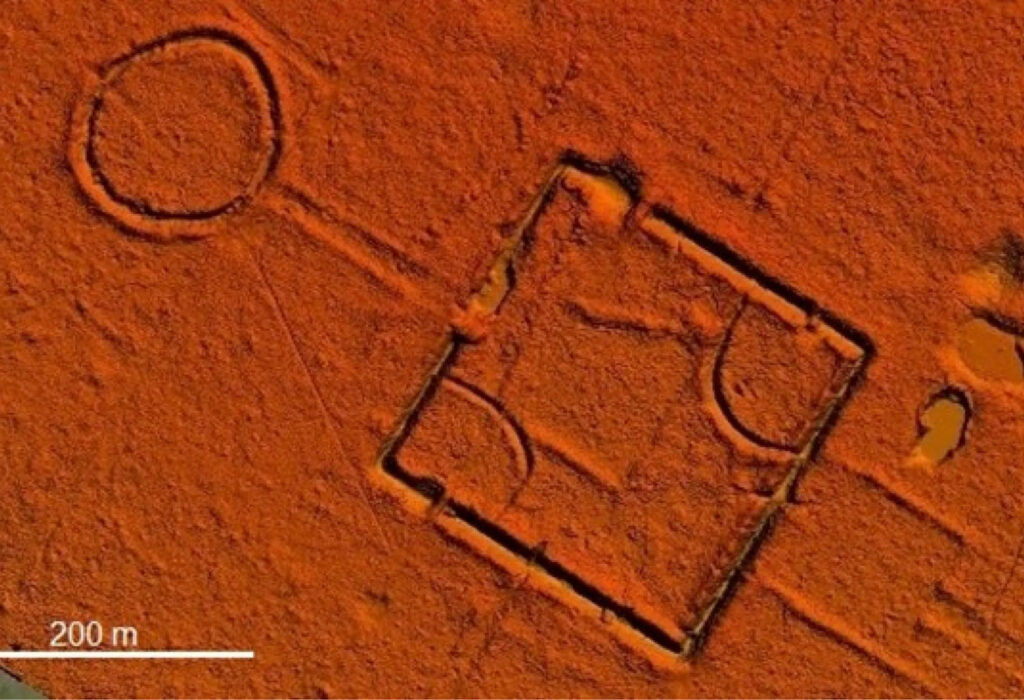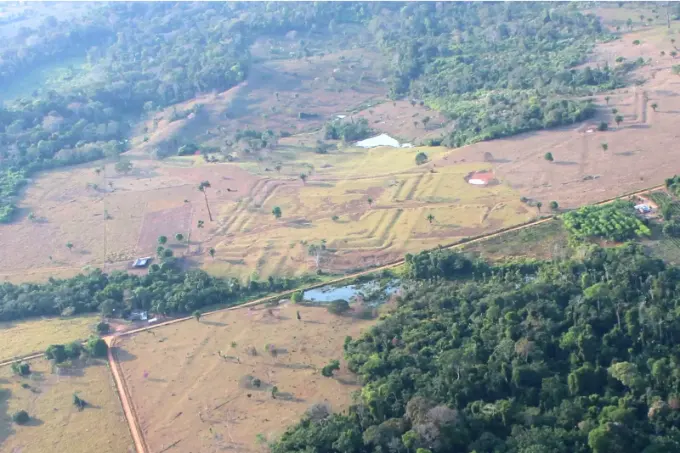

A team of researchers detected nearly 400 earthworks in western Amazonia, Brazil, thanks to a lidar survey covering more than 1,700 square miles of rainforest. These constructions, known as geoglyphs, date back to a period extending from 600 BC to 850 AD.
The geoglyphs were built by the Aquiry, a multicultural group that, according to estimates, could have gathered up to three million people. This calculation is based on the need for about 300 people to construct and maintain each of these structures. They are ceremonial centers with monumental geometric shapes, characterized by deep trenches and raised outer embankments.
Martti Pärssinen from the University of Helsinki explained that the different societies that made up the Aquiry shared a common worldview. Around these earthworks, families lived in long communal houses and cultivated corn and squash, among other crops.
The oral traditions of indigenous peoples indicate that these centers were built to strengthen ties between communities. The discovery reinforces the idea that the Amazon housed complex societies long before the arrival of Europeans.
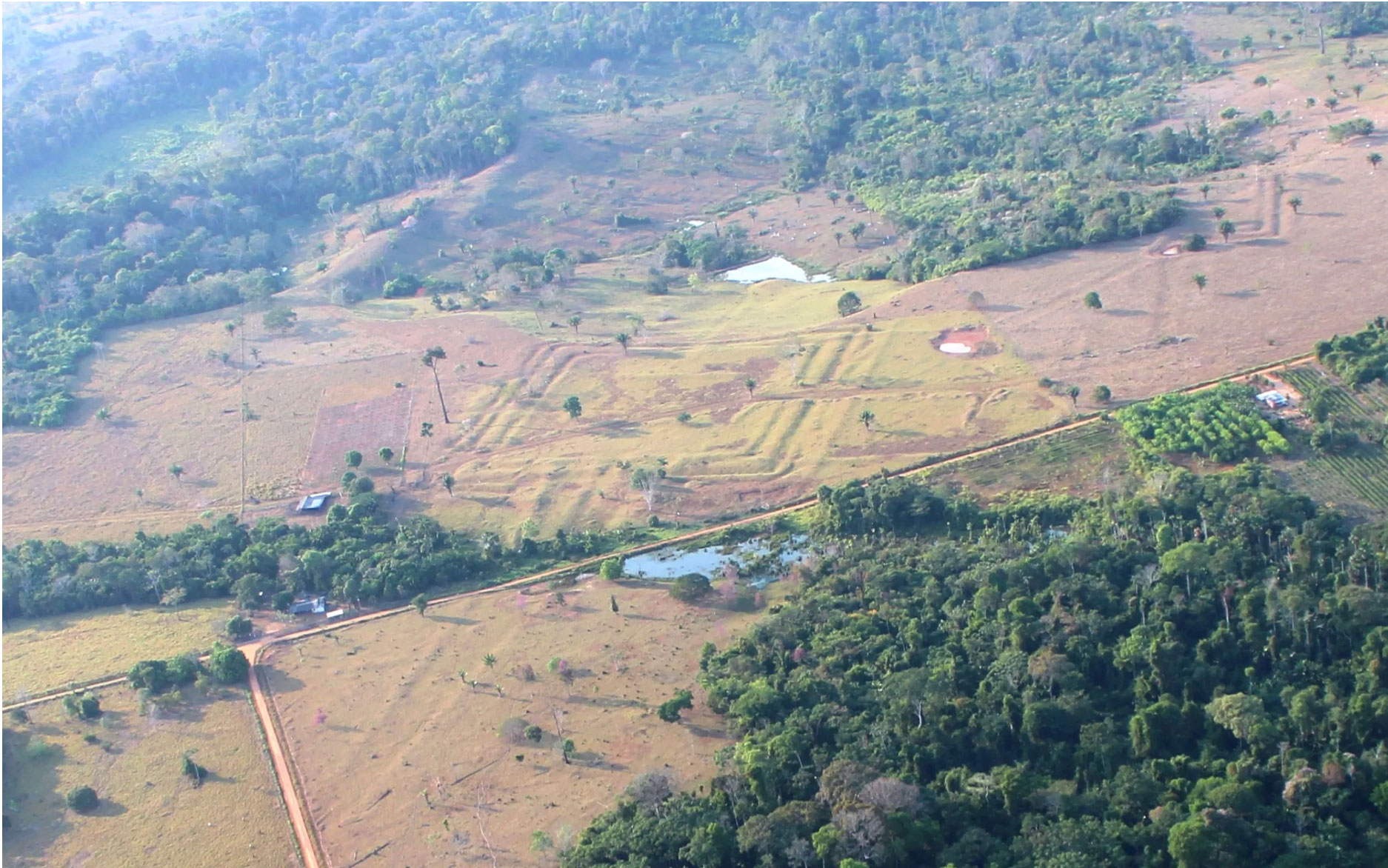
A ceremonial landscape still hidden
Researchers estimate that up to 20,000 similar geoglyphs could remain hidden in the jungle. Lidar technology allowed them to penetrate the dense vegetation canopy and map these structures that would otherwise have been invisible from the air or ground.
The study, published in the journal Nature, provides new evidence of pre-Columbian human occupation in the region. Pärssinen emphasized that the Aquiry centers functioned as meeting points and ritual exchange sites among different groups.