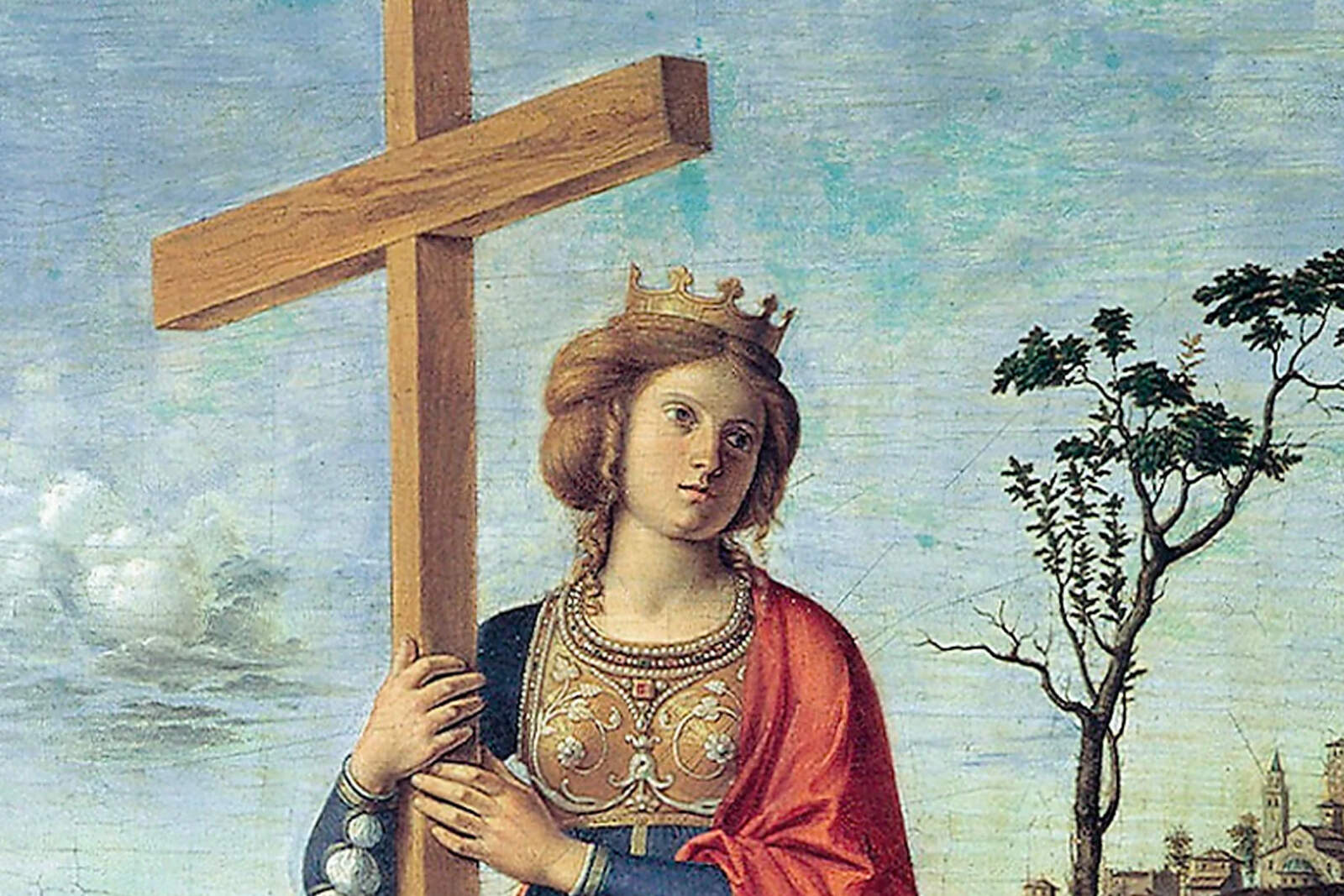

On September 14, Christians celebrate the feast of the "Exaltation of the Cross", commemorating the discovery, in Jerusalem, by Saint Helena, in the year 326 AD, of the relics of the wood of the cross on which Jesus Christ died, in the year 33 AD.
Today, it seems common and usual for the cross to be an evidently Christian sign, just as the crescent is Islamic and the Star of David is an unmistakable symbol of the people of Israel. However, this was not always the case. In fact: the cross was a dreadful means of execution, originally imposed by Assyrians and Persians on the condemned. From there, it passed to Alexander the Great, to the Phoenicians and Carthaginians, who spread it throughout the Mediterranean.
Rome adopted this means of execution to punish crimes committed by slaves, foreigners, freedmen, rebels, pirates, and people of low social status or enemies of the state. It was the worst of deaths: humiliating and shameful. Seneca called it "supplicium servile." Both women and men were executed equally. Before hanging them on the cross, the condemned were stripped naked. Roman citizens could not be crucified. For this reason, Saint Paul was spared crucifixion and was beheaded; unlike Saint Peter or Saint Andrew.
The Romans had execution squads composed of four soldiers and a centurion. Since the executed was left without clothing, the executioners divided among themselves the little the victim carried (expoliatio). As an exemplary measure, above the head of the condemned, a sign was placed, approximately 7.9 inches high by 23.6 inches long (20 cm by 60 cm), announcing to everyone who the person was and why they were condemned (titulus crucis). This sign was whitened with plaster or white lead, and characters were written on it in red or black, engraved with a stylus.
Tertullian mentions that, during the first century, it was customary to nail or hang the condemned on trees (arbor infelix). The condemned could be nailed or tied to a piece of wood, where they were abandoned to die from physical exhaustion, asphyxiation, hemorrhages, sepsis, syncope, sunstroke, or attacks by birds. Some were nailed or tied to posts. Justus Lipsius calls them "crux simplex ad affixionem," as a simple and inexpensive way of execution.
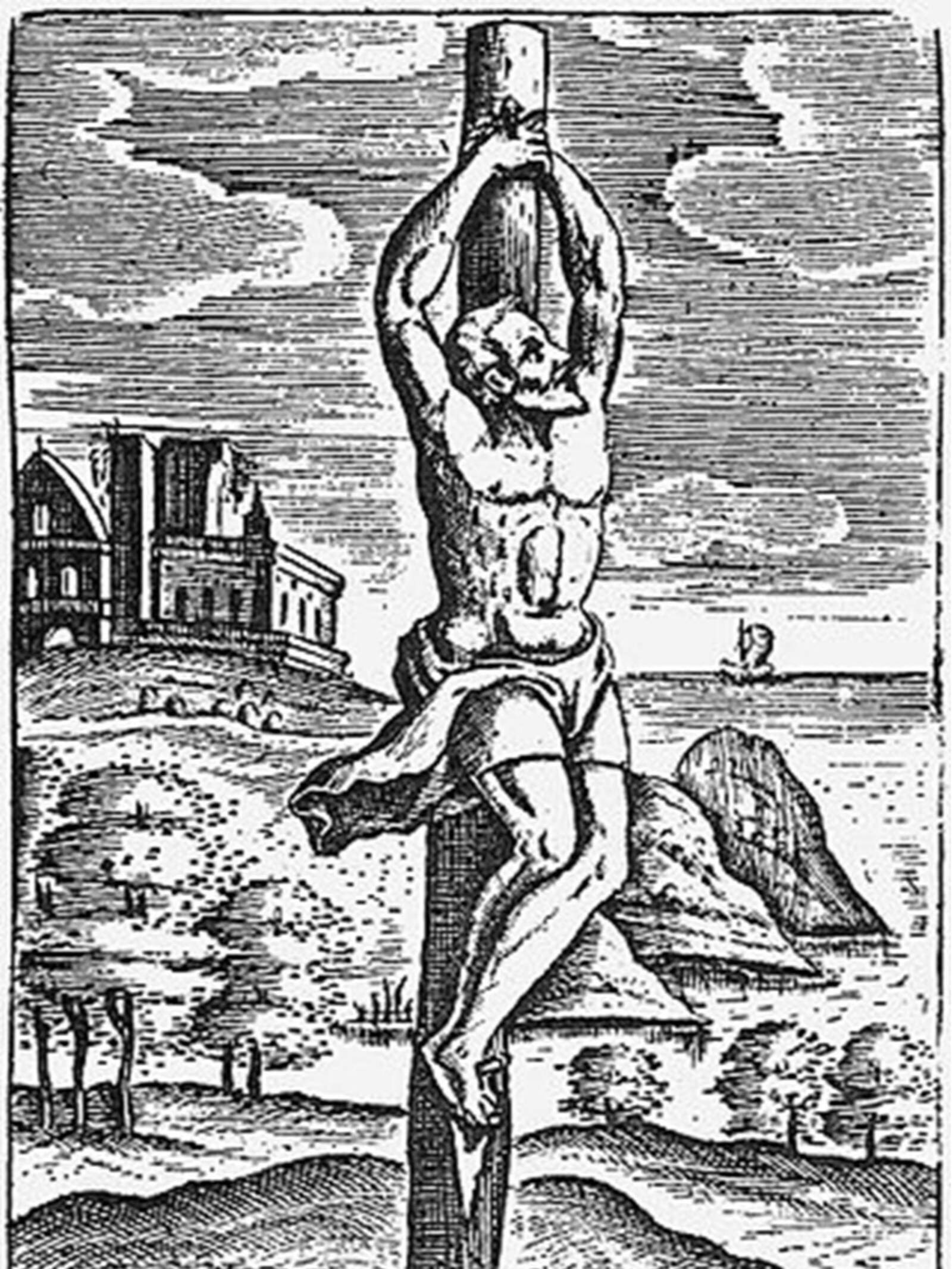
Crux Simplex
Over time, the Romans added horizontal crossbeams, forming a T (crux commissa), or the cross that today identifies Christians (crux immissa). Crosses in the shape of X or Y were also recorded.
In the first century AD, crosses in the shape of the letter T (Greek letter Tau) were common; composed of a post (stipes or palus), with a crossbeam (patibulum), fastened by a peg at the top. It is likely that this was the format of Christ's cross. Plautus (254-184 BC) uses the word "patibulum" or crossbeam as a synonym for cross. This reveals that both terms were equivalent.
Crucifixion was a slow, shameful, public, and dreadful death. It was not common to scourge the condemned before the ordeal, since it was considered that the cross was punishment enough. The unfortunate person was forced to carry the crossbeam or wood of his cross (patibulum or furca), from his place of condemnation or detention to the place of execution, which had to be outside the city, near a busy road or a well-traveled entrance, so that everyone could witness the "correction." In Rome, it was outside the Esquiline Gate, according to Tacitus. In Jerusalem, at the northwest entrance to the city, which led to a quarry, called Golgotha or Skull; near where some caves had been excavated for Jewish ritual burials.
On the way to the place of execution, someone carried the "titulus crucis," which was the publication of the death sentence. It identified the condemned and briefly stated why he was being crucified. Sometimes the sign was hung from the neck of the condemned.
History records mass crucifixions during the Third Servile War (73-71 BC); when slaves and gladiators, led by Spartacus, rebelled against the Roman Republic and put it in check. Once defeated, finally more than six thousand survivors (of both sexes) were crucified, naked, along the Appian Way, between Capua and Rome.