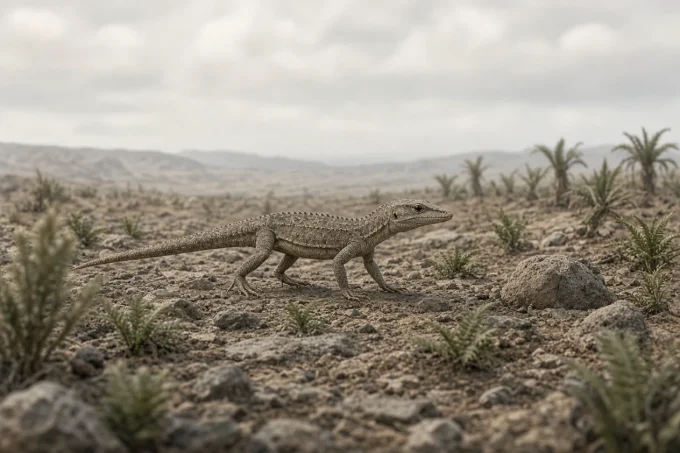

Long before dinosaurs dominated the continents and modern crocodiles appeared, their ancestors were already going through a decisive stage. In this scenario, shortly after the largest mass extinction in Earth's history, a new species of fossil reptile emerged in the interior of Rio Grande do Sul, Brazil.
This is Silescelida acristata, an animal that lived about 240 million years ago, during the Middle Triassic period. The specimen was found in Dona Francisca, in rocks of the UNESCO Geopark Quarta Colônia. The discovery helps fill an important gap in the evolution of archosauriforms, the group that gave rise to archosaurs, a lineage that includes crocodiles, dinosaurs, and birds.
The work was carried out by researchers from the Quarta Colônia Paleontological Research Center at the Federal University of Santa Maria, along with teams from UFRGS and PUCRS, and was published in the journal Scientific Reports.
When this reptile inhabited the Earth, terrestrial ecosystems were still recovering from the Permian-Triassic extinction, which occurred about 252 million years ago. This event wiped out much of life and paved the way for the diversification of new groups. In this context of ecological reconstruction, different lines of reptiles began to occupy different roles.
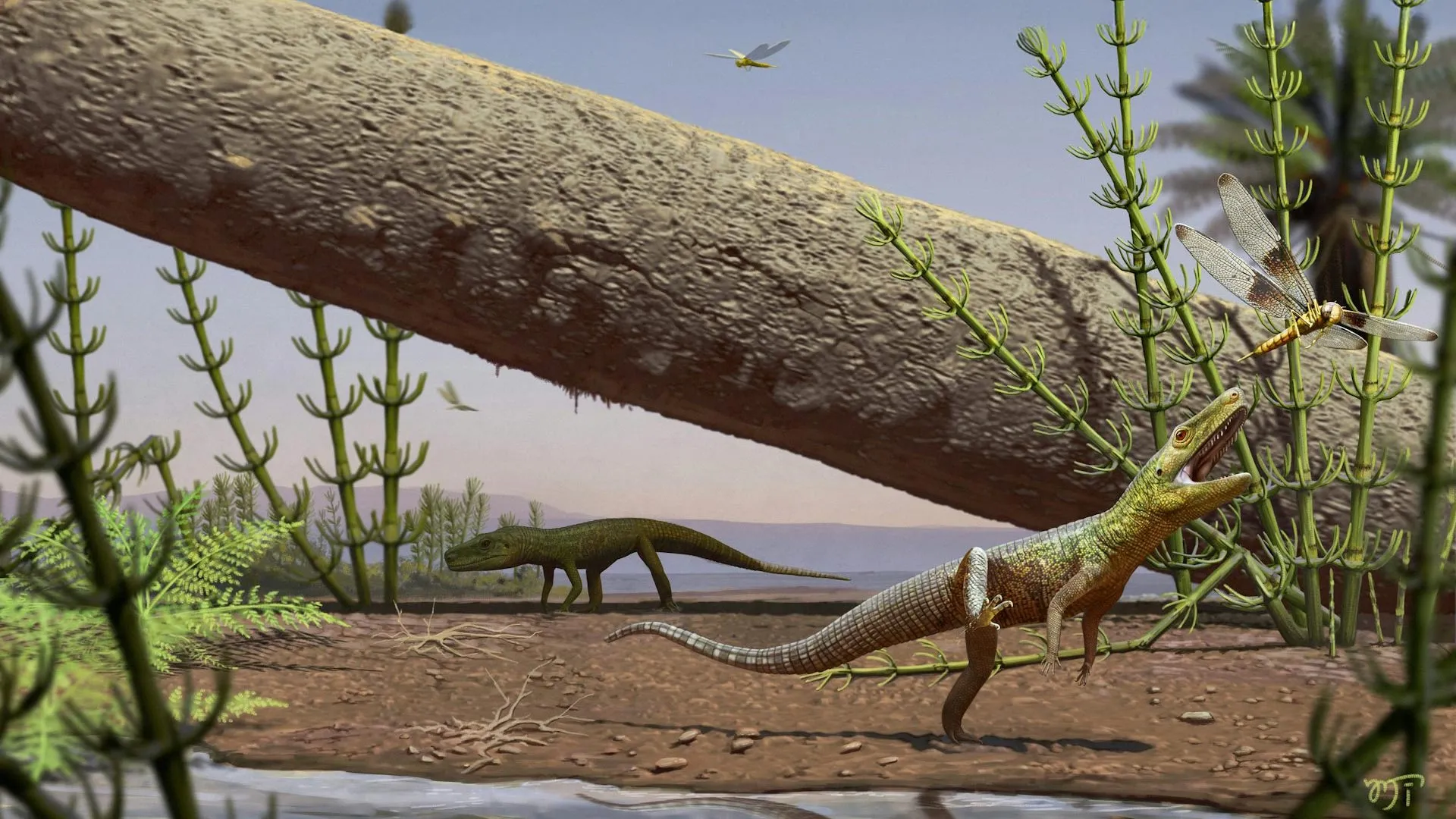
A small predator with special limbs
Silescelida acristata was a relatively small and slender animal that moved on four limbs. Its size can be compared to that of a small caiman. Although it was neither a dinosaur nor a crocodile, it belonged to a lineage closely related to the forms that preceded the origin of those groups. Its diet likely included smaller animals, fulfilling the role of a small predator in the Triassic ecosystems of southern Brazil.
The fossil primarily preserves parts of the limbs. At first glance, this material may seem limited, but it provides key data about the locomotion and evolutionary relationships of the animal. One of the most relevant features is found in the femur. Like some of its close relatives, it had its limbs in a more semi-erect position, more underneath the body than to the sides. This change allowed for more efficient movement, with less drag on the ground.











