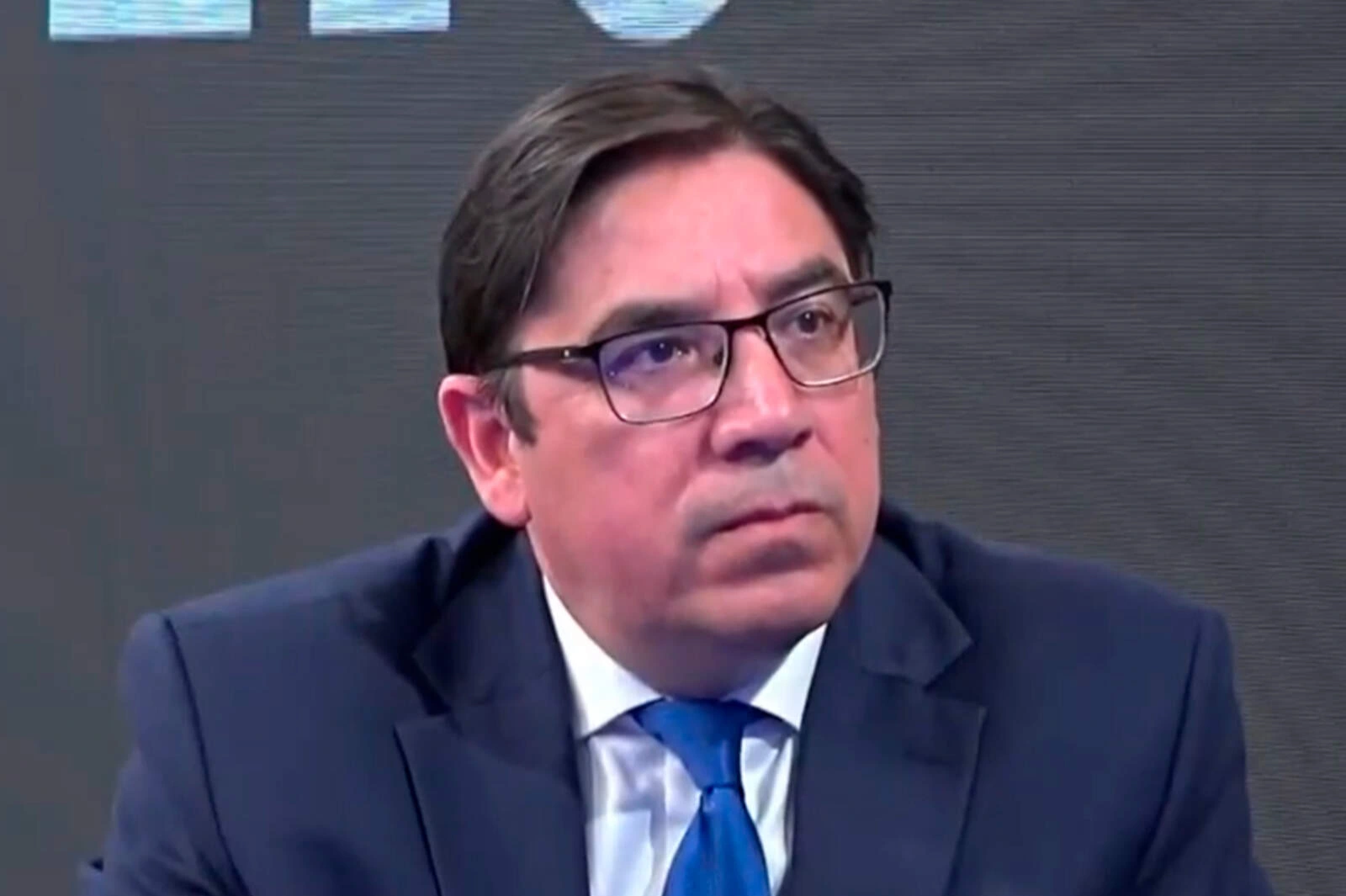
The national government tightened its position in the face of repeated strikes in public universities and focused on the University of Buenos Aires (UBA), pointing out the direct impact that these measures have on students.
The Undersecretary of University Policy, Alejandro Álvarez, revealed convincing figures: out of 37 days of scheduled classes, 16 were affected by force measures, representing 43.24% of classes lost.
“The system cannot work with almost half of the academic calendar interrupted,” they slip from the ruling party, where concern is growing about the lack of educational continuity.
Strategic stoppages and affected schedule
As
Álvarez explained, the stoppages were not only numerous, but they were also concentrated on key dates in
the academic calendar.
The first strike coincided with the holidays of March 23 and 24, while another was extended during Holy Week. Added to this was a new measure that coincided with the May 1 holiday, generating a cumulative effect that deepened the loss
of school days.
The
Government interprets this scheme as a deliberate strategy that amplifies the impact
of force measures and directly harms students.
Criticism of the UBA: “Autonomy is not impunity”
One of the strongest points of the official message was the questioning of the use of university autonomy. Álvarez was categorical in stating that this principle cannot become a tool for political sectors to condition the functioning of the education system
.
“University autonomy exists to guarantee academic independence, not for a political faction to hijack public education,” the official said.
At Casa Rosada, they consider that what happens at the UBA reflects a logic of politicization that ends up violating students' basic right to have classes.
The Government seeks to organize the university system
The official position aims to move towards a scheme where universities guarantee effective compliance with the academic calendar. In this regard, the demand to make up for lost days appears as a central measure to prevent students from continuing to be the main victims.
From the Government environment, they stress that public education must be at the service of students and not subordinated to sectoral or trade union interests.
An in-depth debate: educational quality vs. political conflict
Álvarez's argument reopens a broader discussion about the functioning of the university system in Argentina. For the Government, the repetition of stoppages and the lack of mechanisms to compensate for lost days highlight a structural problem
.
In this context, the UBA is once again at the center of the controversy, not only because of the magnitude of the days without classes, but also because of the lack of concrete answers to guarantee academic continuity.