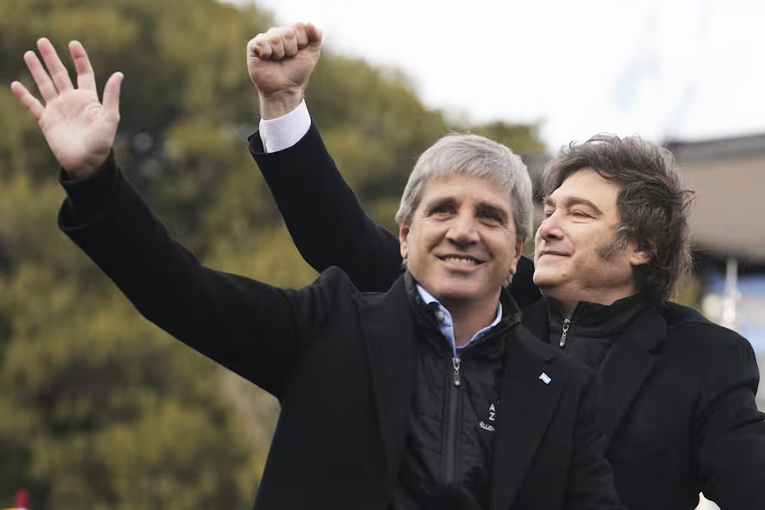
The Minister of Economy, Luis Caputo, advanced with a new sign of fiscal discipline within the Government of Javier Milei. Within this framework, all ministries were instructed to submit, within just one month, an adjustment plan that contemplates a reduction of 2% in current expenditure and 20% in capital expenditure in their respective portfolios
.
The measure mainly aims to cut bureaucratic structures and improve the efficiency of the State, focusing on the optimization of resources and the elimination of items considered to be non-priority. The scheme differentiates between operating and investment expenses, marking a technical and segmented approach to the adjustment.
If confirmed, the request would imply a new phase in the process of reducing public spending, deepening the adjustment scheme that the Government has been implementing since the beginning of the administration. In this framework, the focus would not be placed on sensitive areas but on cutting administrative structures and operating costs
.
The announcement, not yet formalized through official channels, reinforces the Executive's line of discourse, which insists on the need to reduce the size of the State as a condition for stabilizing the economy and generating sustained growth.
The State's total plant fell by 19%, from 343,357 workers in November 2023 to 276,952
today.
This implies the departure of 66,405 public employees, within the framework of a policy aimed at reducing spending, sustaining the fiscal surplus and moving forward with the reduction of taxes. The cut impacted both the National Public Administration and State companies and corporations, with special emphasis on decentralized structures
.
More than 15,000 deregulation and economic opening
According to official data, more than 15,000 reforms have already been implemented aimed at eliminating bureaucratic obstacles and freeing up the functioning of the market
.
The plan, led by Minister Federico Sturzenegger, included the elimination of price controls, permits, quotas and restrictions in key sectors such as energy, transport and foreign trade.
These measures were complemented by the simplification of procedures, administrative digitalization and economic openness, with the objective of creating a more favorable environment for private investment.
The impact has already begun to be reflected in the main indicators: Argentina climbed 39 places in the Economic Freedom Index 2026 andGDPshowed signs of recovery, marking a change in trend after years of stagnation.