The renowned economic historian from Harvard stated that the Argentine president is leading a more profound transformation than Thatcherism and Reaganism, and he assured that his libertarian approach is already emerging as a global example in the face of the failure of the populist model.
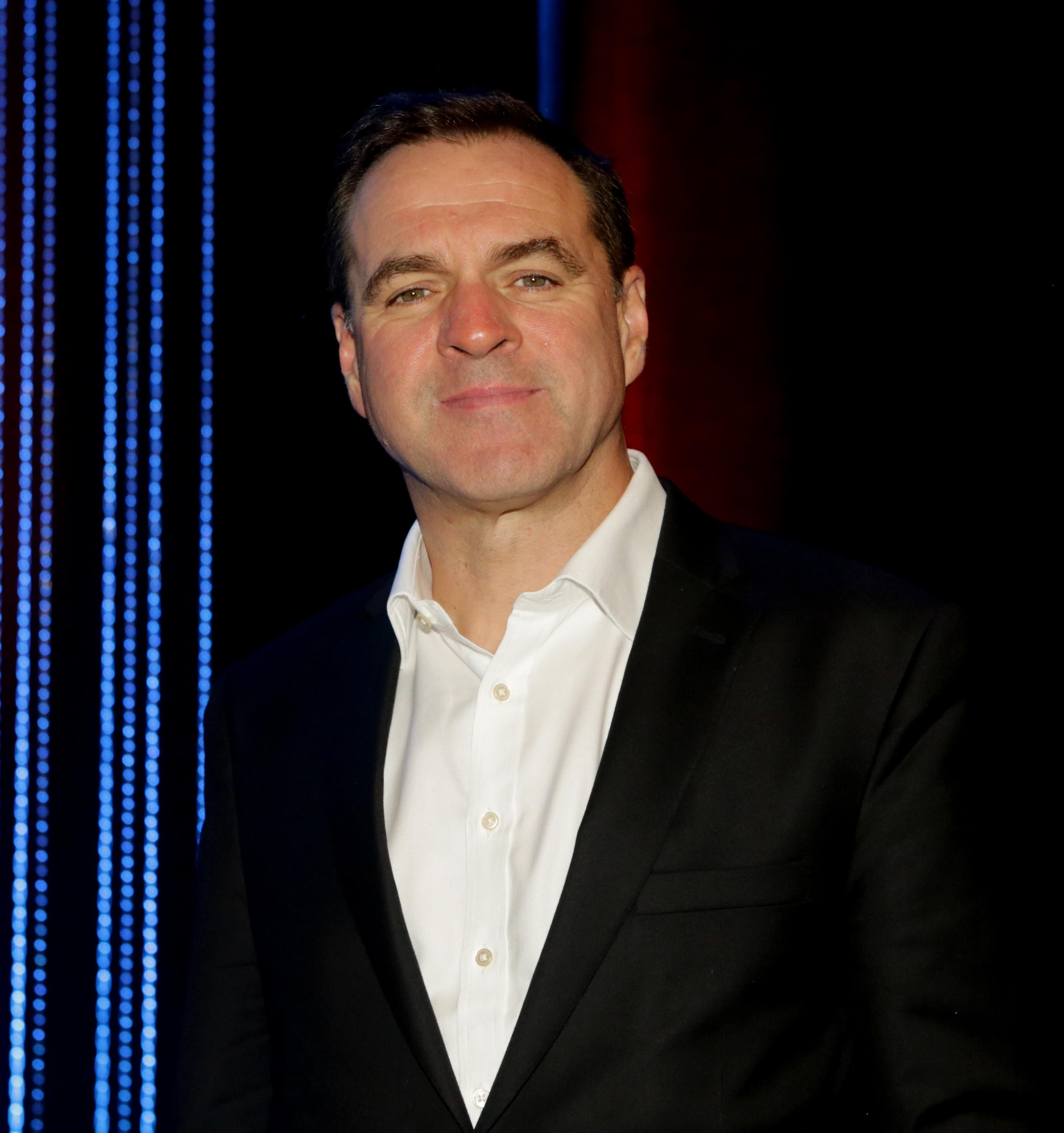
The economic and political course promoted by the government of Javier Milei continues to have repercussions on the world's main financial and intellectual centers. During ArgentinaWeek held in New York, renowned economic historian Sir Niall Ferguson, professor at Harvard University and one of the most influential voices in contemporary economic thought, openly praised the Argentine president and highlighted his character profoundly intellectual of his political leadership.
The Scottish specialist, a nationalized American, participated in a talk with businessman Pierpaolo Barbieri in the JP Morgan building located on Park Avenue, where he analyzed the impact of the reforms promoted by the current Argentine administration. There, he argued that the political phenomenon led by Milei represents an exceptional case in contemporary politics and assured that the Argentine president has an unusual intellectual profile among world leaders
. Javier Milei and Niall Ferguson.
“What moved me when Javier Milei burst onto the political scene was that there would be no gradualism if he was elected president,” Ferguson said, recalling the rise ofthe libertarian leader on the political scene. In this regard, he emphasized that the approach of profound reforms adopted by the Argentine government marked a break with decades of gradualist policies that, according to various analysts, contributed to the country's prolonged
economic crisis.
The historian also argued that Milei's thinking is not always understood in international political circles.
“I'm not sure how much it's understood in the United States, and it's certainly not well understood in Europe,”he said, before recounting a meeting he had with the Argentine president last summer with Barbieri himself.
According to Ferguson, that conversation left a strong impression on the intellectual level of the Argentine head of state. “I don't think he realized that he's the most radical intellectual libertarian leader the world has ever seen. Not just Argentina, the world. When you sit down with Javier Milei, it's a type of economics seminar. He almost has a professorial style. He is much more intellectual than any politician I have ever met,” said the academic.
The Harvard professor also described the conversations with the president as an academic experience in itself. “It's almost like a reading list,” he laughed, explaining that every meeting with the Argentine president usually ends with new book recommendations or ideas to go deeper. “Every time I talk to him, I come out with homework,” she added.
Niall Ferguson In his analysis of the political vision of the Argentine government, Ferguson emphasized that the defense of freedom constitutes the central axis of the political project led by Milei.
“He is a man for whom freedom is the central purpose of the government, of his presence in power, and that is stimulating to me,” he said
.
The historian also highlighted the speech that the president gave during Argentina Week, pointing out that far from opting for a superficial message or aimed solely at generating applause, he chose to deepen the philosophical foundations of his political program. “I could have come here and given an easy-going political speech. He could have given us a handful of lines to applaud, but no. He carefully explained to us what the political theory of his government is, where the roots of the ideals of freedom come from, why the free market is a moral imperative, and not just one justified by efficiency,” he explained
.
For Ferguson, this defense of the free market connects directly with the classic ideas of liberal economics. In that sense, he described Milei as a leader who promotes the principles of Adam Smith with a conviction that is unusual in contemporary politics. “This is something powerful and the exciting thing is that, the more successful it is, the more the rest of the world will have to pay attention to this extraordinary missionary, Javier Milei, who preaches Adam Smith's ideas about the free market as something closely connected to a civil society based on freedom
,” he said.
The historian also questioned the characterizations that some sectors make of the Argentine president. “To characterize President Milei as a kind of eccentric rock'n'roll populist is to completely lose the reality that he is the world's leading political intellectual and, by a happy coincidence, the Argentinian population gave him a chance,
” he said.
In his diagnosis of the Argentine context, Ferguson considered that the country is going through a key moment of economic transformation. “Argentina is changing economically with perfect timing,” he said, while stressing that Argentine society reached a point of saturation compared to the dominant political model for decades. “It has an educated population that grew tired of Peronism,” explained the historian, who described the economic situation prior to the current government as extremely critical. “It was only football that kept the country running, because everything else was wrong,”
he said.
Ferguson also recalled a previous conversation with Barbieri after visiting Argentina, in which he anticipated that the country was ready for profound change. “When a population has reached the point of being on the brink of another hyperinflation, which I think was the case in Argentina, when all the Peronist game with all its associated corruption has reached a point where it is no longer sustainable, then people are ready to take risks with radical reform,”
he explained. The president, Javier Milei.
In that context, he recalled pointing out to the Argentinian businessman: “People are ready. They are ready for regime change, and only Milei offers the kind of radical solution that will work.” The academic also analyzed the capacity of the Argentine president to combine his libertarian ideology with modern tools of political communication. As he explained, Milei was able to connect especially with young voters through social networks, something he considers unusual among right-wing leaders at the global level
.
“It combines that radical libertarian ideology, these principles that he holds so passionately, with a knack for the new politics of social networks. It's extraordinarily good at connecting especially with young voters. There are very few right-wing leaders in the world capable of doing that,” he said.
Fergusoneven compared the fiscal results of the first year in office of the Argentine government with those achieved by one of the most emblematic figures of economic liberalism of the 20th century: former British Prime Minister Margaret Thatcher.“I said to him when we met: 'Do you realize that you have done in a year of fiscal policy what took the Margaret Thatcher government 10 years? '” , he recounted. According to his analysis, “what the Milei government achieved in the first year took 10 years for the Thatcher government
”.
The historian recognized that the reform process necessarily involves costs and adjustments. “It was inevitable that there would be some pain, even if the growth rate has been maintained, because there are a lot of things in motion,” he explained.
Despite this, Ferguson believes that the Argentine experience could be transformed into an international reference model. “Argentina is an example of radical fiscal and structural reform,” he said, arguing that even powers such as the United States could closely observe the process taking place in the South American country. “Perhaps the United States could learn something from Argentina's fiscal policy,” he said.
Finally, the academic concluded that the Argentine challenge has a meaning that transcends its own borders. “That's Argentina's role: to show the world that something even more radical than Thatcherism and Reaganism can succeed,” he said. “If we achieve that together, if the United States can help as it has already done, support Argentina, that's a huge victory, not only for Argentines, but for humanity,”