Archaeologists have confirmed the existence of a submerged medieval city in Kyrgyzstan, which was key to the Silk Road
Nuevo
Agregar La Derecha Diario en
Compartir:
An international team of specialists has confirmed the existence of a medieval submerged city in Kyrgyzstan, a discovery that promises to rewrite part of the urban and commercial history of Central Asia. The research revealed surprisingly well-preserved structures beneath Lake Issyk-Kul.
The excavations focused on Toru-Aygyr, an archaeological site located at the northwestern edge of the lake. This settlement, inhabited for centuries by various cultures, is believed to have been a point along the historic Silk Road.
Confirman la existencia de una ciudad medieval sumergida en Kirguistán
A submerged city that remained hidden for centuries
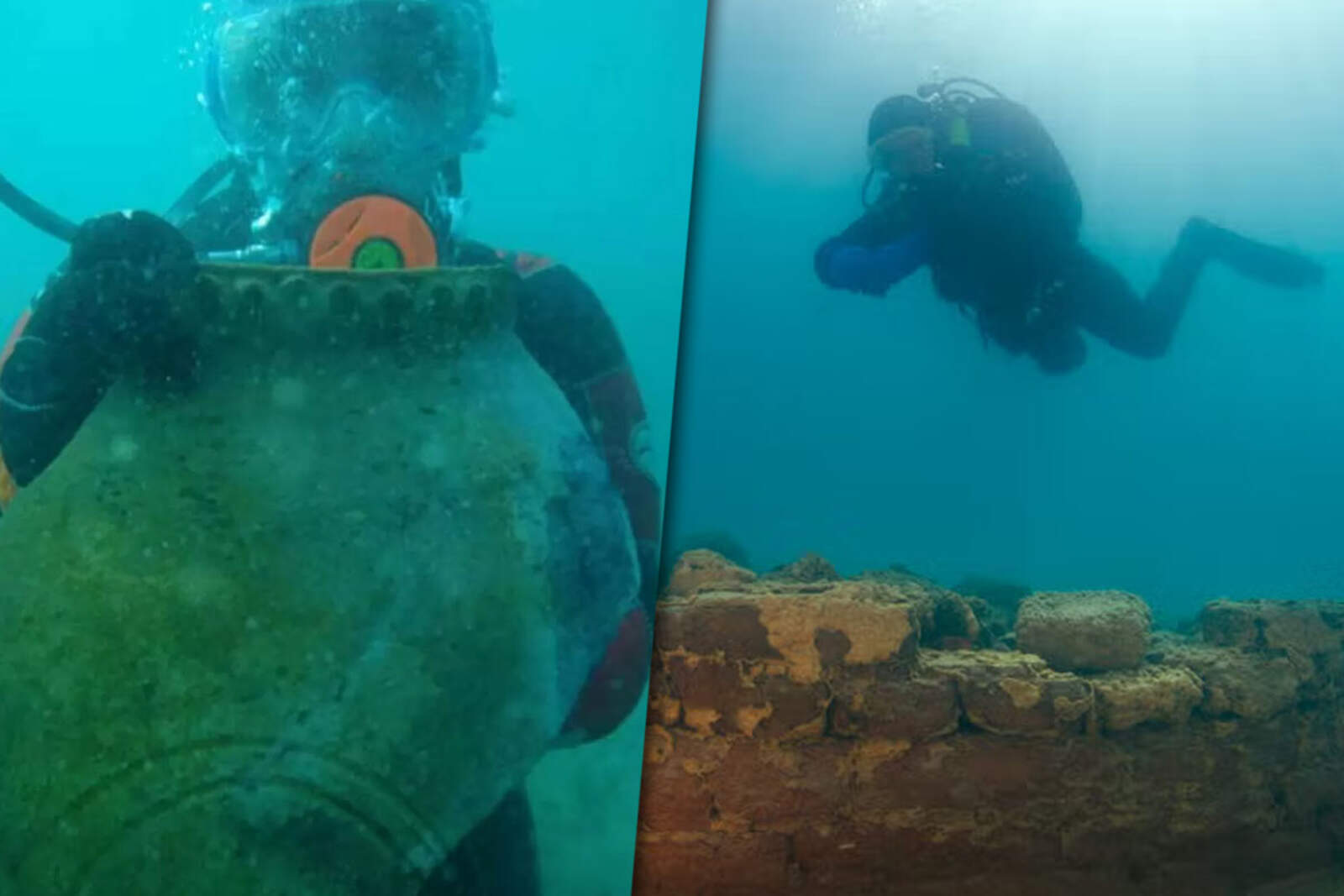
Archaeologists identified constructions at depths between one and four meters (3.3 and 13.1 feet). Buildings made of baked brick, enormous ceramic fragments, remains of a mill, and elements indicating the presence of mosques and public baths were found. The scale of the discovery confirms that it was a prosperous urban center.
According to the researchers, Toru-Aygyr reached its peak between the 10th and 15th centuries, during the rule of the Kara-Khanids.
The earthquake that sank it
The settlement is believed to have been abandoned after a strong earthquake in the 15th century, which caused its partial submersion in the lake. Among the most astonishing findings is an Islamic cemetery from the 13th and 14th centuries that covers about 60,000 square meters (645,835 square feet).
Toru-Aygyr alcanzó su auge entre los siglos X y XV
The graves, oriented toward Mecca, allowed the recovery of skeletons that will provide key data on health, funerary customs, and diet of the period.
To document the site, the team used drones, advanced navigation systems, and digital mapping techniques. These resources made it possible to create a detailed map that will be essential for future excavations and for preserving the site against natural deterioration.