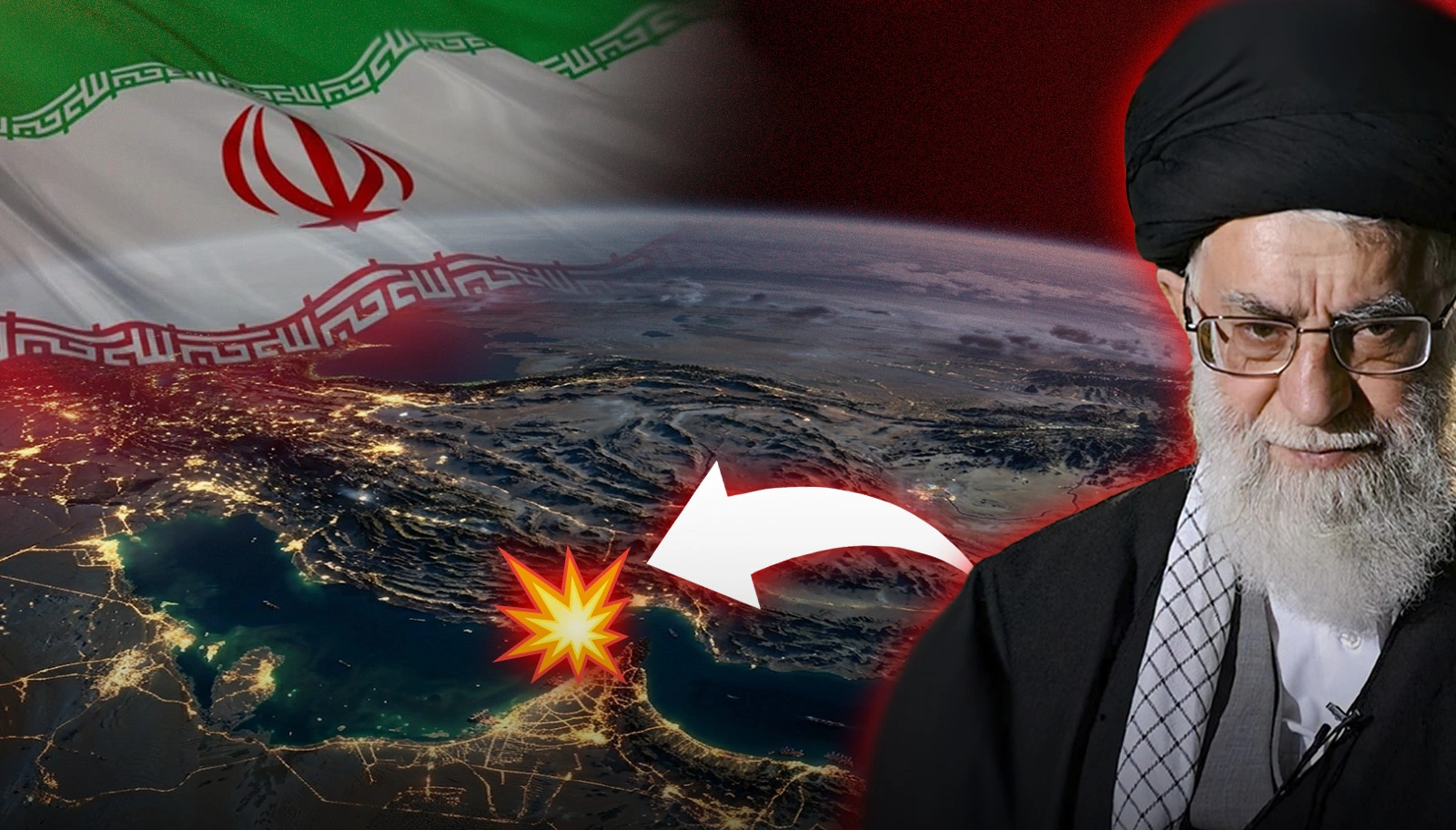
Tensions in the Persian Gulf intensified this Saturday after an official of the European naval mission Aspides revealed that vessels sailing through the Strait of Hormuz received VHF radio transmissions attributed to the Iranian Revolutionary Guard warning that “no ship can cross the strait”. Although Tehran did not officially confirm the order, the message set off alarms on one of the most strategic maritime routes
on the planet.
The incident takes place in the context of a strong regional escalation following the joint military operation between the United States and Israel against strategic objectives on Iranian territory. Although Iran has repeatedly threatened to block the strait in response to pressure or attacks, until now it has never executed a total closure of
the road.
The Strait of Hormuz connects the Persian Gulf with the Gulf of Oman and the Indian Ocean, separating Iran from the Omani peninsula of Musandam. Its narrowness, about 50 kilometers at its narrowest point, and its limited depth make it a vulnerable bottleneck from a military point of view
.
In addition, it is surrounded by strategic islands under Iranian control, such as Hormuz, Qeshm and Larak, as well as disputed territories such as Abu Musa and the Tunb Islands, giving Tehran a dominant position over the area.
According to the U.S. Energy Information Administration (EIA), approximately one-fifth of the world's consumption of petroleum and petroleum products, some 20 million barrels a day in 2024, passes through this maritime passage.
In addition, about 20% of global liquefied natural gas trade crosses the strait, largely from Qatar. More than 80% of these energy flows are destined for Asian markets
.
The EIA warns that there are few viable alternatives if the strait were to be blocked. Although Saudi Arabia and the United Arab Emirates have infrastructures that allow part of the crude oil to be diverted along alternative land or sea routes, their combined capacity barely reaches 2.6 million barrels per day, a fraction of the total volume that circulates through
Hormuz.
The recent warnings have been interpreted as an attempt at strategic pressure by Iran. The Revolutionary Guard, which controls Iranian naval operations in the Gulf, has been involved in multiple incidents in the area in recent years
.
Since 2018, when the United States withdrew from the nuclear agreement and imposed new sanctions on Tehran, there have been attacks on oil tankers, seizures of ships and episodes of harassment of commercial and military vessels.
In 2019, sabotage against ships in the Gulf, the shooting down of a US drone and the capture of oil tankers increased the risk of direct confrontation. In 2021, an attack on a ship operated by a company linked to an Israeli businessman left two dead; several Western governments held Iran responsible, which denied involvement
.
In 2024, the Revolutionary Guard seized the MSC Aries container ship alleging links to Israel. More recently, this year, Iranian boats approached an American-flagged oil tanker before
it continued its journey.
The history of incidents in Hormuz goes back even to the Iran-Iraq war, when the so-called “oil tanker war” left hundreds of vessels damaged or destroyed. This historical precedent now fuels international concern at any sign of a possible blockade
.
For the time being, a formal closure of the strait has not been confirmed. However, the warnings transmitted to commercial ships have increased uncertainty in energy markets and have reinforced fears that the current military escalation will have global economic repercussions
.