The Israel Defense Forces destroyed a network of tunnels and a weapons depot belonging to Hezbollah as they continue operations to eliminate threats on the northern border
The Israel Defense Forces (IDF) reported that they continue to carry out military operations in southern Lebanon to neutralize the terrorist infrastructure of Hezbollah, as part of the campaign aimed at protecting Israeli communities located along the northern border.
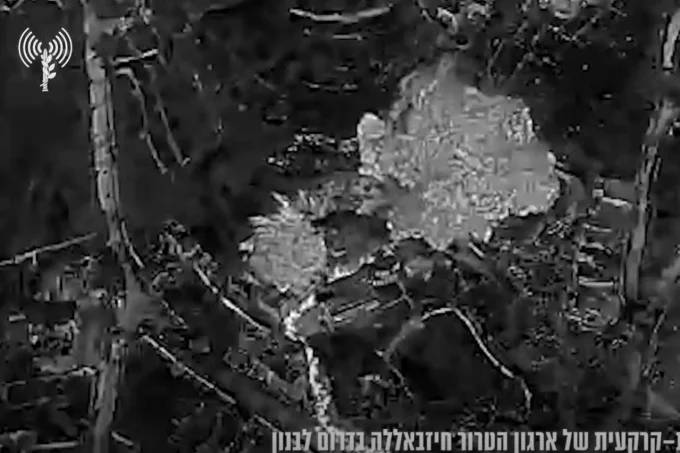
During an operation in the town of Sarbin, troops from the 300th Brigade alongside the combat engineering unit Yahalom destroyed an extensive network of underground tunnels used by the terrorist organization to plan and execute attacks against Israeli forces.
The images released by the IDF show a powerful explosion that travels throughout the underground structure, rendering the tunnel system built by Hezbollah unusable.
Israel also destroyed a Hezbollah weapons depot
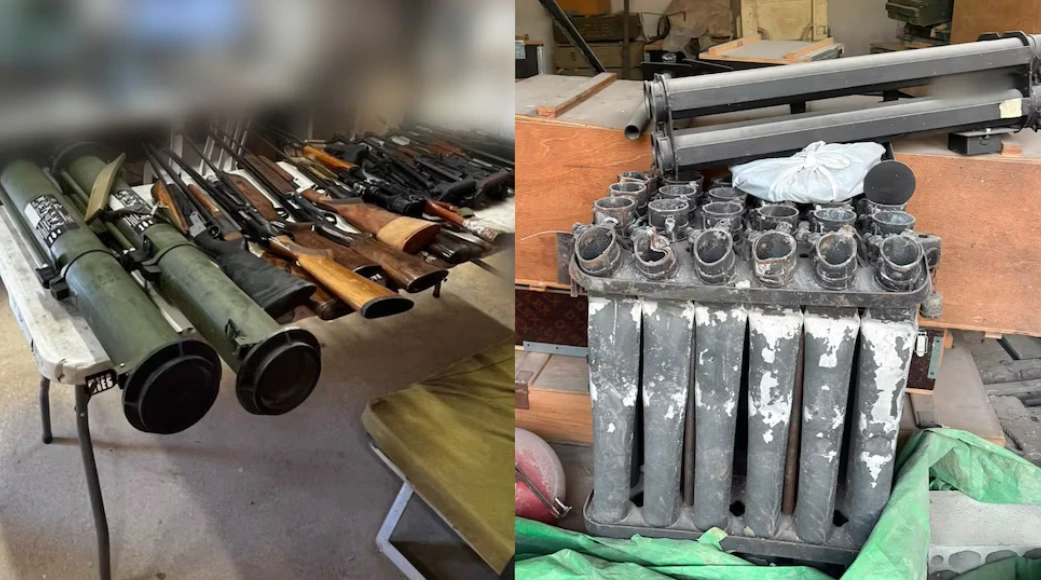
In parallel, the IDF reported that the Kfir Brigade located and destroyed a significant weapons depot belonging to Hezbollah.
According to the military report, the troops found rocket launchers, missiles, Kalashnikov rifles, anti-tank rockets, and various military equipment that was ready to be used in attacks against Israeli territory.
Additionally, the 4th Brigade identified dozens of additional combat assets during operations carried out in various areas of southern Lebanon.
Israel also destroyed a Hezbollah weapons depot
The Israeli Army emphasized that these actions aim to eliminate Hezbollah's military capabilities and prevent new attacks against the Israeli civilian population.
Negotiations between Israel and Lebanon progress
While military operations continue, representatives from Israel and Lebanon held a new round of talks in Rome, mediated by the United States, to advance the implementation of the framework agreement reached in June.
The goal of the negotiations is to finalize the gradual withdrawal of Israeli troops from southern Lebanon, accompanied by the deployment of the Lebanese Army in border areas to prevent Hezbollah from re-establishing military infrastructure.
The U.S. State Department indicated that the talks also aim to resolve outstanding border issues and move toward a permanent peace and security agreement between the two countries.
The Lebanese Prime Minister blamed Hezbollah for the war
Amid the diplomatic process, Lebanon's Prime Minister, Nawaf Salam, launched harsh criticisms against Hezbollah and blamed the terrorist group for dragging the country into a war that caused thousands of casualties and a deep humanitarian crisis.
The Lebanese Prime Minister held Hezbollah responsible for the war
"The useless war adventures gave Israel the pretexts to attack our country, destroy our cities, and displace hundreds of thousands of people," Salam stated in a message posted on the social network X.
The head of government maintained that Lebanon can only fully regain its sovereignty when there is a single national army with exclusive control over all territory, in a direct criticism of the parallel military structure maintained by Hezbollah.
The statements came in response to the leader of the terrorist group, Naim Qassem, who again rejected negotiations with Israel and demanded the suspension of any peace dialogue.
The United States urged cautious progress
For its part, the United States reiterated its support for the negotiation process, although it called for gradual progress to avoid new risks for the civilian population.
The U.S. ambassador to Lebanon, Michel Issa, stated that accelerating the process could endanger the inhabitants of the areas affected by the conflict and argued that it is preferable to properly consolidate the initial stages before extending the agreement to other regions.
Although the level of violence decreased following the understandings reached in June between Washington, Jerusalem, and Beirut, Israeli authorities continue operations against Hezbollah's terrorist infrastructure to prevent the organization from using southern Lebanon as a platform to launch attacks against Israel.