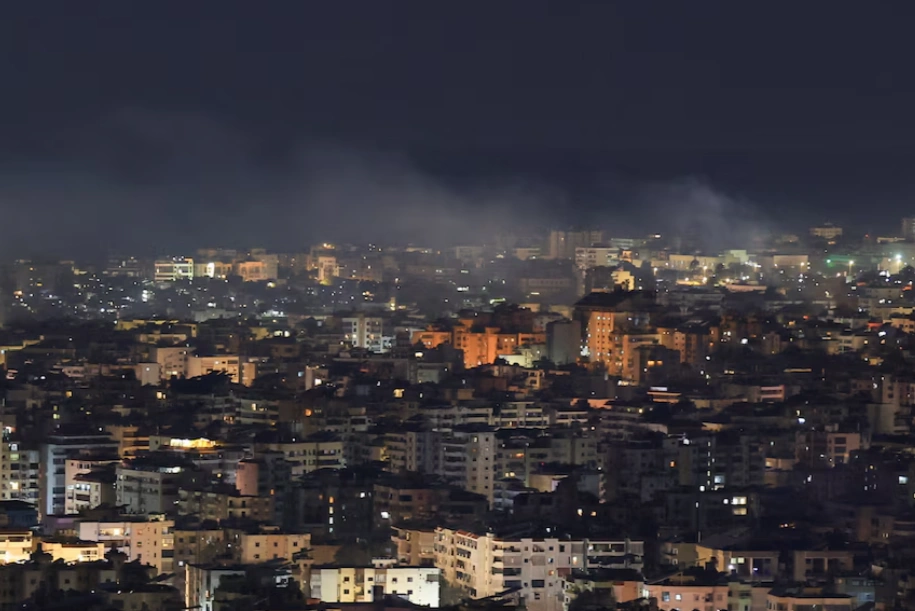
The Israeli offensive generated displacements in southern Lebanon and in the southern suburbs of Beirut, where Hezbollah maintains a strong military presence.
On Monday, Israel intensified its military offensive on Lebanese territory, with bombings concentrated on the southern suburbs of Beirut and in various locations in the south of the country, after the terrorist group Hezbollah launched precision missiles and drones against the Israeli north.
The Israel Defense Forces (IDF) confirmed carrying out “large scale attacks” against strategic positions of Hezbollah, backed by Iran, after projectiles hit areas near Haifa and other northern areas of the Jewish State.
Preventive evacuations and warnings from the Israeli Army
During the early morning, the IDF spokeswoman for Arab media, Ella Waweya, ordered the evacuation of 53 towns and cities in southern Lebanon. Through a message released on X, he urged residents to move at least 1,000 meters away from populated areas where Hezbollah operates, with the aim of preserving civilian security in the face of new military actions
.
Waweya stressed that “Hezbollah activities are forcing the IDF to respond” and warned that anyone close to the armed group's infrastructure or weapons “puts their lives at risk.”
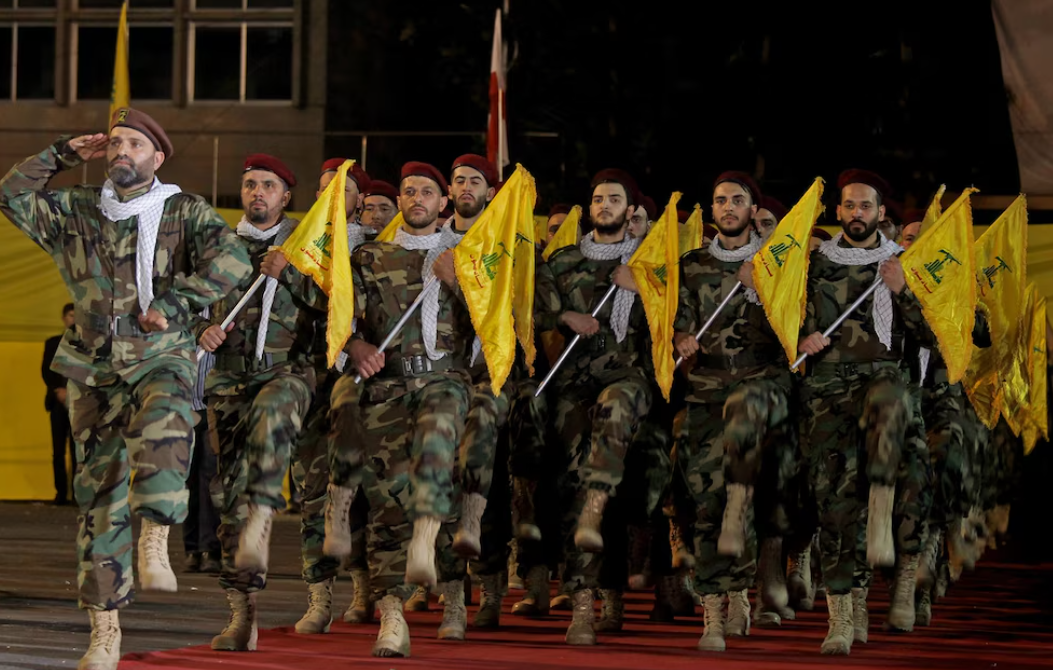
Hezbollah terrorists
The attack on northern Israel
Hezbollah claimed responsibility for a missile and drone attack against the city of Haifa and other locations in northern Israel, which was presented by the organization as retaliation for the death of the Iranian supreme leader, Ali Khamenei
.
Anti-aircraft alarms were activated in multiple Israeli cities. Air defenses intercepted several projectiles and, according to the military side, others fell in open areas without causing casualties or
significant damage.
The IDF said that one of the rockets was neutralized in flight and at least two others hit depopulated areas, avoiding major consequences.
Regional escalation and tension in Lebanon The
Israeli offensive generated displacements in southern Lebanon and in the southern suburbs of Beirut, where Hezbollah maintains a strong presence. Lebanese authorities compared the magnitude of the exodus with the start of the open war in September 2024, when nearly 1.2 million people left their homes
in a few days.
The President of Lebanon, Joseph Aoun, said that rocket attacks from Lebanese territory harm his Government's efforts to prevent the country from being caught up in a larger regional conflict. He noted that the missile launch contradicts the official policy of trying to keep Lebanon out of confrontation
.
Israel expands operations against Hezbollah
The IDF confirmed that its operations cover “all Lebanese territory” where Hezbollah's military infrastructure is detected, in direct response to the
shooting claimed by the group.
Hezbollah, for its part, justified the attack on northern Israel as “revenge”, reaffirming its decision to continue hostilities.
The escalation once again raises alarm bells about a possible open war on Israel's northern border, in a context of high regional tension following recent indirect clashes between Iran and the United States.
While both sides maintain their determination to continue military actions, the international community views with concern the humanitarian impact on Lebanon and the risk of a further expansion of the conflict in the Middle East.