The meeting was organized by the Latin American Jewish Congress and the Israeli Foreign Ministry. Political, judicial, and diplomatic authorities participated to coordinate actions against hatred towards Jews
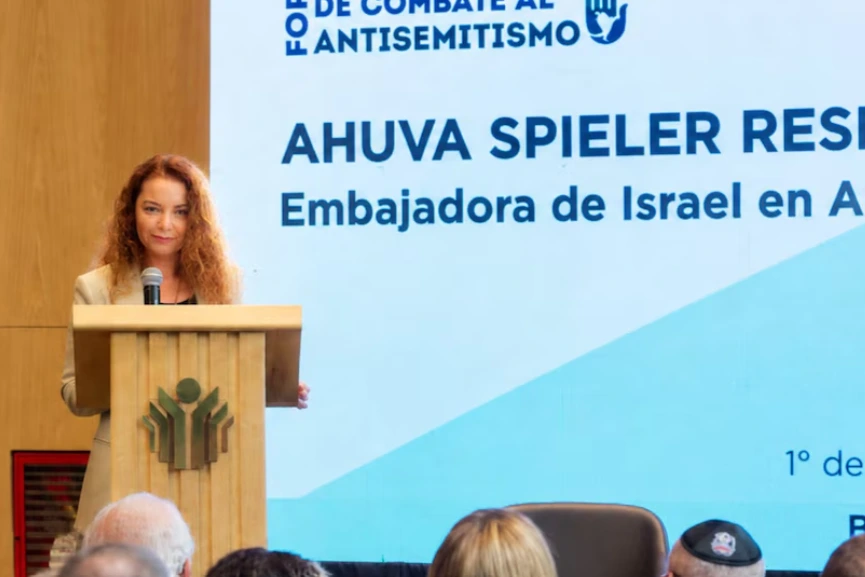
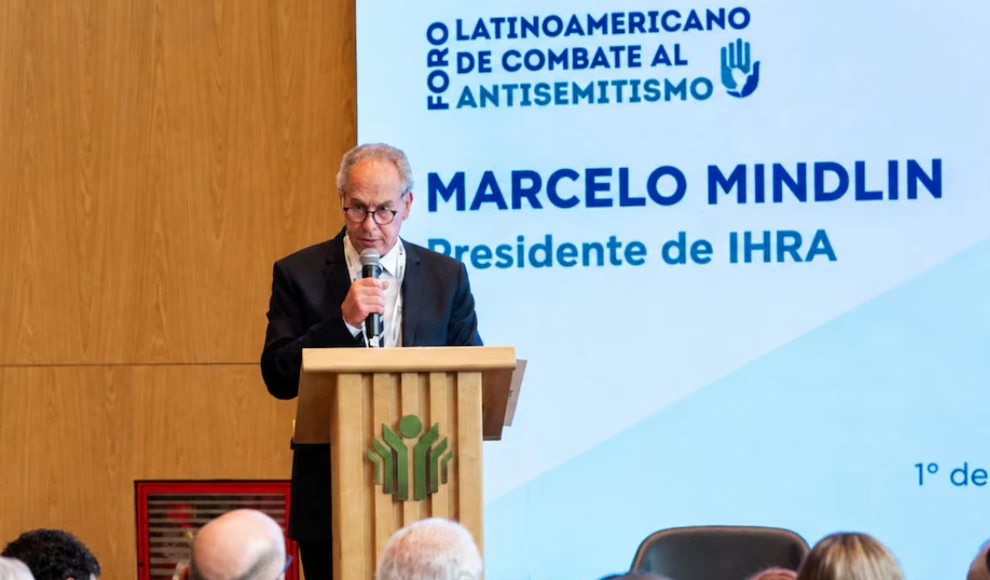
The event featured the presence of Jack Terpins, president of the Latin American Jewish Congress; Marcelo Mindlin, president of the IHRA; Michaela Küchler, secretary general of the organization; Ahuva Spieler Reshef, ambassador of Israel to Argentina; and Rabbi Yehuda Kaploun, U.S. special envoy to Monitor and Combat Antisemitism.
During her speech, the Israeli diplomat emphasized the importance of preserving the historical memory of the Holocaust and renewing international commitment against antisemitism.
“If hatred has gone viral, let us make the democratic courage to defend historical truth an unstoppable force. History is not written by those who remain silent; it belongs to those who choose to hold the conversation. That is why we are here,” she stated.
Israel hosted the Latin American Forum for Combating Antisemitism, an international meeting that brought together representatives from 13 Latin American countries to analyze the growth of hatred against Jews and coordinate institutional responses. The initiative was organized by the Latin American Jewish Congress (CJL) along with the Ministry of Foreign Affairs of Israel and gathered important political, judicial, and diplomatic authorities from the region.
The meeting aimed to strengthen cooperation among Latin American governments and promote concrete policies to prevent and combat various manifestations of antisemitism. Among the main topics addressed were the impact of the Hamas terrorist attacks on October 7, 2023, the expansion of hate speech on the internet, and the need to reinforce the commitment of states against discrimination towards the Jewish community.
Notable participants included the president of the Chamber of Deputies of Paraguay, Raúl Latorre; the president of the Supreme Court of Justice of Uruguay, Doris Morales; the commissioner of the Organization of American States (OAS) for combating antisemitism, Fernando Lottemberg; the Argentine representative to the International Holocaust Remembrance Alliance (IHRA), Fabiana Loguzzo; and the president of the Federal Chamber of Criminal Cassation of Argentina, Diego Barroetaveña.
Israel called on Latin American governments to combat antisemitism
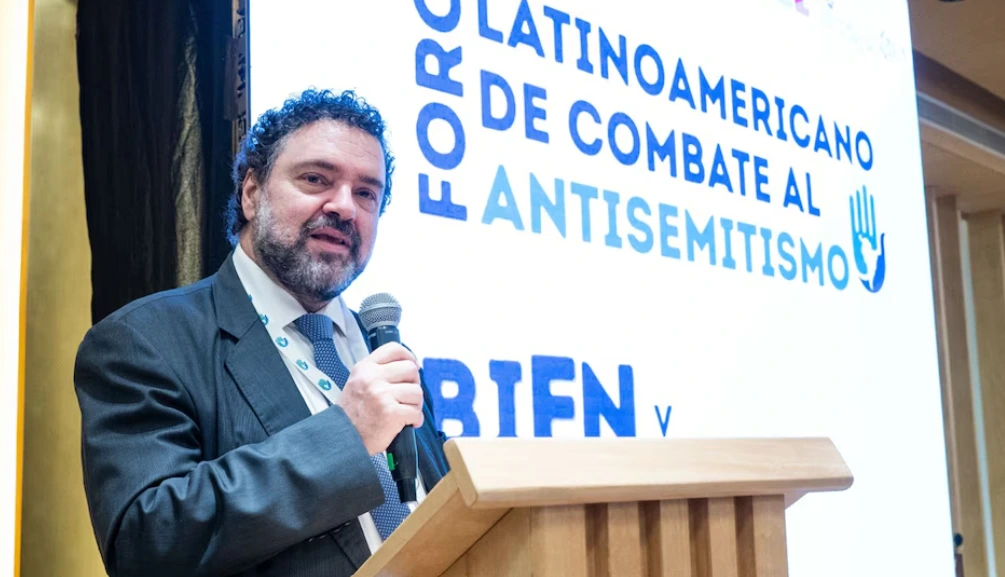
During the opening, the executive director of the Latin American Jewish Congress, Claudio Epelman, stated that the responsibility of societies regarding antisemitism does not end with the public condemnation of attacks but requires concrete measures to prevent their recurrence.
“Incidents against Jews do not make a society antisemitic. What makes a society antisemitic is when those events are not fought against. When they are not prevented. When silence is kept and indifference is shown,” he asserted.
For her part, Arezoo Hersel-Rohila, director of the Department for Combating Antisemitism and Holocaust Remembrance of the Israeli Foreign Ministry, called on countries in the region to incorporate the recognition and addressing of antisemitism into their national policies against discrimination and hate crimes.
Marcelo Mindlin, president of the IHRA
The official also emphasized the need to understand the new expressions of the phenomenon, including those related to Israel, and demanded that diplomatic commitments translate into effective measures.
“Our responsibility is to go beyond statements and ensure that the commitments we share translate into concrete and meaningful actions,” she stated.
The opening concluded with remarks from Mario Bramnick, president of the Latino Coalition for Israel (LCI), who highlighted the role of religious leaders and civil society in the fight against discriminatory speech.
“It is the responsibility of religious leaders and society as a whole to confront antisemitism,” he expressed.
The IHRA presented its work in Latin America
One of the central moments of the forum was a joint plenary session with the International Holocaust Remembrance Alliance (IHRA), which presented its work in Latin America for the first time and opened a space for dialogue and cooperation with representatives from participating countries.
The participation of the IHRA allowed for the incorporation of international experience in Holocaust memory, education, and the prevention of various forms of antisemitism into the debate.
Claudio Epelman, executive director of the Latin American Jewish Congress (CJL)
Antisemitism after October 7 and the challenges of artificial intelligence
Throughout the sessions, representatives from the 13 countries analyzed different dimensions of contemporary antisemitism and the challenges institutions face in responding to its expansion.
One of the main focuses was the evolution of antisemitic expressions in Latin America after the Hamas terrorist attack against Israel on October 7, 2023. Participants also debated the spread of hate speech in digital environments, the distortion and trivialization of the Holocaust, and the impact of new technologies.
In particular, the challenges posed by artificial intelligence were addressed, both for its capacity to amplify discriminatory content and for the difficulties states face in preventing its circulation.
Another central topic was the role of public authorities and the judiciary in protecting Jewish communities. In this sense, the forum promoted the exchange of experiences on institutional tools, prevention mechanisms, and policies aimed at ensuring equality before the law.
Specific spaces were also developed regarding the responsibility of religious leaders in the face of hate speech and the importance of strengthening democratic institutions to build societies more resilient to discrimination.
At the closing of the activities, Epelman reiterated the need to coordinate international responses to the growth of antisemitism.
“The growth of antisemitism and its new manifestations constitute a warning sign that demands much more than diagnoses: it requires commitment, cooperation, dialogue, and coordinated actions,” he affirmed.
The meeting highlighted the need to deepen collaboration between Israel and Latin American countries, with the aim of transforming statements condemning antisemitism into public policies, judicial cooperation, and concrete prevention actions.