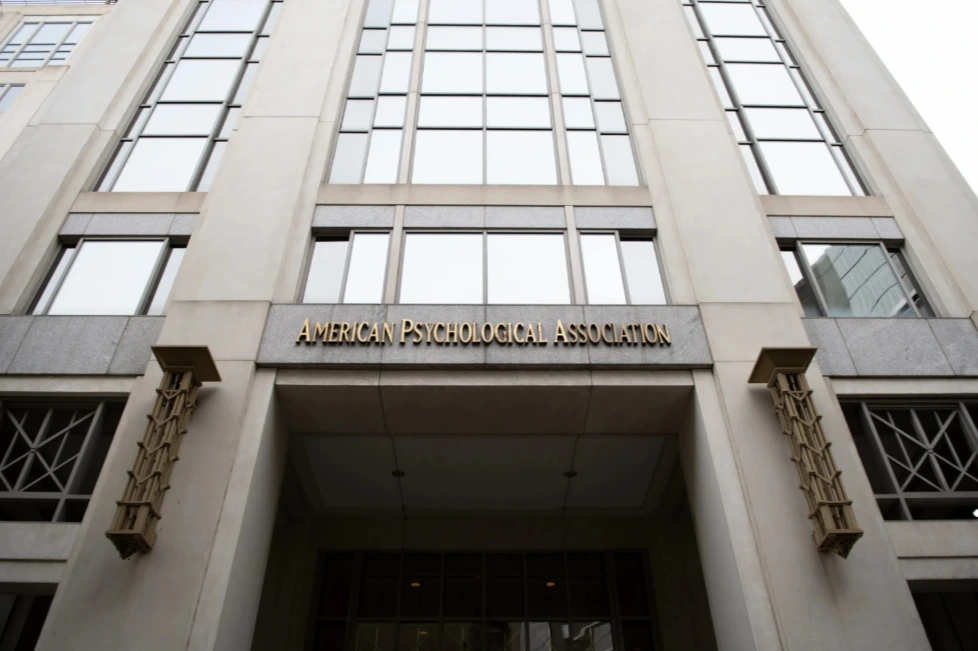







A report from the Education and Labor Committee of the U.S. House of Representatives denounced the existence of an antisemitic climate within the American Psychological Association (APA) and questioned the response of its authorities to repeated complaints from Jewish professionals. The investigation exposed internal communications, institutional decisions, and academic publications that, according to lawmakers, demonstrate a growing politicization of the organization and a lack of measures to combat discrimination.
The document, titled Antisemitism at the American Psychological Association, argues that groups of radicalized activists managed to influence the entity's decisions, while its authorities prioritized the demands of organizations critical of Israel and dismissed the concerns of its Jewish members.
The investigation was formally initiated in December 2025, under the chairmanship of Republican Congressman Tim Walberg, after Jewish professionals reported instances of discrimination in the governing bodies, publications, mailing lists, and annual conventions of the association.
The APA removed references to Hamas terrorism in a statement about October 7
One of the central episodes of the investigation was the drafting of the APA's institutional statement following the terrorist attacks by Hamas against Israel on October 7, 2023.
According to emails examined by the committee, the association's authorities consulted the American Arab, Middle Eastern, and North African Psychological Association (AMENA-Psy), an affiliated organization.
Their representatives requested the removal of references to terrorism from the document. Among the arguments presented, leaders of the entity claimed that using the term "terrorist attacks" was one-sided and that it was used excessively when discussing Arabs.
Internal drafts also included attempts to equate Hamas's attacks with Israeli military responses. Ultimately, the APA published a statement that contained no reference to terrorism.
For the congressional investigators, this episode constitutes one of the most relevant examples of how pressures from groups critical of Israel influenced the institutional decisions of the association.
The investigation also retrieved messages from high-ranking officials in the months following the attack. Among them is a communication from then-president Cynthia de las Fuentes, in 2024, in which she compared the murders committed by Hamas against Israelis with the murder of George Floyd in the United States.
In that exchange, De las Fuentes established a comparison between the police and those who believe that any means is valid to achieve the goals of Zionism. She also stated that George Floyd was representative of the inhabitants of Gaza.
The association's authorities dismissed complaints from Jewish psychologists
Another of the points most questioned by the committee was the internal reactions of the leadership to Jewish professionals who reported the growth of antisemitism within the organization.
According to the emails included in the report, the then-director of diversity at the APA responded with the expression "Ugh!" to one of those communications. Another high-ranking official complained about "the Jews who are so angry with us" and accused them of "feeding hatred" for publicly expressing their concerns.
The document also noted that the association refused to complete a survey from the Anti-Defamation League (ADL) on antisemitism. According to the records examined, staff members considered that the questionnaire was "clearly aimed at finding faults" in the institution.
The investigation also questioned the changes approved in February 2026 in an institutional statement on antisemitism. The Council of Representatives adopted a modified version by 127 votes to 37, which incorporated references to the alleged "instrumentalization of antisemitism" and used the Jerusalem Declaration on Antisemitism as a framework, despite objections from an internal Jewish advisory group.
They rejected recognizing a professional association of Jewish psychologists
The report also examined the opposition of ethnic minority organizations linked to the APA to an initiative to formally recognize a professional association of Jewish psychology.
Among the arguments used to reject the proposal was that Jews benefit from so-called "white privilege" and that, for that reason, they do not face the same forms of structural oppression as other minority groups.



