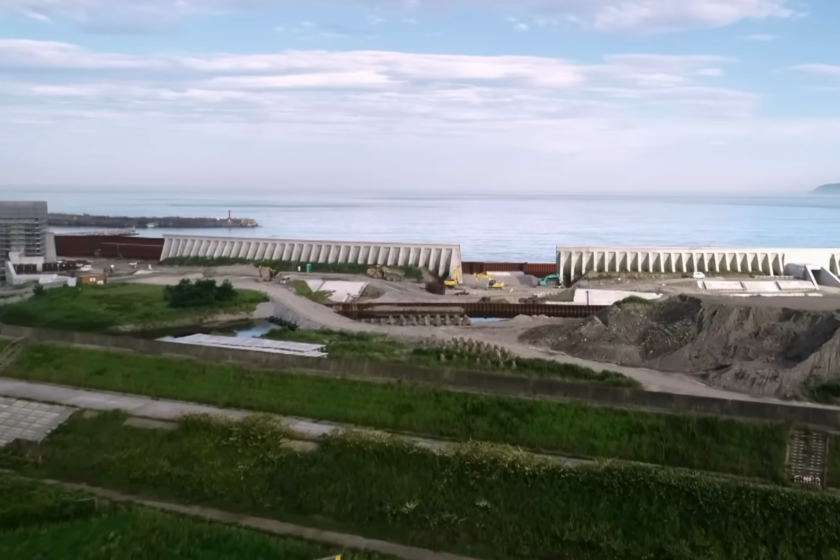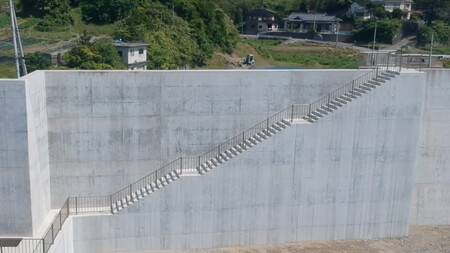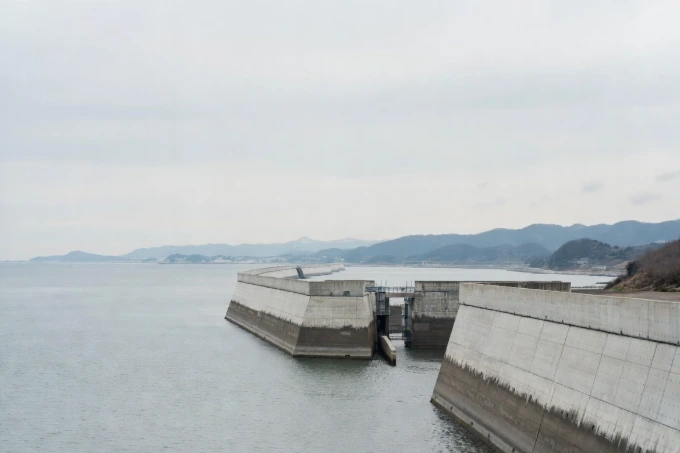

The magnitude 9 earthquake that shook the Tohoku coast on March 11, 2011, generated a tsunami with waves between 12 and 15 meters. The levees that existed at the time, designed to contain waves up to 8 meters, failed in almost 90 percent of cases. The toll was tragic: more than 20,000 people dead or missing and entire towns devastated, including the area around the Fukushima nuclear plant.
Months later, the Japanese government launched one of the largest infrastructure projects in its history. Today, about 396 kilometers of northeast coast are protected by concrete walls and levees. The planned extensions aim to reach 430 kilometers. The highest sections reach 15.5 meters above sea level and are supported by foundations up to 25 meters deep.
The total cost of the project is estimated to be between 12 billion and 17 billion dollars, almost entirely funded by the state. It is not a single continuous wall, but a succession of segments adapted to each stretch of coast, with widened bases to gain stability against overflow.
The system includes more than 440 automatic gates located in rivers, ports, and bays. These close in less than five minutes without human intervention as soon as the sensors detect an earthquake of a certain magnitude. The declared objective is not to completely stop a tsunami like that of 2011, but to slow the water enough to gain evacuation time.