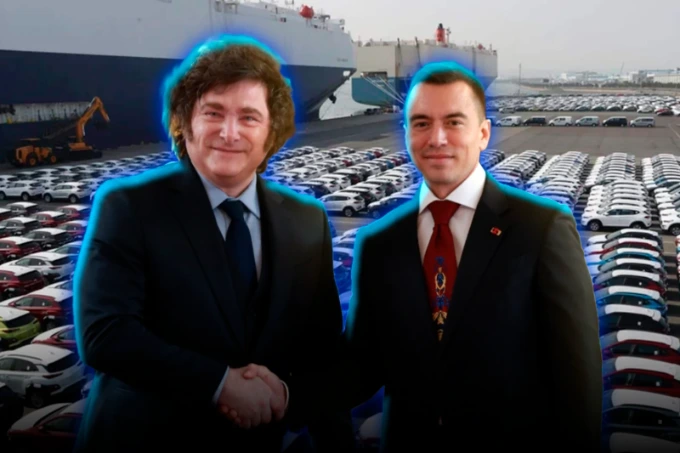
The Government of Javier Milei signed a new Automotive Trade Agreement with Ecuador that will significantly reduce tariffs applied to vehicles and auto parts manufactured in Argentina, with the aim of recovering presence in the regional market and boosting industrial exports.
The measure was finalized during the visit of the President to Quito, where he held a bilateral meeting with his Ecuadorian counterpart, Daniel Noboa. The agreement allowed to unlock a negotiation that had been stalled for several years and modifies the access conditions for Argentine production to the Ecuadorian market.
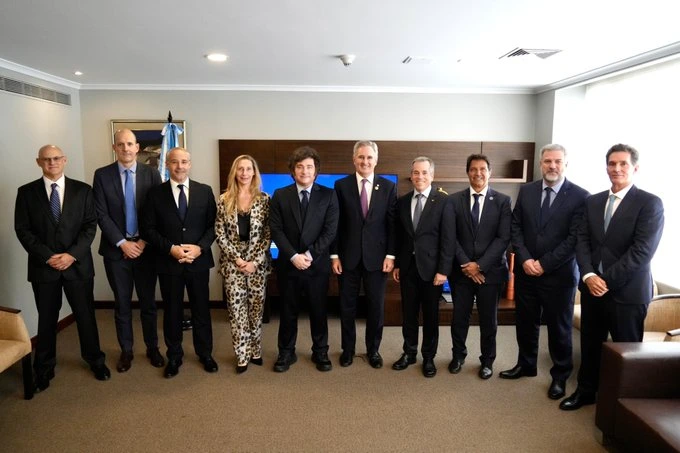
Javier Milei and executive authorities alongside representatives of the Argentine automotive sector in Ecuador
As a result of the agreement, Argentine vehicles will stop paying a general tariff of 28% and will instead be taxed at a rate of 10%. In the case of electric and hybrid cars, the tariff will be completely eliminated. Auto parts will also enter with a rate of 0%.
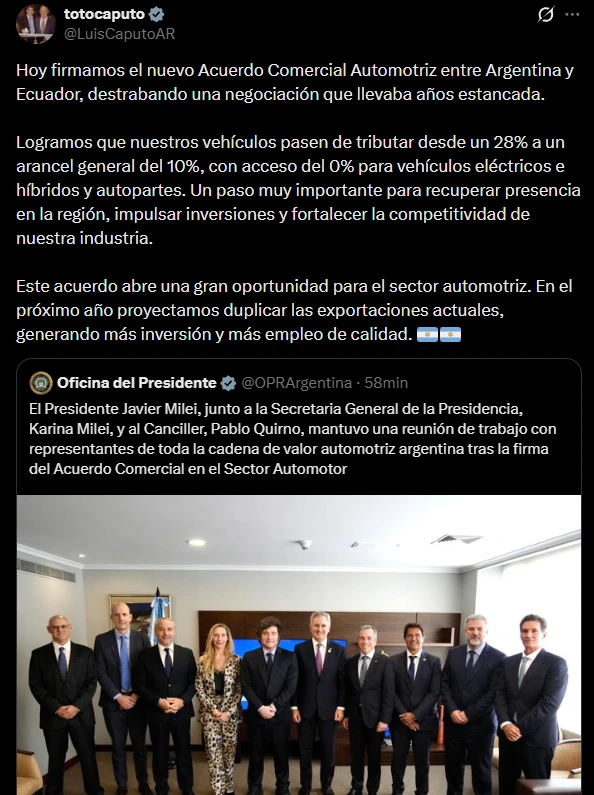
The Minister of Economy Luis "Toto" Caputo emphasized that the agreement represents “a very important step to recover presence in the region, boost investments, and strengthen the competitiveness” of the national industry. He also estimated that during the next year, automotive exports to Ecuador could double, generating new investments and quality jobs.
The post from the Minister of Economy on X
In reciprocity, Argentina will apply a tariff of 10% on vehicles coming from Ecuador and will eliminate customs duties on auto parts. The agreement will also allow Ecuadorian companies to become suppliers for the terminals established in the country and the replacement market.
After the signing, Milei held a meeting with representatives from the entire Argentine automotive value chain. Authorities from ADEFA, AFAC, and ACARA participated, along with executives from Toyota, Ford, and Volkswagen. Also present were the Secretary General of the Presidency, Karina Milei, and the Chancellor Pablo Quirno.
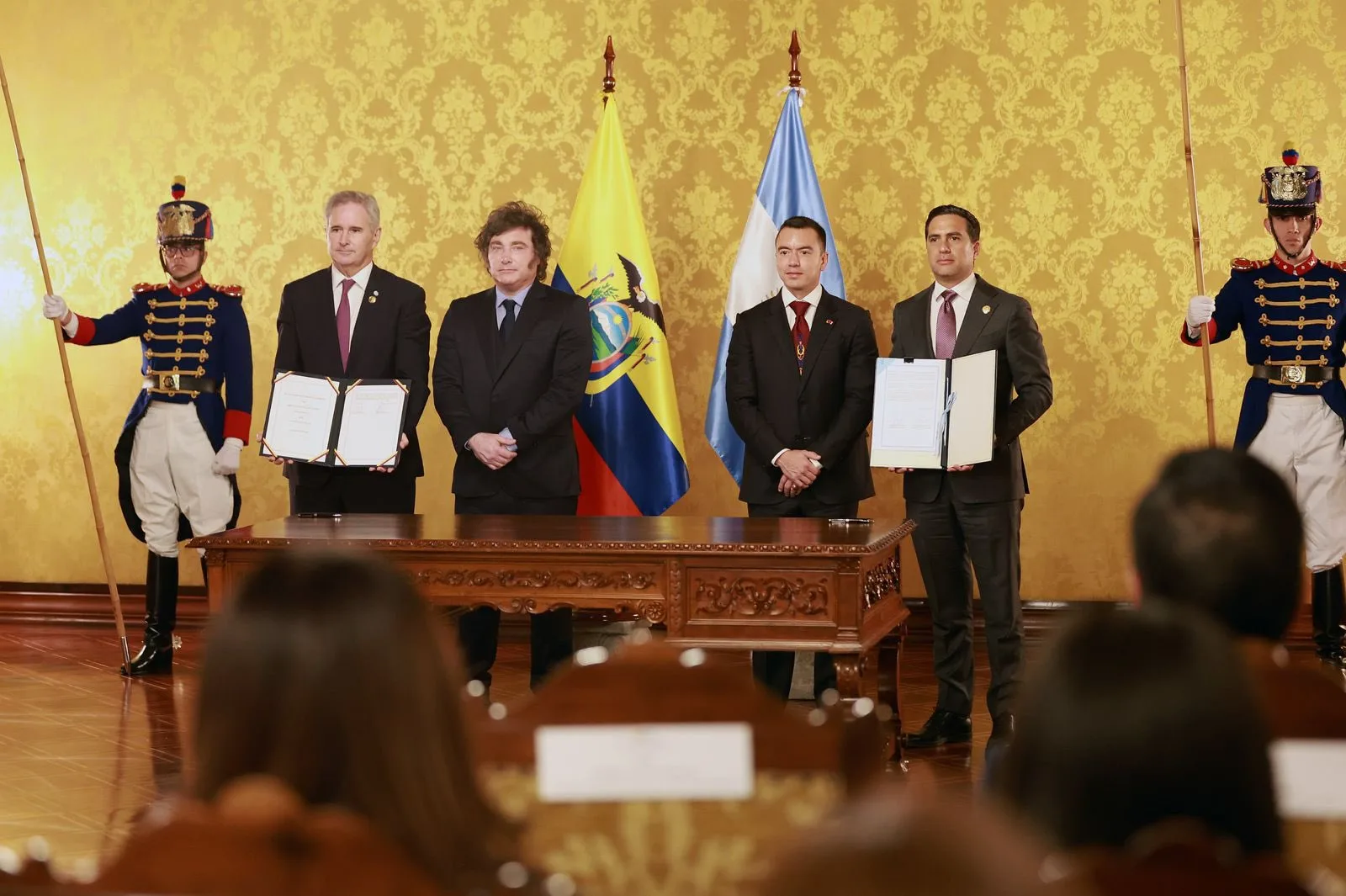
Javier Milei at the signing of the agreements alongside Ecuadorian President Daniel Noboa
ADEFA described the agreement as an opportunity to increase exports of vehicles and components manufactured in the country. The entity emphasized that progress on the ACE-59 agenda and the signing of the Quito Manifesto are part of a joint strategy with the Government to deepen the international insertion of the sector.
The agreement is part of the market opening policy promoted by Milei's administration, which seeks to replace years of isolation and stalled negotiations with trade agreements aimed at expanding exports, attracting capital, and consolidating Argentina as a regional automotive hub.