This situation is compounded by the deficit in Latin America, estimated at 11.5 million tons annually, a gap that represents an opportunity to expand local production and supply other markets in the region.
With the launch of the new facility, Pampa Energía aims to meet the demand of the Argentine agricultural sector, reduce dependence on external purchases, and allocate part of the production for export.
Argentina will have the largest urea production plant in Latin America starting from a project driven by Pampa Energía, which involves an investment of USD 2.7 billion in Bahía Blanca, Buenos Aires province.
The initiative was approved under the Incentive Regime for Large Investments (RIGI) of the Government of Javier Milei and aims to expand the industrial capacity of the country, add value to energy resources, and strengthen the supply of fertilizers for the agricultural sector.
The company approved the construction of a granulated urea plant in 2026, which will have a production capacity of 2.1 million tons per year. According to the expected timelines, operations would begin at the end of 2029, while the estimated period to complete the work will be 41 months.
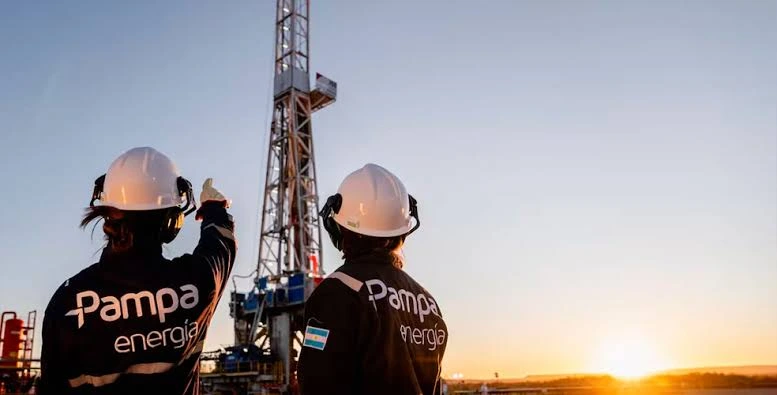
Pampa Energy.
The project will have a significant impact on the labor market. During the peak construction activity, it is estimated that it will employ around 3,500 people. Once the plant is operational, it will require approximately 300 workers to sustain its permanent operations.
Additionally, the economic projections contemplate a foreign exchange impact of USD 1 billion annually, as a result of import substitution and export generation.
In this way, the project seeks to position Argentina as a regional producer of fertilizers and reduce the need to rely on foreign suppliers.
Urea is one of the main fertilizers used by the agricultural sector. However, currently, the country depends on imports to cover a significant part of its consumption.
President Javier Milei.
Pampa Energía and its expansion in the energy sector
Founded in 2005, Pampa Energía is one of the leading integrated energy companies in Argentina. Its activities encompass the exploration and production of oil and gas, electricity generation and transmission, petrochemicals, and participation in the transportation and processing of natural gas.
The company operates in Neuquén, Buenos Aires, Mendoza, Salta, La Rioja, and Santa Fe, and is listed on both the Buenos Aires Stock Exchange and the New York Stock Exchange.
Among its main expansion projects is the increase in oil production in Rincón de Aranda and its entry into the fertilizer business through the urea plant in Bahía Blanca.
The investment of USD 2.7 billion represents a new step in the company's strategy to expand its industrial activities and leverage the resources available in the country.
Under the framework of Milei's RIGI, the project seeks to develop a production capacity that allows for supplying the domestic market and generating new income through exports.