After meeting with the governors at Casa Rosada, President Javier Milei celebrated the national consensus regarding zero deficit and anticipated the end of inflation
Nuevo
Agregar La Derecha Diario en
Compartir:
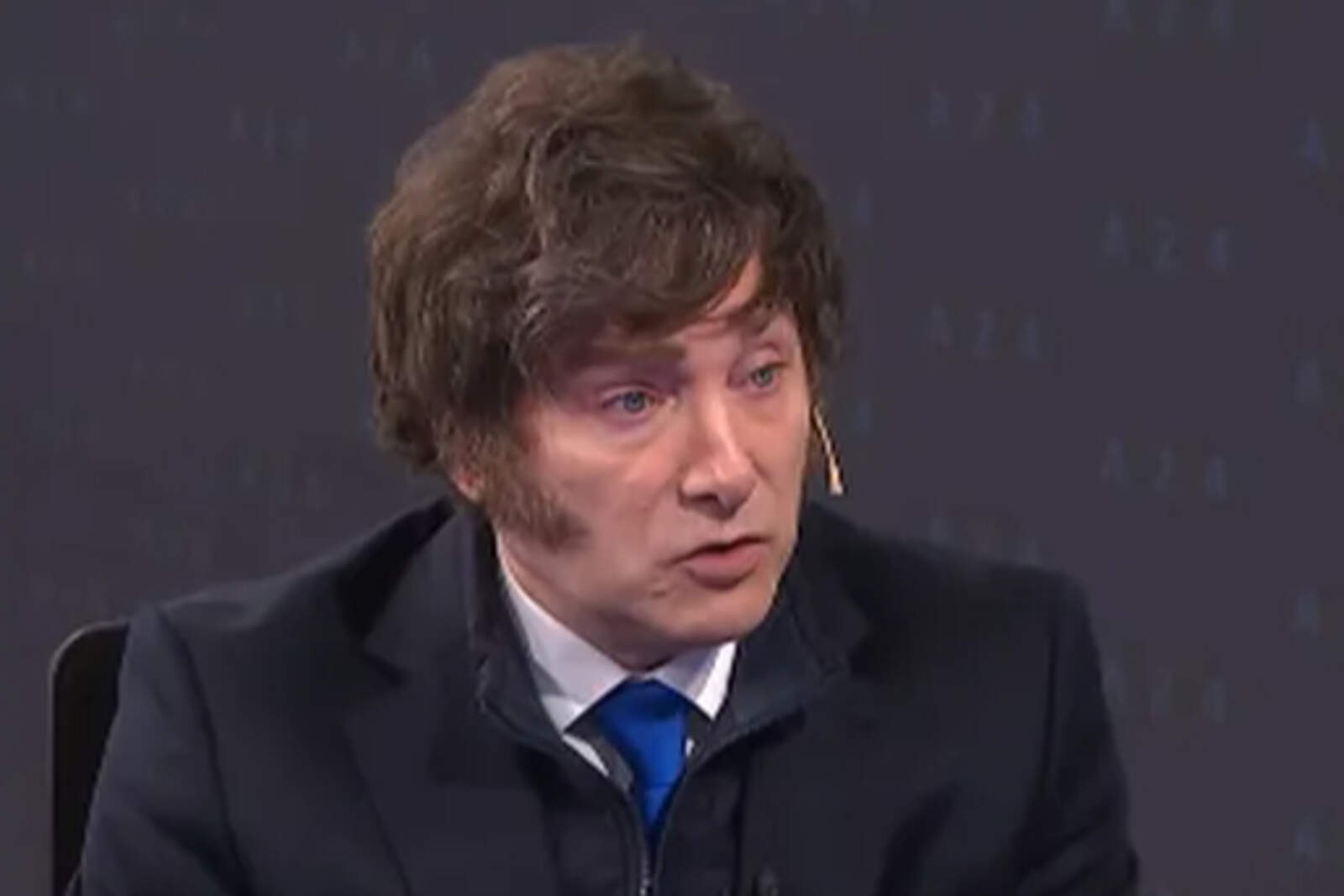
President Javier Milei described the meeting he held with twenty governors at Casa Rosada as "extremely positive," emphasizing that the gathering marked a turning point in the relationship between the Nation and the provinces. "We've managed to reach an agreement, with nuances, on what Argentina needs at this stage," he stated in an exclusive interview with Pablo Rossi for A24. The president thanked the provincial leaders for "respecting what more than two-thirds of Argentinians asked for: not going back to the past and continuing on the path of freedom."
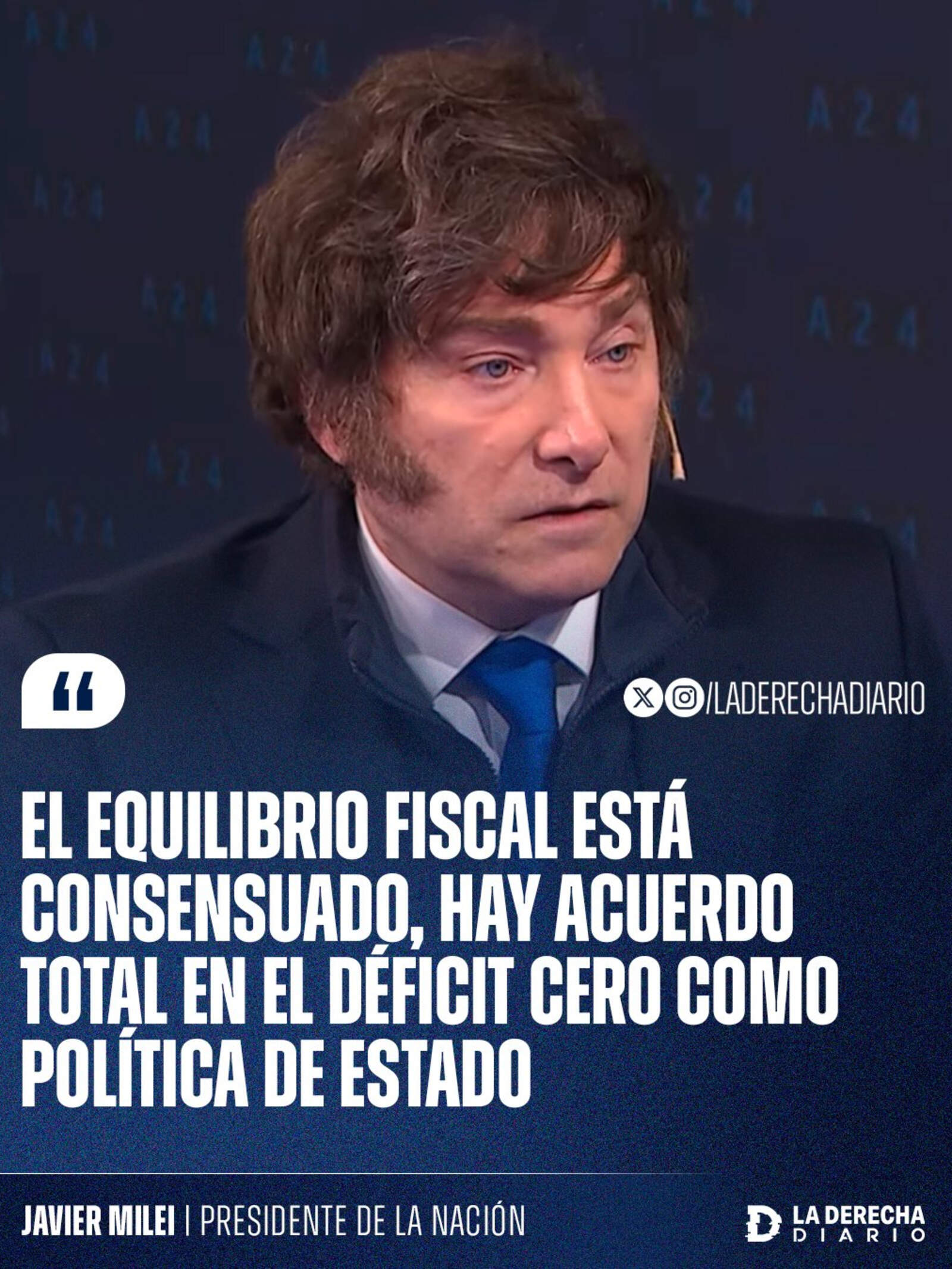
Milei asserted that there is an "absolute consensus" regarding fiscal balance and announced that zero deficit "is already a State policy.""We've adjusted seven points of the GDP, but it must be acknowledged that the provinces made an adjustment of more than three points, and the municipalities of 0.54. We're all working in the same direction," he specified.
El presidente, Javier Milei.
The president explained that fiscal discipline "is not ideology, but common sense," and reaffirmed that monetary issuance—the root of Argentine inflation—"has already been stopped." In that regard, he predicted that "by the middle of next year, there will be no more inflation in Argentina."
One of the central topics of the meeting was labor reform, about which Milei assured that there is "absolute consensus." "Argentina has a labor regime that's 70 or 80 years old and is absolutely outdated. Half of the workers are in the informal market, and even the union leaders themselves, behind the cameras, admit it," he maintained.
El presidente, Javier Milei.
He explained that the new legislation will allow millions of Argentinians without rights to become formal workers: "No one loses anything, but many gain. Those who are already employed can keep their contracts. This is designed for the young people who today leave through Ezeiza because they can't find work."
True to his direct style, the President explained why he excluded governors Axel Kicillof, Gildo Insfrán, Ricardo Quintela, and Gustavo Melella from the invitation. "If you repeat the Marxist catechism, recipes that sank the country for a hundred years, it's very difficult to have a reasonable dialogue. We can't meet with people for whom 2+2 doesn't equal 4," he declared. He added: "There's an avenue that wants to go to Cuba and Venezuela with Castro-Chavism. We've chosen freedom."
El presidente, Javier Milei.
When asked about possible changes in the Cabinet, Milei was clear: "I'll make changes when I consider them necessary. I need valid interlocutors before Congress and the governors."
He praised the work of his advisor Santiago Caputo—whom he could formally incorporate into the Executive—and confirmed Martín Menem as Speaker of the Chamber of Deputies. He also announced that he will hold a meeting with Mauricio Macri: "He never asked me for anything, but he always approached with generosity and contributed his experience."
Milei defended his "bilardismo" as a management philosophy: "I have a commitment to Argentinians and I keep my promises. I've fulfilled all of them in less than two years of government." He explained that after the "first-generation" reforms—focused on fiscal order and stability—the "second-generation" stage will begin, focused on growth and competitiveness. "The chainsaw was the symbol of fiscal balance, and we achieved it in a month. Others said it would take years. We did it," he stressed.
On the economic front, Milei detailed that the GDP fell by 1.8% during the transition, but that in December 2024 the economy was already 6.6% above the previous year. He attributed the setbacks to the legislative blockade promoted by the opposition, "which introduced 40 laws to torpedo the economic plan." Even so, he assured that "76% of Argentinians don't want to return to Kirchnerism."
When asked about the electoral defeat in September in Buenos Aires, the President considered it "a blessing." "It forced us to rethink many things and was reflected in the victory of October 26. I learned a lot about politics and economics," he admitted.
He closed the interview with a message of optimism and determination: "Socialism is frightening; we set people free. What characterizes us is making promises and keeping them. In the Bilardista logic, winning is the only thing that matters. We're winning: Argentina is getting back on its feet."