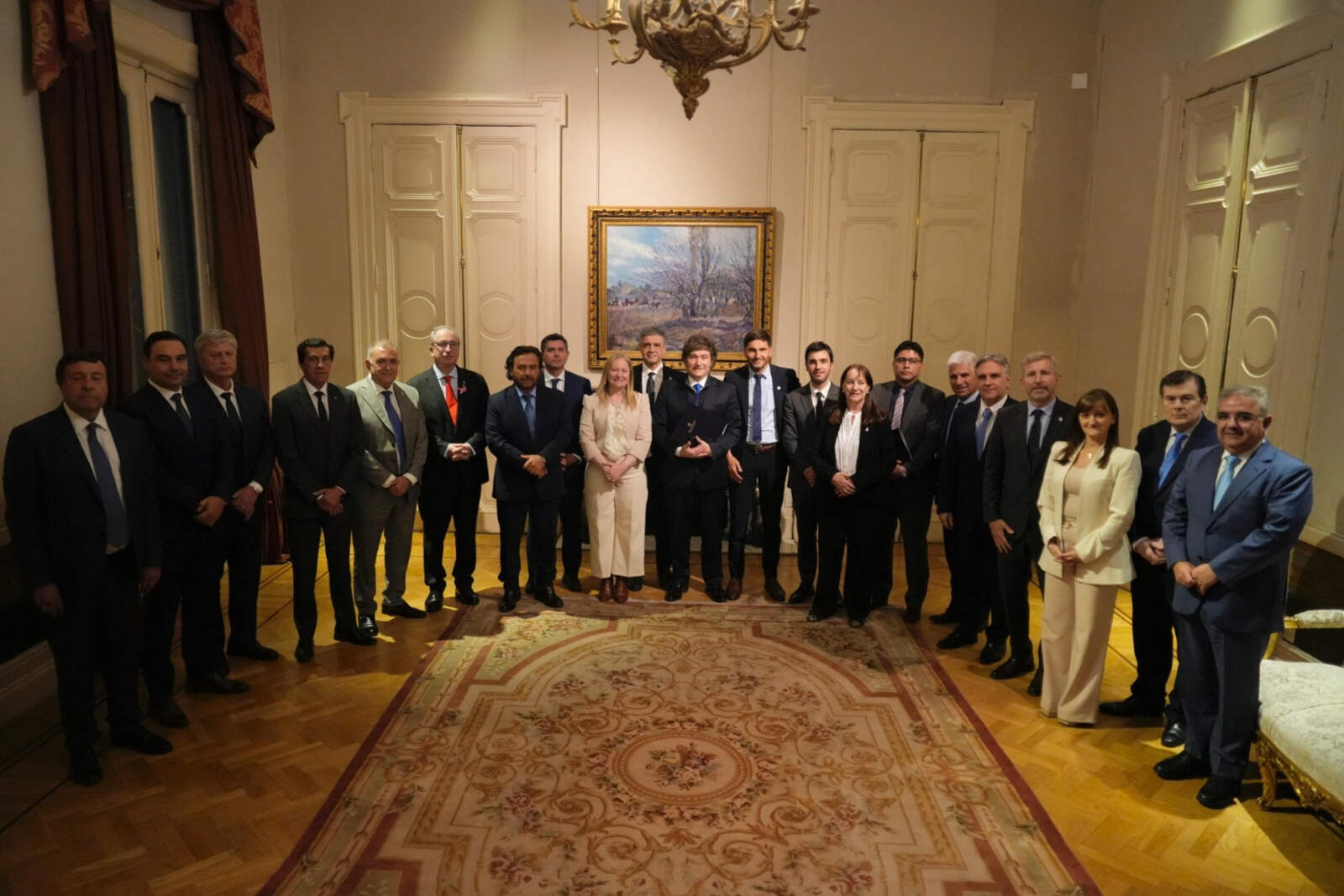

Exactly 42 years after the 1983 general elections that marked the return of democracy, President Javier Milei led a historic meeting this Thursday at Casa Rosada with 20 governors to outline the new political stage that will open after La Libertad Avanza's resounding victory in last Sunday's legislative elections.
The meeting, convened by the Chief of Cabinet, served to reaffirm the May Pact and lay the foundations for the structural reforms that the Government will seek to promote together with the new Congress: labor, tax, and criminal, pillars of the national reconstruction that the President described as "indispensable to unleash the country's productive forces."
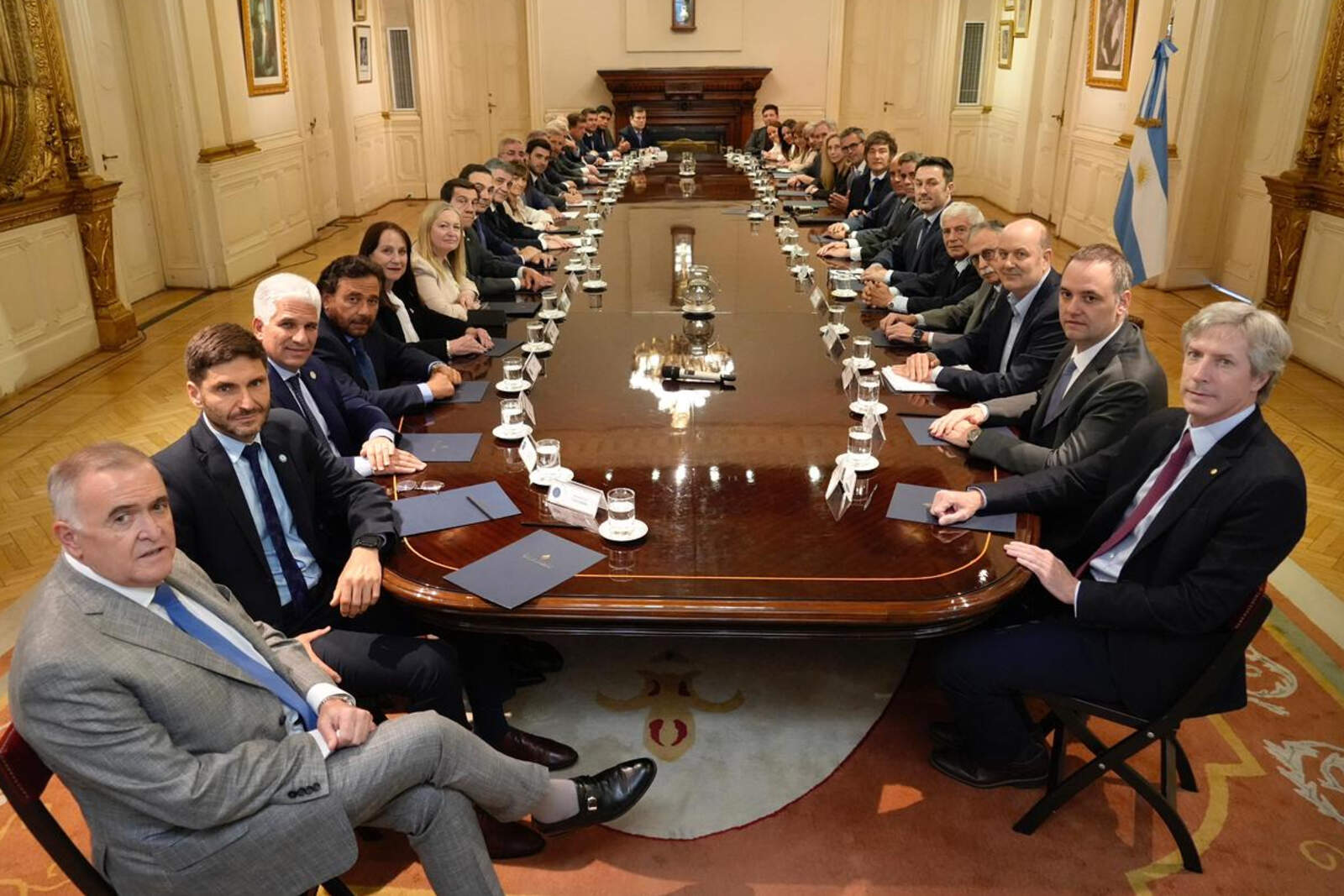
"The May Pact will be consolidated with the structural reforms that the new Congress will implement. It will be the most reformist in our country's history," stated Manuel Adorni, presidential spokesperson. He highlighted the president's gratitude to "all the governors who agree with and understand the changes that Argentina needs."
Among the principles shared by the President and the governors, the need to boost savings and private investment stood out, under the conviction that "growth will come only from the private sector," as well as the unrestricted defense of private property, defined by Milei as "the foundation of everything."
"Salaries will grow with production and productivity," emphasized the spokesperson, in line with the idea that true progress will come from competitiveness. The May Pact, signed by the president and the governors in July 2024, established the Government's ten central commitments to rebuild Argentina on the foundations of economic freedom, fiscal balance, and institutional stability.
Participating in this reaffirmation of the pact were governors and representatives from Ciudad de Buenos Aires (Jorge Macri), Catamarca (Raul Jalil), Chaco (Silvana Schneider), Chubut (Ignacio Torres), Córdoba (Martin Llaryora), Corrientes (Gustavo Valdés), Entre Ríos (Rogelio Frigerio), Jujuy (Carlos Sadir), La Pampa (Sergio Ziliotto), Mendoza (Hebe Casado, representing), Misiones (Hugo Passalacqua), Neuquén (Zulma Reina, representing), Río Negro (Alberto Weretilneck), Salta (Gustavo Sáenz), San Juan (Marcelo Orrego), San Luis (Claudio Poggi), Santa Cruz (Claudio Vidal), Santa Fe (Maximiliano Pullaro), Santiago del Estero (Gerardo Zamora), and Tucumán (Osvaldo Jaldo).
On behalf of the presidential team, the meeting was attended by Karina Milei, Secretary General of the Presidency; Guillermo Francos, Chief of Cabinet; Lisandro Catalán, Minister of the Interior; Luis Caputo, Minister of Economy; Patricia Bullrich (Security); Luis Petri (Defense); Mariano Cúneo Libarona (Justice); Sandra Pettovello (Human Capital); Federico Sturzenegger (Deregulation); Mario Lugones (Health); Pablo Quirno (Foreign Affairs); Martín Menem, President of the Chamber of Deputies; Santiago Bausili, President of the Central Bank; Santiago Caputo, presidential advisor, and spokesperson Manuel Adorni.
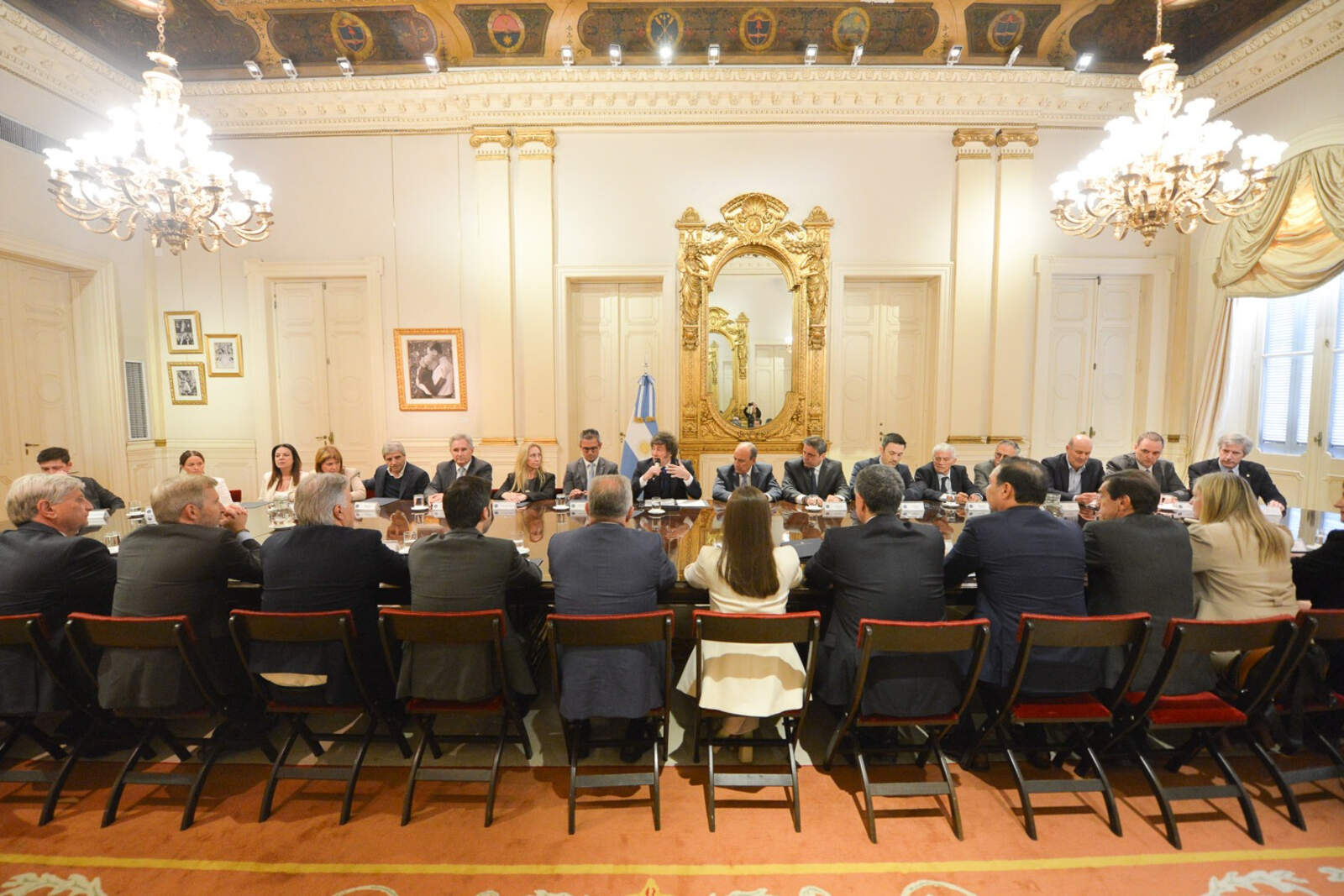
The president and the governors agreed that "each Argentine province can be a power in itself," reaffirming that the Government will work with all the governors and Congress to promote reforms that restore competitiveness, employment, and investment to the country.
With this meeting, Milei consolidated his political and federal leadership after the popular support in the legislative elections, marking the beginning of a new stage of deep reforms that seek to leave behind inherited stagnation. The Government trusts that the new Congress will allow the May Pact's principles to be transformed into laws and move toward a freer, more productive, and modern Argentina.