






The U.S. newspaper cited individuals who worked at the company and described a relationship that allegedly raised questions about internal rules regarding relationships between executives and employees under their supervision.
The accumulation of both episodes ultimately weakened the founder's position. According to reports published by Reuters, the board even considered his dismissal and analyzed possible alternatives to ensure the company's leadership.
The resignation came after a board meeting and marked the end of more than three decades of Huang at the helm of NVIDIA.
NVIDIA lost hundreds of billions of dollars amid the crisis
The repercussions quickly extended to Wall Street. Uncertainty about the company's future and the possible consequences of the investigations led to a sharp drop in its stock prices.
In the days leading up to the resignation, NVIDIA lost approximately $600 billion in market capitalization compared to pre-crisis levels, although this figure corresponds to the volatility accumulated over several days.
The magnitude of the drop reflects investors' concerns about the institutional stability of a company that is at the center of the global expansion of artificial intelligence.
Huang's departure also raises questions about the continuity of NVIDIA's business strategy regarding China. The businessman had defended on various occasions the possibility of maintaining the company's access to the Chinese market, even amid U.S. export restrictions on semiconductors.
This position had generated differences with sectors in Washington that consider it a priority to limit Beijing's access to the most advanced processors.
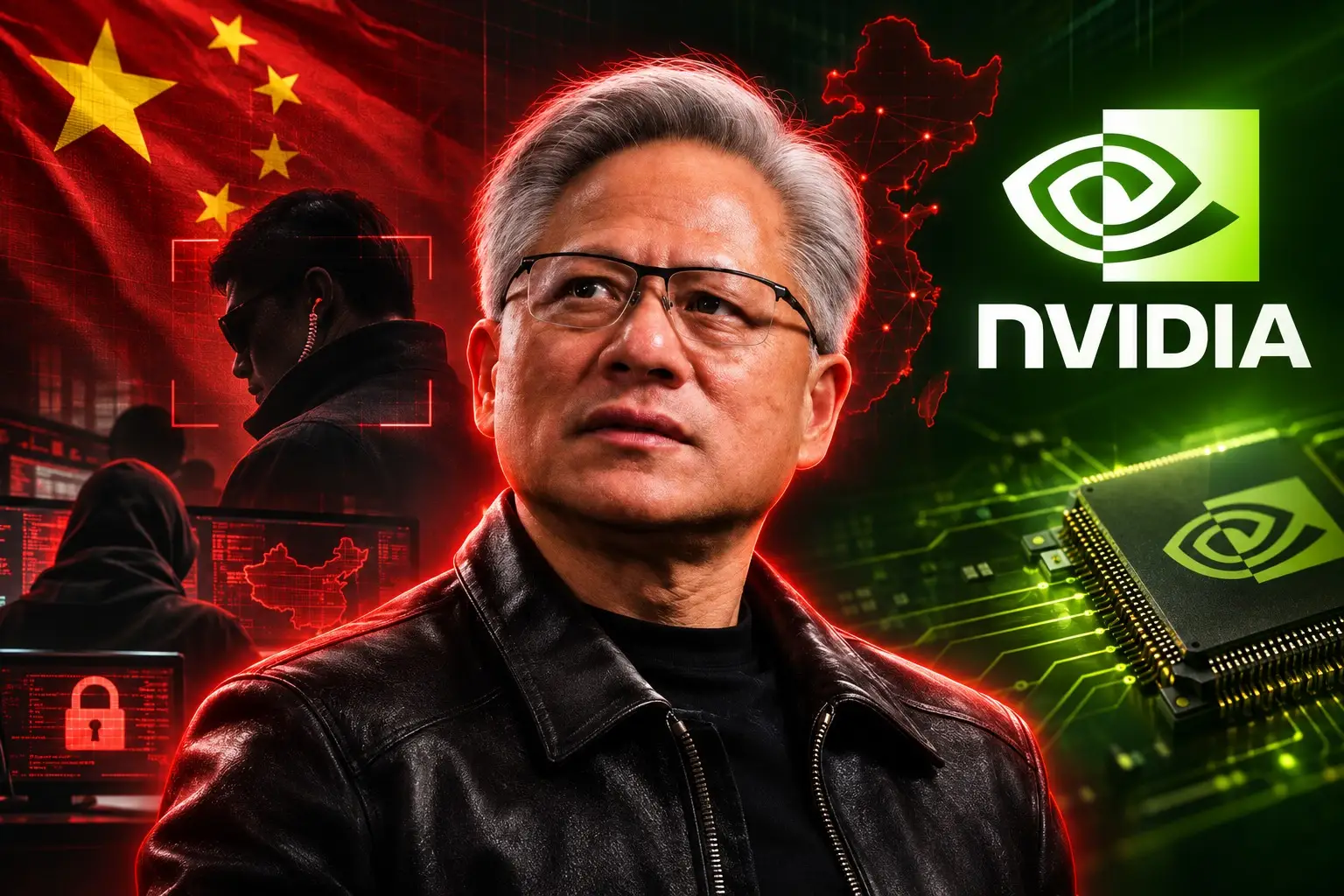
Now, with an investigation into possible ties with Chinese intelligence and the business operations of intermediary companies, the discussion about U.S. technological security takes on an even greater dimension.
The departure of Jensen Huang marks the end of a historic era for NVIDIA. But the scandal leaves a much more important question for Washington: to what extent can the Chinese regime use its business networks and intelligence operations to approach the companies that control the most strategic technologies of the West.