The labor conflict in Argentina recorded a sharp decline during July 2026, reaching its lowest levels in the past year.
According to the survey by the Directorate of Studies and Statistics of Labor Relations of the National Ministry of Labor, conflicts with strikes decreased by 27% compared to July 2025, while those that did not include strikes saw a 43% year-on-year decline.
The report counted 123 labor conflicts during the month: 86 without strikes and 37 with strikes. The comparison with June also showed a reduction: conflicts with strikes fell by 5% and lost workdays were reduced to less than half.
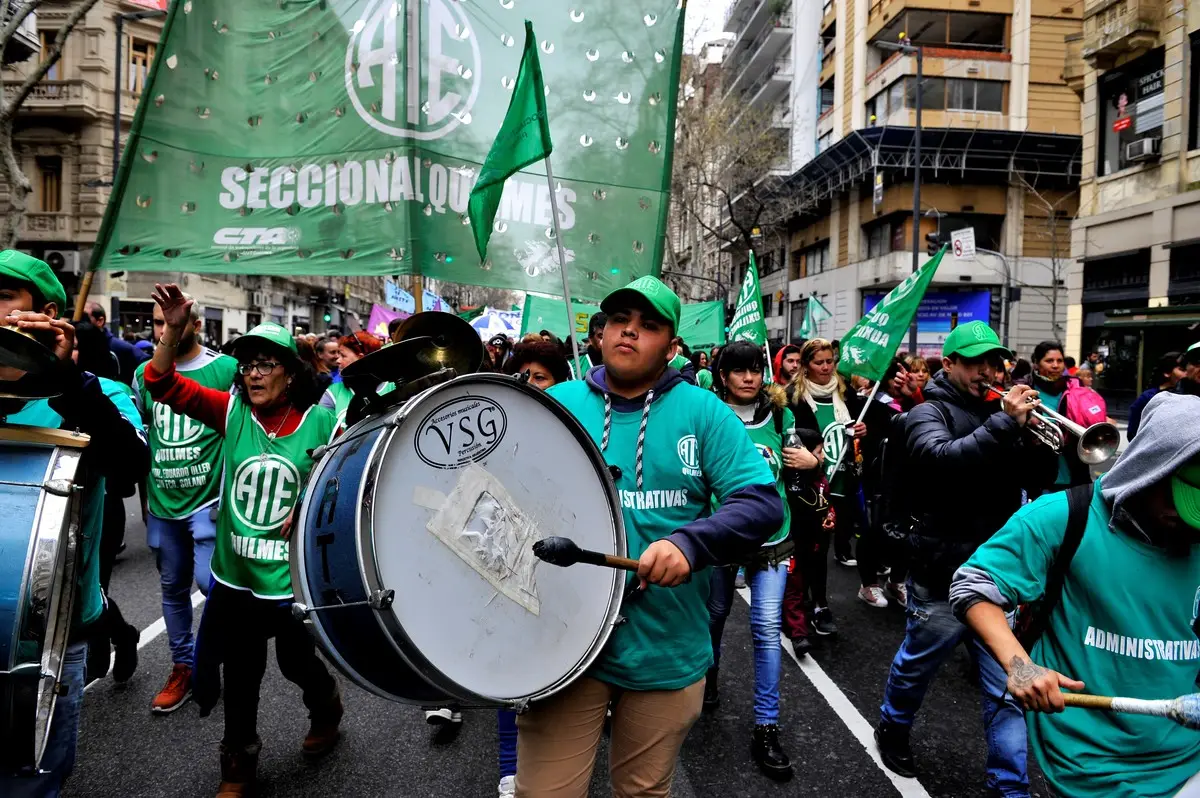
ATE Protest
The number of workers involved followed this trend. In July, 114,000 workers participated in strikes, which is 33% less than a year ago and 70% less than in June 2026. Meanwhile, 225,000 individual workdays were recorded as not worked, with a year-on-year decline of 24% and a monthly decline of 52%.
Thus, both the number of strikers and the days of strikes reached their lowest figures in the last twelve months.
The public sector concentrated the largest number of strikes
The behavior varied according to the work environment. In the public sector, conflicts with strikes decreased by 24% over twelve months and the number of strikers fell by 25%. However, the days of strikes increased by 13%, reflecting a longer average duration of conflicts.
ATE Protest
In July, 25 conflicts with strikes were recorded in the public sector, which concentrated 104,503 strikers and 215,083 lost workdays. In the private sector, however, there were only 13 conflicts, with 9,358 workers involved and 9,906 workdays not worked.
The private sector showed the largest year-on-year reductions: conflicts with strikes fell by 28%, strikers decreased by 70%, and lost workdays were reduced by 91%.
By activity, education accounted for 32% of conflicts with strikes, followed by public administration at 27%, and health at 17%. Together, these three sectors accounted for 76% of the strikes recorded during July.
Finally, in the conflicts without strikes, which totaled 86 cases, the most frequent actions were concentrations, at 45%, and organizational declarations, at 21%