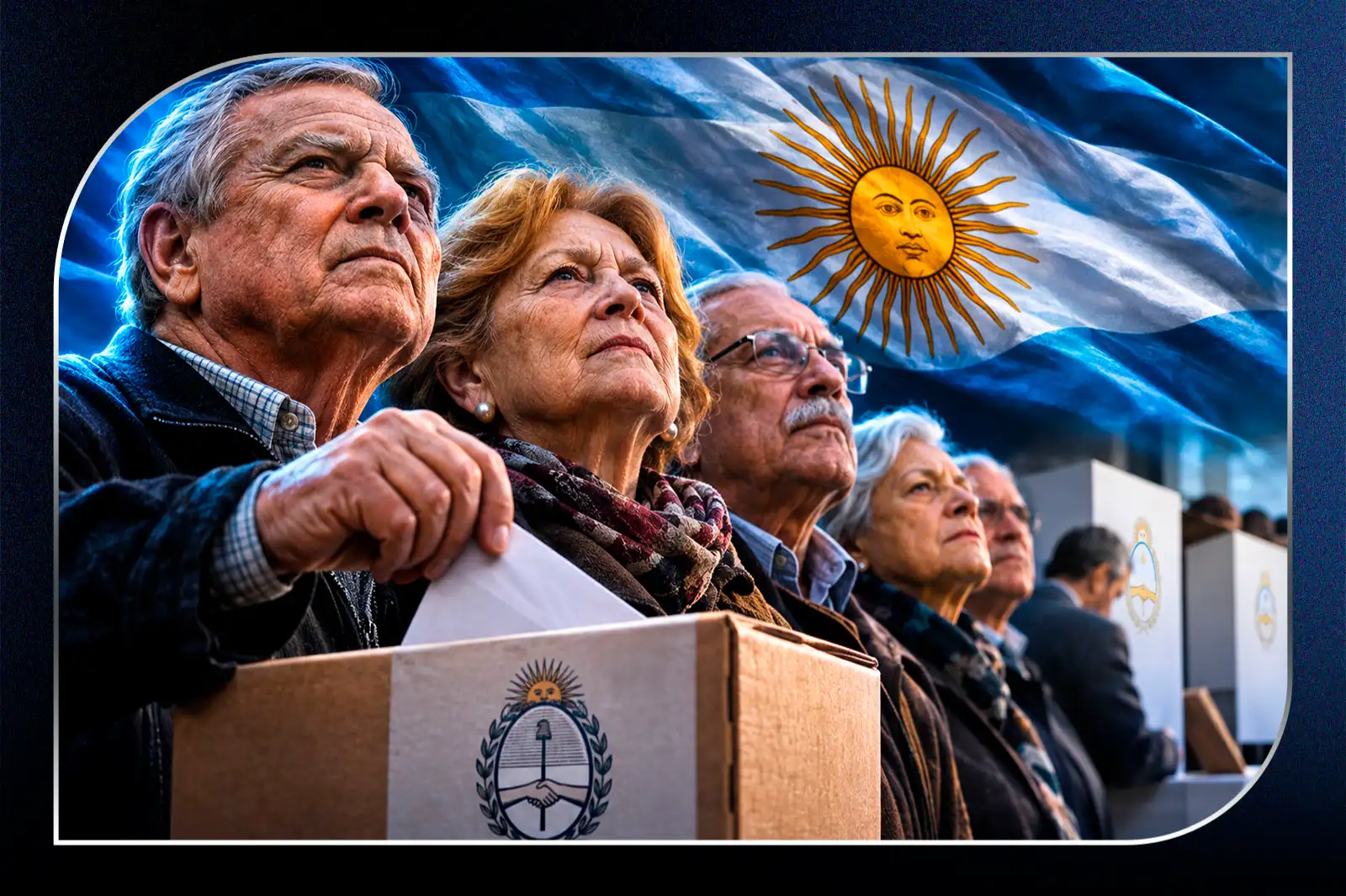
The coalition of anti-Kirchner voters is at an electoral crossroads that could have a definitive impact on the future of Argentina
Ahead of the 2027 elections, the historic PRO voters (formerly radical voters) are once again critical to consolidating change and ensuring that there is no turning back. That group is going to be asked to make one last sacrifice. He is not the only one: history is also asking for one from the leader who best represents them.
Historically, the Argentine economy has been like a raft on the high seas that was leaking water and had some of its plates rotten. Any wind, or external shock, caused him to completely lose control. In 2026 the winds came all together.
An economy that withstood external shocks
The conflict in the Middle East brought the oil barrel of about 60 dollars at the beginning of the year to peaks of more than 125, and today it remains around 50% above those values. Added to that was the first Federal Reserve rate hike since 2023, the sharp devaluation of the real and, more recently, the correction of technological assets following Jensen Huang's resignation from NVIDIA, which even Anthropic's record IPO failed to reverse
.
A more expensive barrel improves external accounts, but 47 million Argentines pay for it every time they move. The same thing happens when the global price of meat rises: the export sector benefits, but the blow is felt at the table of Argentines and in the price indices. This is what the President pointed out when he spoke of negative external shocks
.
This time the raft didn't turn around. The economy is on track for its second consecutive year of growth. This is a mild, almost agonizing growth, with a weak third quarter: activity accumulated an increase of 1% in the first nine months and the last EMAE showed a rebound of 1.1% per month in September. Compared to what we would have experienced without a solid macro, it's another fact to celebrate
.
Inflation will close the year in line with that of 2025. October, despite being above September, presented the lowest rate for an October since 2017. If November and December fall below 2%, year-on-year inflation would fall by one to two points compared to the current 33.1%. This is not the rate of disinflation we expected at the beginning of the year. But an increase of 50% in the main energy input is not free, and the most common thing this year is that countries close with higher than expected inflations (Paraguay is one of the honorable exceptions
).
The Government Trust Index prepared by the UTDT rose in November for the second consecutive month, with improvements in the Interior and in CABA, not so in the GBA (one of the geographies most affected by the change in the productive matrix). The most revealing fact is openness by age: among those over 50, trust in the Government jumped by more than 20% in a single month. It is precisely the group that has the most reason to be frustrated and the one that, when it comes to the truth, seems to understand what is at stake
.
As I said in my last column, the path forward is not rosy, but it is going in the right direction. The macro is tidy.
But the frustration of a part of the voter who made this change possible is not explained by the macro. A whole generation that saved up to live in an abnormal economy
To understand this frustration, you have to look at who the “old loved ones” are. The majority belong to a middle, upper middle class, which saw their savings decimated by the playpen and subsequent asymmetric pesification, and who later had to live the most productive years of their lives in the Kirchner economy. For two decades they had very poor hard currency incomes, and the meager savings they knew how to achieve slept in safe deposit boxes, joints, stockings or other variants of the “mattress”.
Over the past 20 years, those dollars lost approximately 40% of their purchasing power. In a chaotic Argentina, that mattered little. The dollar was still (and still is) king. Stocks, loopholes and loopholes meant that anyone with the capacity to obtain dollars, or with a stock saved, would live a life of luxury at auction prices
.
The stabilization and deregulation of the economy ended that. The dollar ceased to be a scarce commodity, and the sacred greenback, which had already been losing purchasing power in hard currency, lost much more in soft currency. The main reason for Milei's soft voter's dissatisfaction is not that the President yells, fights with Lula or wears a leather jacket. The thing is that a generation of retirees, or future retirees, prepared themselves all their lives to grow old in an abnormal economy with salaries from a poor country. To paraphrase the infamous Silvina Batakis, the process of normalizing the Argentine economy collides with the right of a group of Argentines to live like kings on a few
dollars a month.
Generational sacrifice and the future of children and grandchildren
That is why in these elections, that generation is going to be asked to make the ultimate sacrifice. Let him not do it for her, but for those who come behind. My son the doctor represented the sacrifice of one generation for the benefit of another. Today it is that group that has to pay the costs so that their children and grandchildren are not forced to seek a better future outside Argentina.
A return to the past in 2027 would be catastrophic: with the natural resources boom that the country has today, there would be cash to finance at least 20 more years of populism. It is possible to imagine a Milei-Bullrich formula, which can win in the first round and bring together a coalition of Argentines committed to the future of the country, willing to make whatever sacrifices are necessary, in the face of those who want immediate magical answers.
Today, the world has its eyes set on Argentina being able to consolidate change. If we miss that train, there's no other one behind. The parents of old loved ones sacrificed themselves so that their children would be “the doctor”.
Now it's their turn to do the same for their children and grandchildren.