This is the president of the Association of Ecuadorian Students in Argentina, who caused strong criticism on social media
Nuevo
Agregar La Derecha Diario en
Compartir:
The scandal surrounding the sale of medical residency exams, which began after the Ministry of Health detected irregularities in the national tests, where a group of at least nine Ecuadorian students obtained unusually high scores, led to a foreign figure gaining prominence.
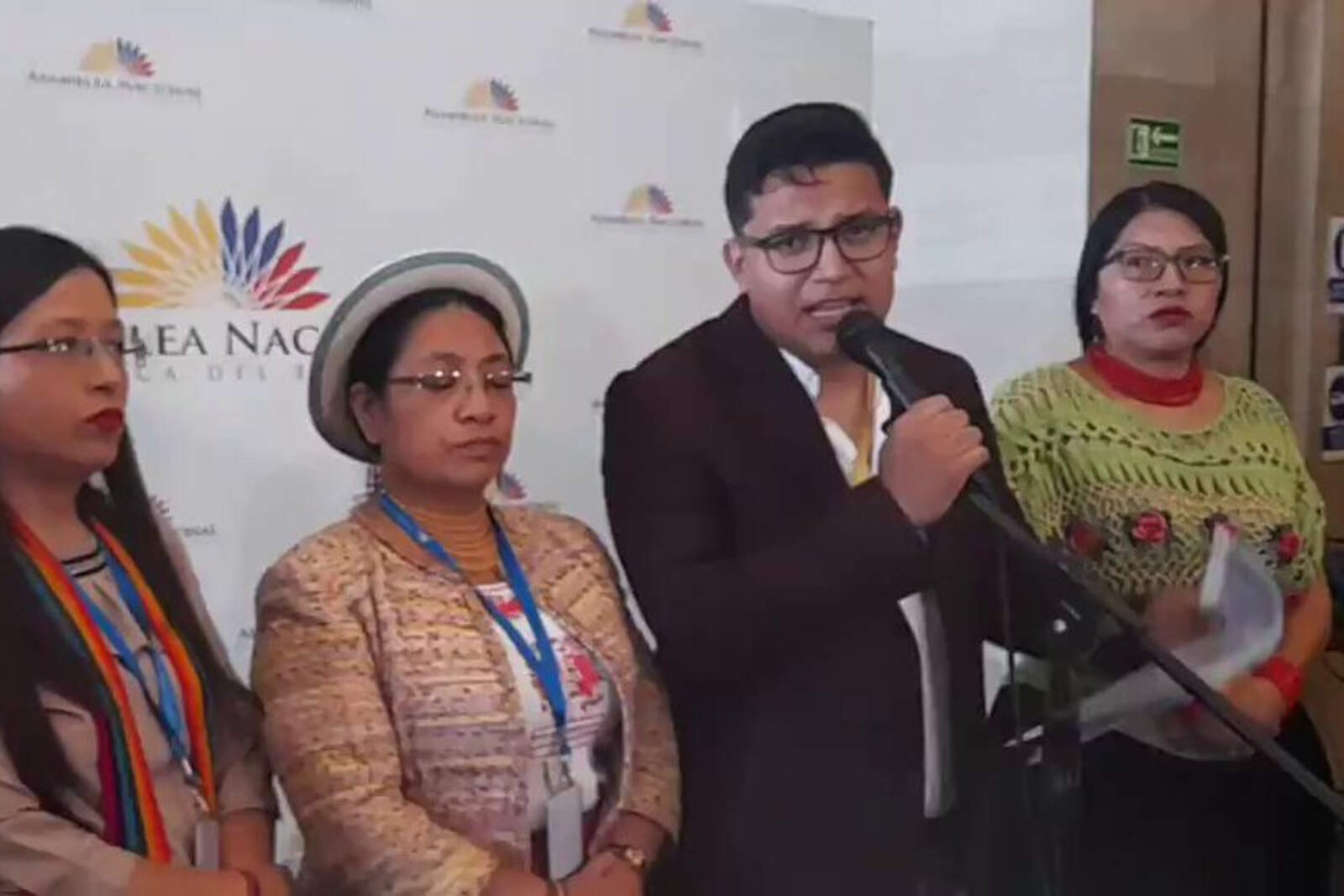
This is Leonardo Arias, a 24-year-old Ecuadorian immigrant who became one of the voices defending those who committed fraud. A philosophy student, he is also the president of the Association of Ecuadorian Students in Argentina, which demands that Argentinians finance "free education" for foreigners and is a strong critic of Javier Milei's government proposals to charge tuition for non-residents.
Arias arrived in Argentina a few years ago, attracted by the "free" public universities, a benefit funded by Argentinian taxpayers.
Leonardo Arias y Lucas Bonfante.
In his public appearances, Arias presents himself as a "human rights activist," and his discourse is clearly aligned with the most hardline sectors of the Latin American left. Meanwhile, he keeps ties with Luca Bonfante, a well-known communist leader of the Left Front, with whom he was recently seen in a joint photo.
Criticism of the Government and protests
Under his leadership, the Association he presides over organized and promoted protests against President Javier Milei's initiatives, especially those proposing to apply tuition fees to foreign non-resident students in public universities.
Arias participated in marches such as the one on April 23, 2024, where, under the banner of defending "free education," he defended his privileges and openly criticized Milei's government for prioritizing Argentinian citizens in the use of public funds.
Leonardo Arias y otros ecuatorianos.
Paradoxically, while he demands to continue receiving free education in a country to which he doesn't belong, the activist denounces "xenophobia" whenever a debate arises about educational funding. His statements show that any attempt to organize the system and demand international reciprocity is a "form of discrimination" for him, while Argentinians receive nothing for free in Ecuador.
Arias's name began to circulate more intensely after the medical exam scandal. Recently, at least nine Ecuadorian students were identified for having obtained suspiciously high results in the national medical residency exam.
Although Arias is not directly involved, his unwavering defense of the Ecuadorian community in Argentina, even in cases where there are suspicions of fraud, caused strong criticism on social media.