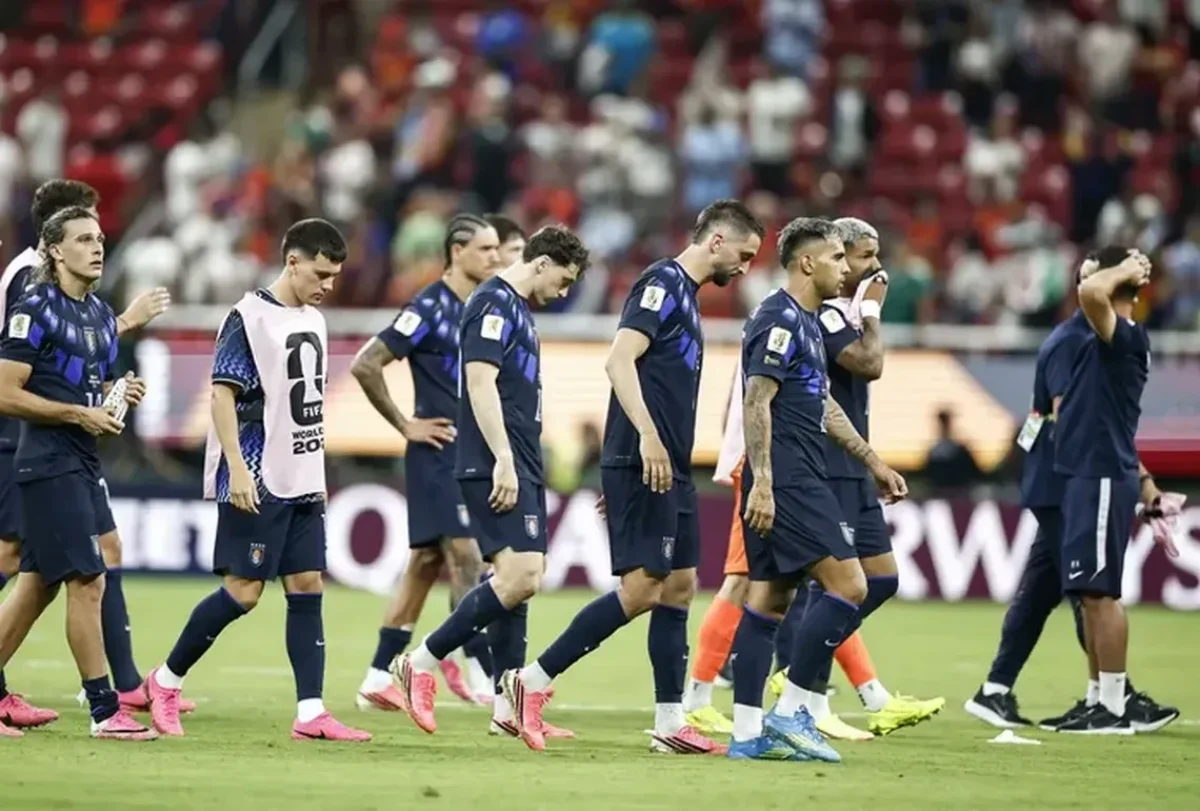
After the elimination in the group stage of the World Cup, the outgoing coach made a strong self-criticism, denied reports about differences with the players, and explained the changes he accepted during the preparation, among other topics
"The relationship with the players does not explain the elimination"
Despite admitting that he never had a particularly close relationship with the squad, Bielsa rejected that this situation conditioned the team's performance and explained that he always listened to the players' concerns, accepted the changes they requested, and never felt that the relationship prevented him from leading the group.
Additionally, he dismissed any kind of personal confrontation and maintained that he never needed intermediaries to communicate with the players. "I only spoke with the players and listened to what they told me", he stated, before insisting that he had "no excuse" to justify the elimination.
He also dismissed reports about leaks and maneuvers to harm his image, and recalled that in the three years he was in charge of Uruguay he never spoke with journalists outside of press conferences and stated that his concern never revolved around how he could be publicly exposed, but solely about trying to lead the team in the best possible way.
The effort of the squad
Another key point of his presentation was to highlight the commitment of the players. Bielsa asserted that the players made "an enormous effort" throughout the preparation and during the World Cup, and rejected the idea that there was an internal rupture.
As an example, he used the physical data collected by the coaching staff to emphasize that Uruguay ran considerably more than its rivals during the three matches of the group stage. He also highlighted that, even against Spain, the team maintained a physical intensity higher than usual and reached the final stretch of the match with chances of equalizing.
Bielsa highlighted the team's effort
For the coach, those numbers demonstrated exactly the opposite of what some criticisms claimed. "A disunited group was not seen", he affirmed. According to his analysis, the physical commitment and the collective commitment were a compelling proof that the squad continued to support the playing idea until the last minute of the World Cup.
Bielsa defended Uruguay's football performance
Beyond the result, Bielsa insisted several times that the analysis of the game did not coincide with the elimination suffered by the Celeste. He explained that if only the football merits were evaluated, Uruguay should have finished the group stage with seven points.
To support that claim, he asserted that the team generated five times more dangerous situations than Saudi Arabia, doubled the chances created by Cape Verde, and managed to play equally against Spain, a team that arrived at the World Cup with an extensive unbeaten streak. He even stated that against the European team, Uruguay deserved at least to draw the match.
According to Bielsa, Uruguay should have finished the group stage with 7 points
The coach also turned to physical statistics to reinforce his argument. He revealed that his coaching staff had set a goal for the team to play at least 40 minutes above 80% of their maximum physical capacity and assured that that parameter was widely achieved during the three matches.
For Bielsa, the intensity with which Uruguay competed was a demonstration of the squad's commitment and not of a divided team. "How am I going to accept that the relationship I had with the team was what prevented us from winning the first two matches and from drawing the last one?", he posed.
The challenges of the preparation
One of the most extensive sections of the conference was dedicated to explaining the difficulties that Uruguay faced before the World Cup.
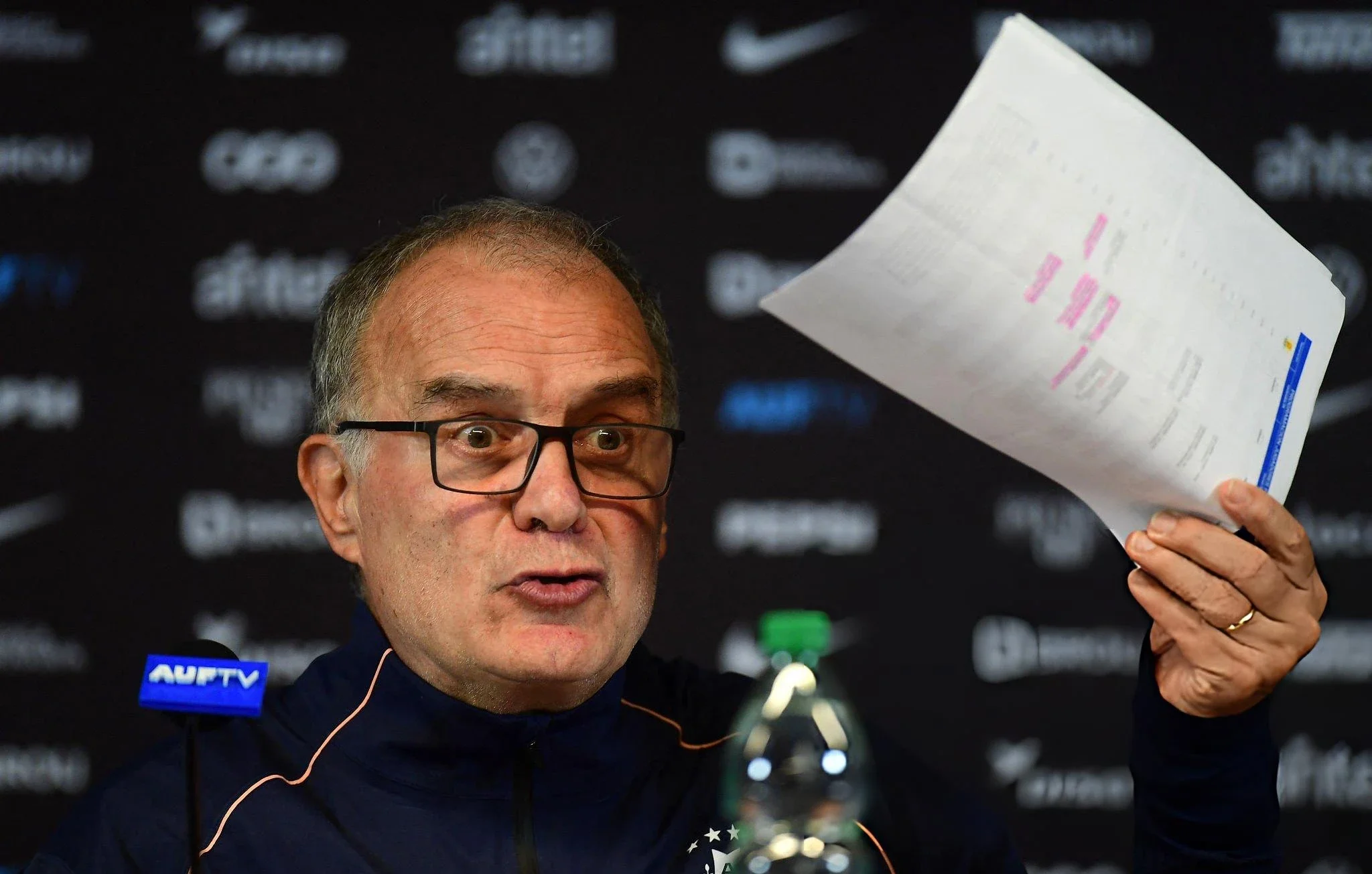
Bielsa listed six main problems that, according to his analysis, affected the squad's preparation: players who arrived injured, players who could only train at the end of the preparation, physical relapses, players called up with little continuity in their clubs, late incorporations due to international commitments, and players who accumulated few minutes during the previous semester.
Bielsa listed the different problems he faced in the preparation leading up to the World Cup
In total, he stated that 12 of the 26 called up faced one of those situations. Nevertheless, he clarified that he did not intend to use those circumstances as an excuse. He explained that the group managed to find answers to each inconvenience and that was one of the reasons why he valued the commitment of his players so much.
The praise for several team leaders
During the conference, Bielsa dedicated several minutes to highlight the individual effort of different players. One of the cases he developed the most was that of Manuel Ugarte. He recalled that he arrived at the World Cup after having played very little at his club (Manchester United) and explained that he progressively regained his physical level until completing a great match against Spain.
He also praised the evolution of Nicolás De la Cruz, who had had little continuity before the World Cup and, as he explained, ended up becoming a strong candidate for the starting position
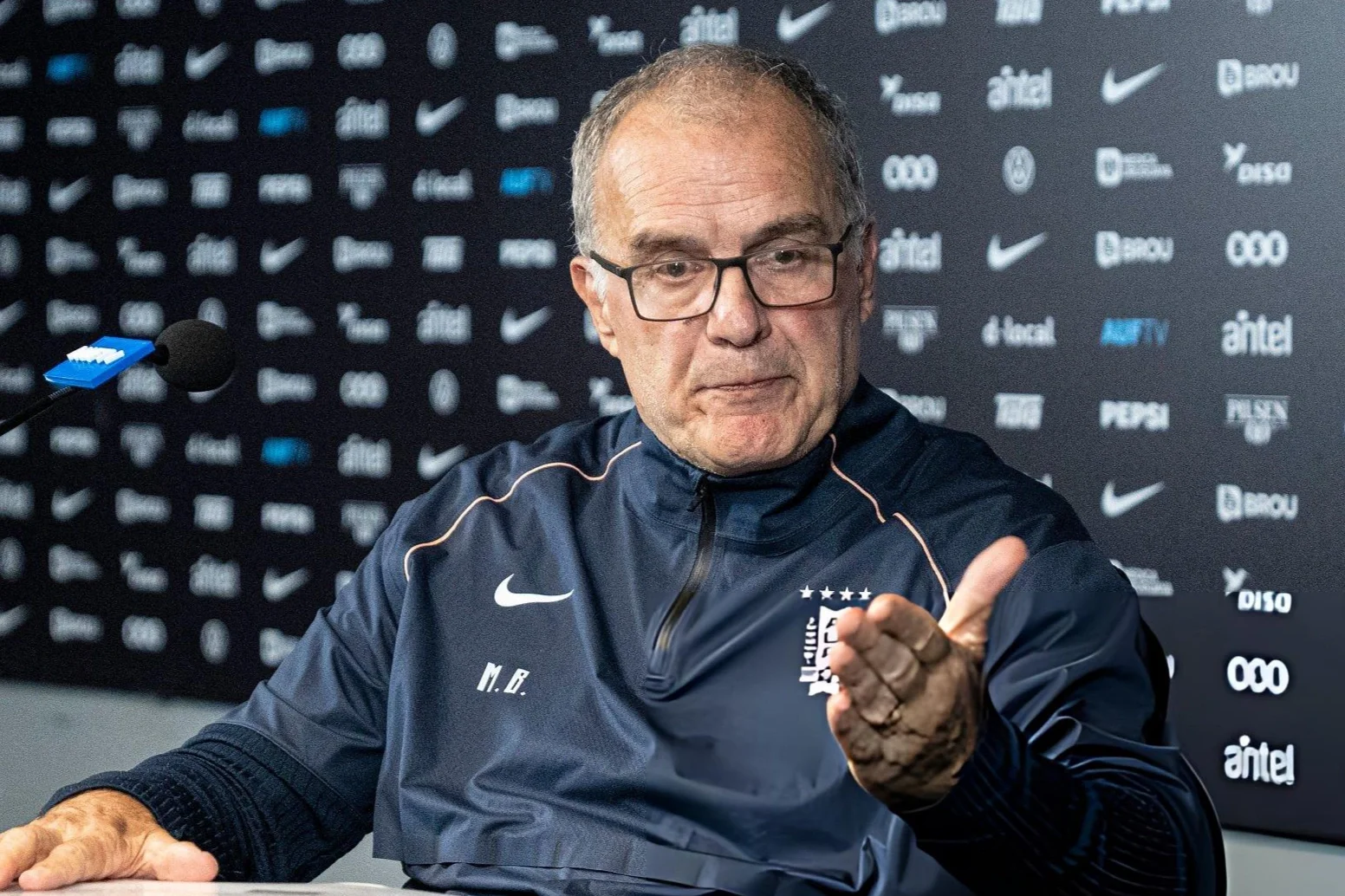
The unexpected elimination of Uruguay in the group stage of the 2026 World Cup left a huge disappointment among fans and raised numerous questions about the already concluded cycle of Marcelo Bielsa at the helm of the national team. Days after the Celeste's participation ended, the coach faced the microphones in an extensive press conference where he took full responsibility for the sporting failure, explained various aspects of the coexistence with the squad, and rejected that relationship problems were decisive in the team's outcome.
"We have disappointed the fans"
From the beginning of the conference, Bielsa did not seek to soften the blow and made a strong self-criticism of his team's performance in the World Cup.
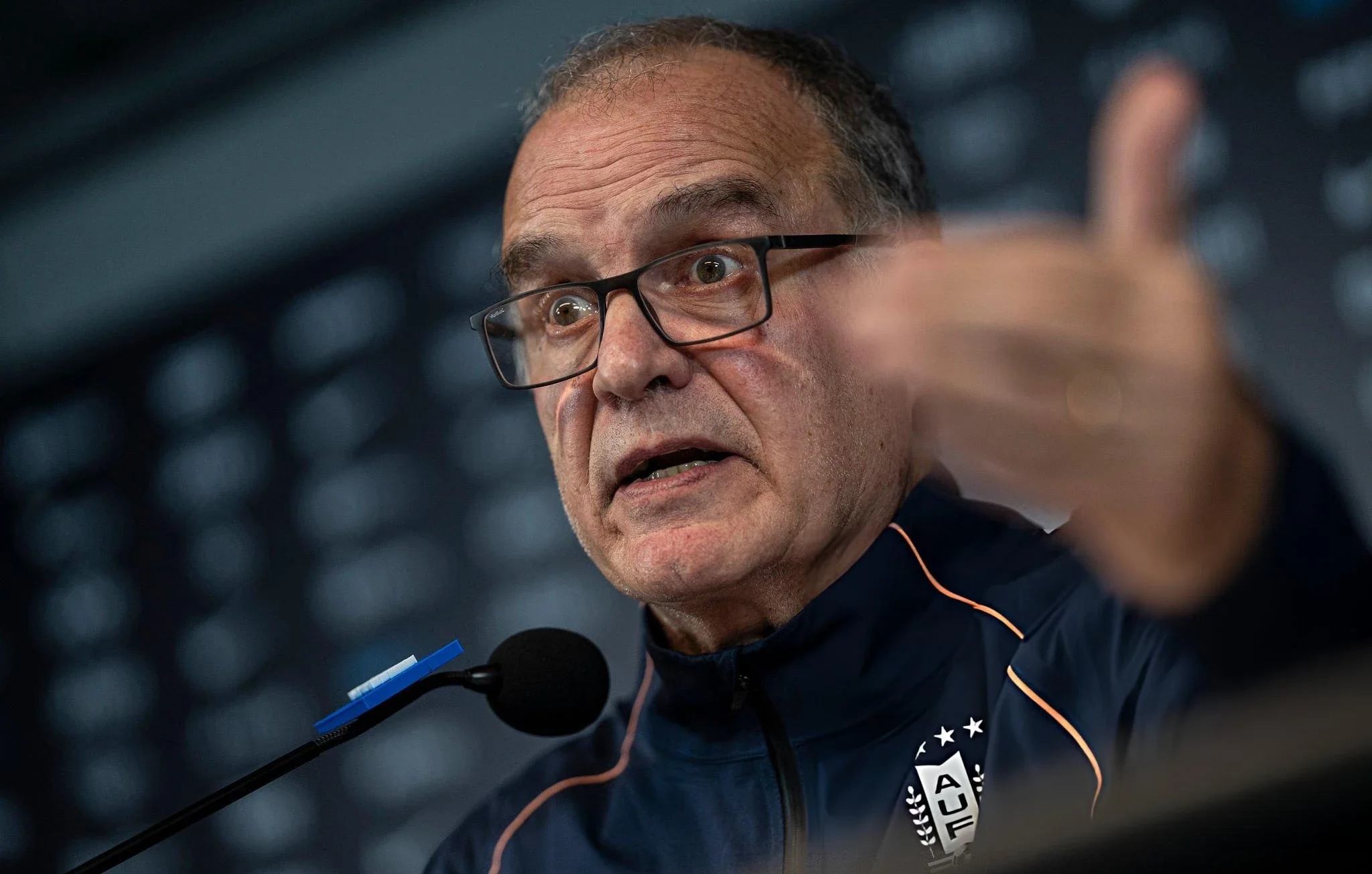
When evaluating Uruguay's performance, he stated that "we have disappointed the fans", described the elimination as "a very big frustration", and acknowledged that "it was completely unexpected that our final position would be what it was". In that vein, he added that it was "a fall that no one can admit, accept, or endure", especially for the public, whom he defined as "the recipients of what we do".
For Bielsa, Uruguay disappointed its people
The Argentine coach also took full responsibility for the result obtained. He explained that "the management I made of the resources I had, referring to the quality of the available players, was not enough" and stated that he found no justification for the position in which the team finished.
Nevertheless, he emphasized that both he and his coaching staff and the players did "the maximum", although he acknowledged that "clearly it was not enough". He even asserted that, looking back, he does not believe that choosing other paths would have changed the outcome of the tournament.
His response about the alleged conflict with the players
One of the main focuses of the conference was on the reports that spoke of differences between the coach and the squad during the preparation for the World Cup.
When asked about the information claiming that some players had requested to modify the tactical approach to face Spain, Bielsa was categorical in denying that possibility. "That did not happen", he replied, adding that, had it occurred, "it would be something that would not reflect well on the players". As an argument, he pointed out that the development of the match clearly demonstrated that Uruguay played according to his ideas.
However, he did confirm that there were numerous meetings with the players during the preparation, although he explained that they were focused on methodological aspects and not football-related.
The two requests made by the players
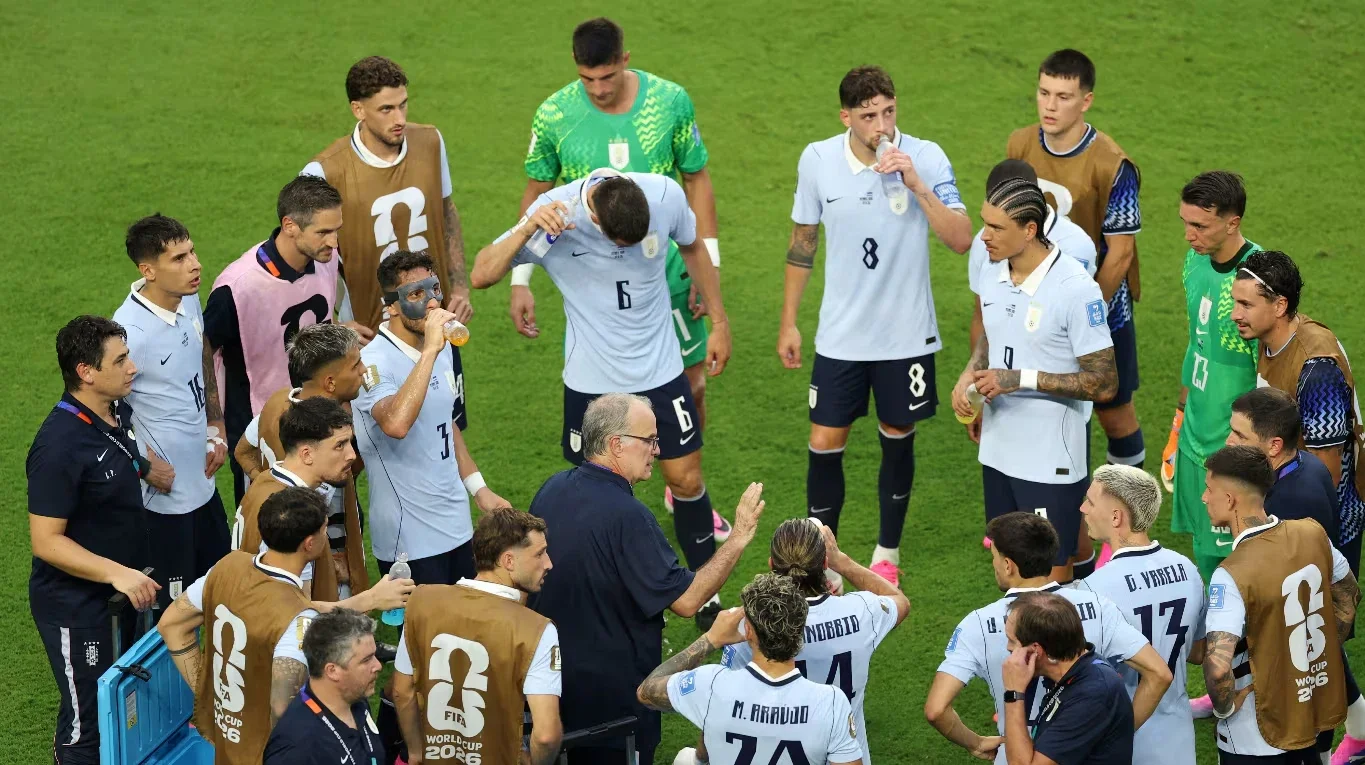
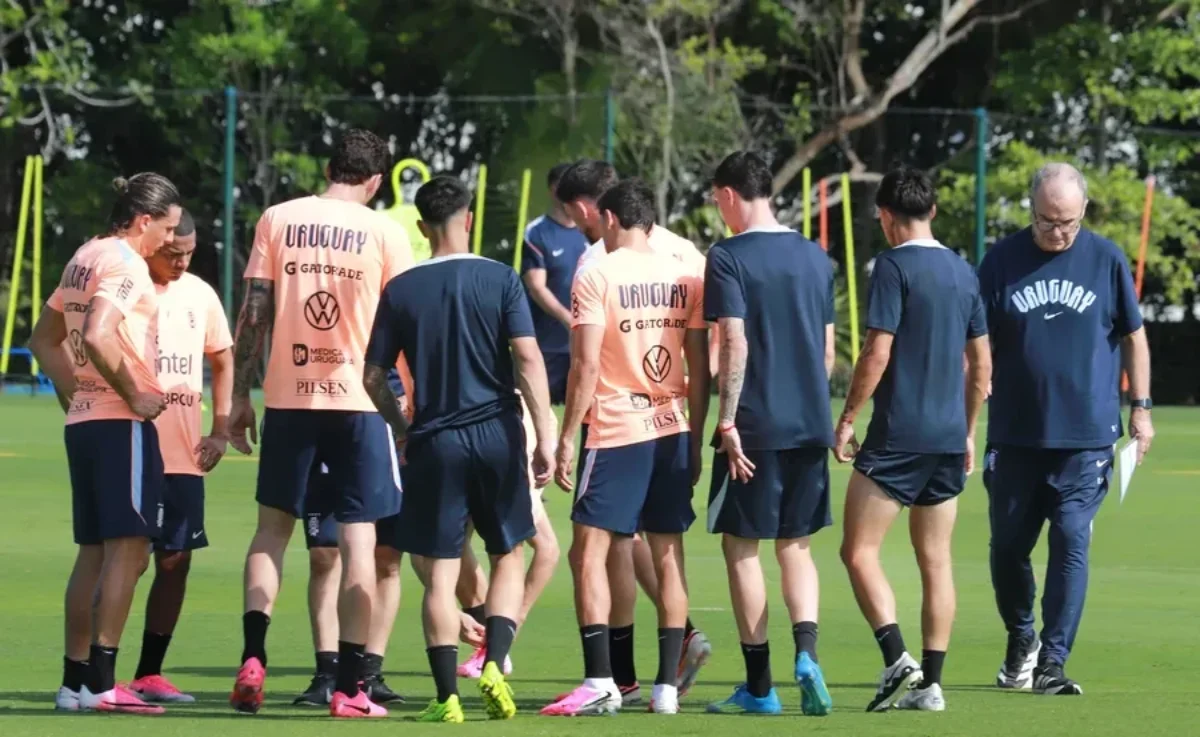
According to Bielsa, after the match against the United States, he began a series of conversations with small groups of players to hear their concerns. From those meetings, two concrete requests emerged. The first was to train all together and to stop dividing the squad into two groups, a methodology that the coach had used for years.
The Loco explained that he had sporting reasons to work that way. He noted that by dividing the group, the training sessions were shorter, which was especially important due to the high temperatures and humidity during the preparation, and it also allowed him to observe each player's individual performance more closely. However, he shared that the players expressed to him that they preferred to train together because they needed to feel "close" and strengthen the group's coexistence.
In light of that request, he decided to modify his method. "I thought that if they had that need, I had to accept it", he explained, adding that agreeing to that request was the most logical decision because insisting on a stance that the players no longer shared would only have generated unnecessary conflict.
The team asked Bielsa for two changes in training: one unified group instead of two and fewer talks
The second request from the squad was related to the number of meetings and informational talks. Bielsa acknowledged that he always considered it important to explain in detail both the training sessions and the opponents and analyze previous matches, but he mentioned that the players felt that this volume of information ended up overwhelming them.
Faced with that scenario, he said he consulted with specialists on how to adapt communication to new generations and received as a recommendation to reduce the duration of meetings and distribute the content over different days.
The coach assured that he applied those changes, shortened the talks, reduced the information he conveyed, and even eliminated some meetings altogether when the players expressed that they preferred to rest mentally. "The recipient of a message has the right to say this is useful to me and this is not useful to me", he summarized.