Japanese scientists combined a poem from the year 1204 with buried tree rings and confirmed shorter and more intense solar cycles that generated visible auroras at unusual latitudes such as Kyoto.
A team of researchers from the Okinawa Institute of Science and Technology managed to reconstruct the Sun's activity in the early 13th century thanks to an unusual combination of art and science: a Japanese poem and tree rings buried in northern Japan.
The results show that during that distant time, the Sun went through much shorter cycles than today, about 6 or 7 years instead of the usual 11, but with extreme intensity.
This generated unusual phenomena, such as auroras visible at lower latitudes than normal.
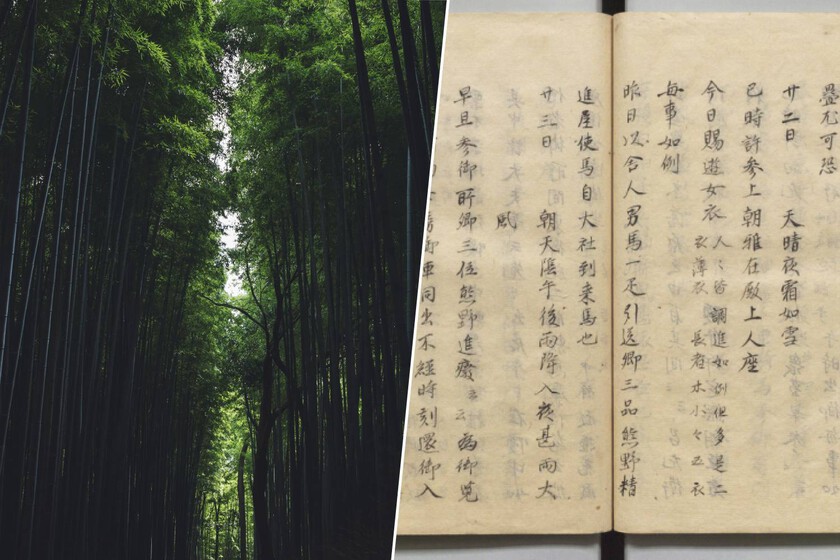
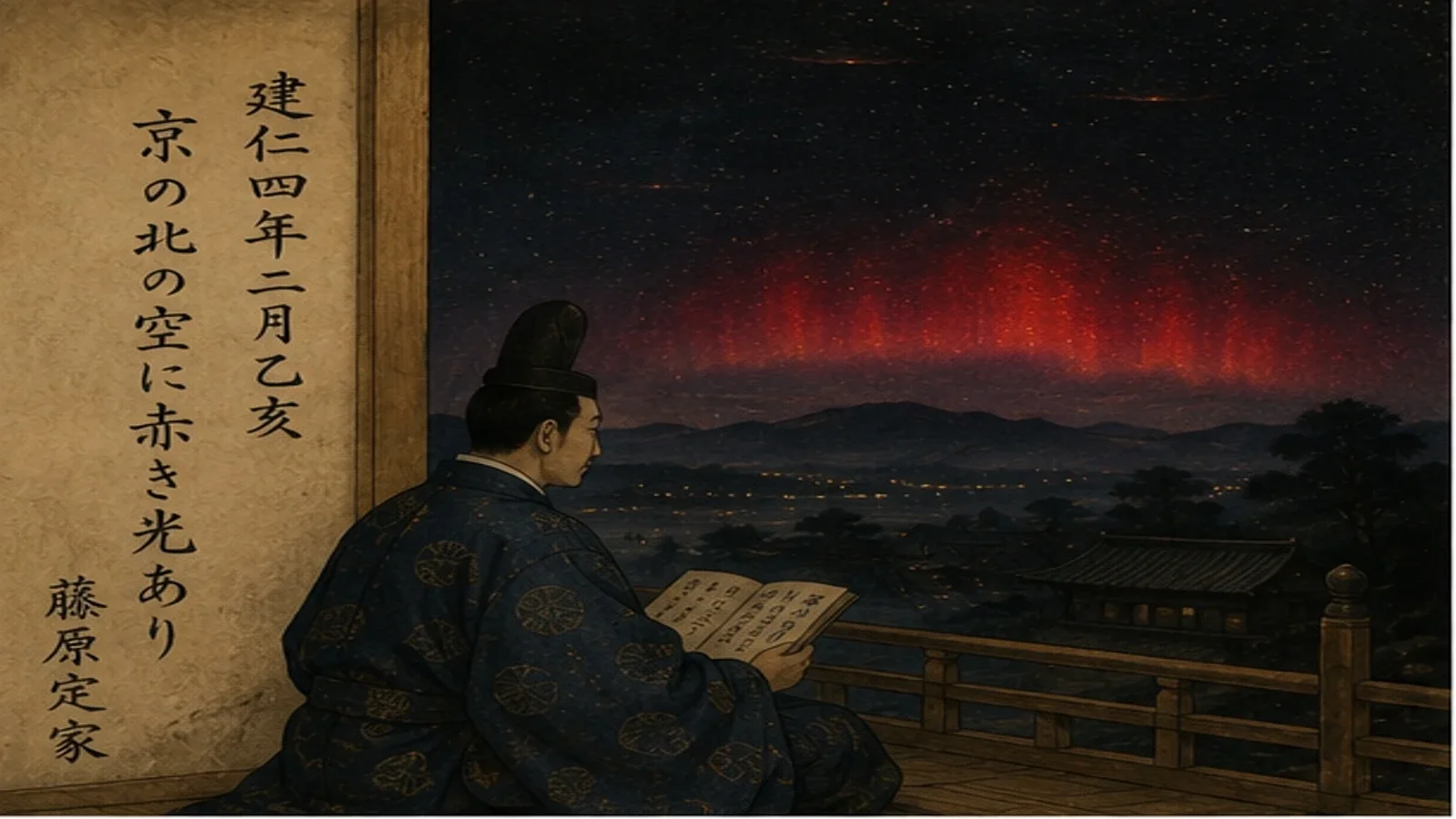
The poet Fujiwara no Teika left a key record in his diary Meigetsuki. In 1204, he described “red lights in the sky over northern Kyoto,” a place too far south to see auroras under normal conditions.
What the trees told
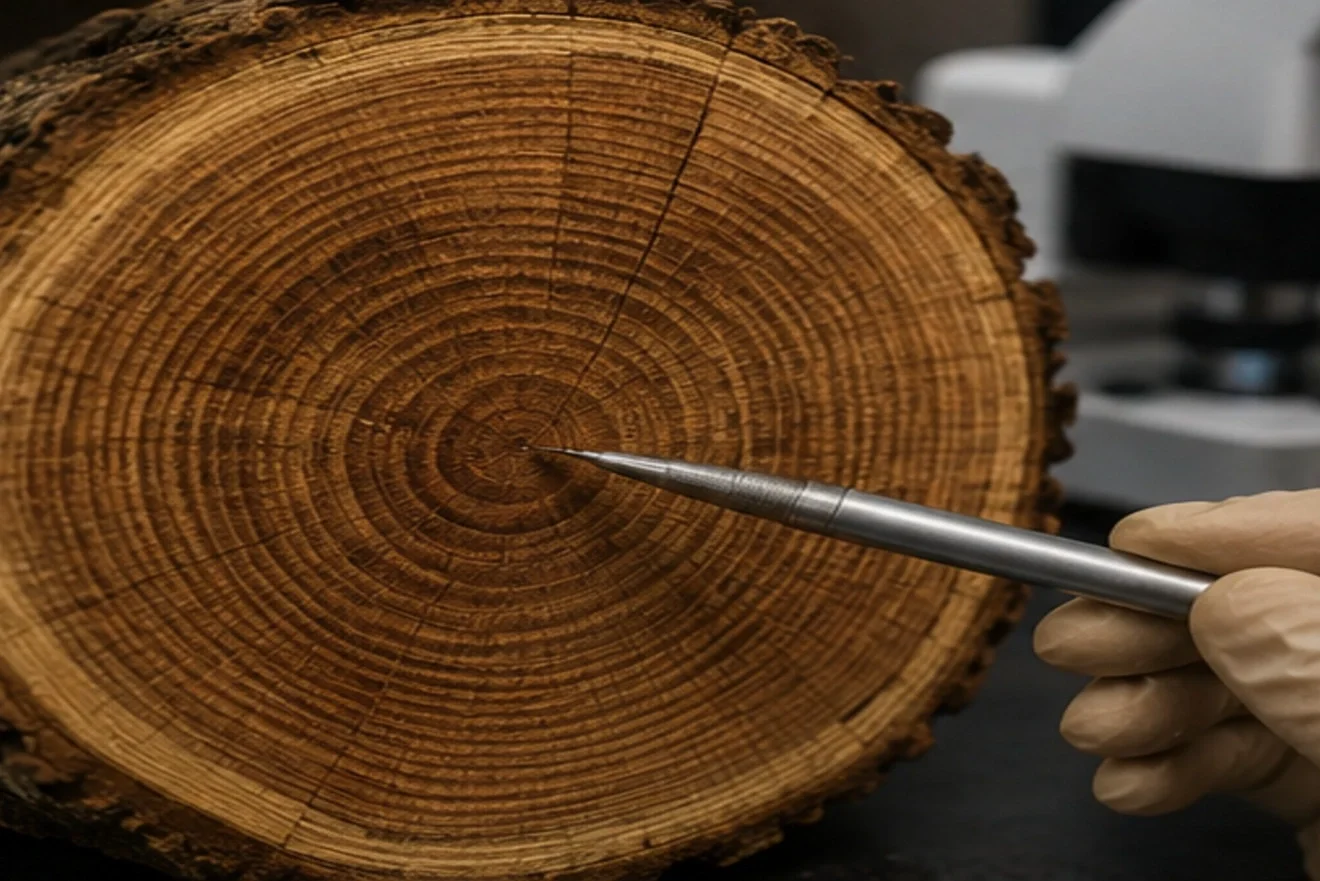
The rings of buried tree trunks provided scientific confirmation. By analyzing those corresponding to the winter of 1200 and the spring of 1201, researchers detected a notable increase in carbon-14 levels.
This isotope forms when charged particles from the Sun interact with the Earth's atmosphere. The data matched the elevated levels of beryllium-10 found in ice cores from the same period.
Additionally, historical Chinese records from the time also mention red lights in the sky, reinforcing the idea of a powerful solar event.
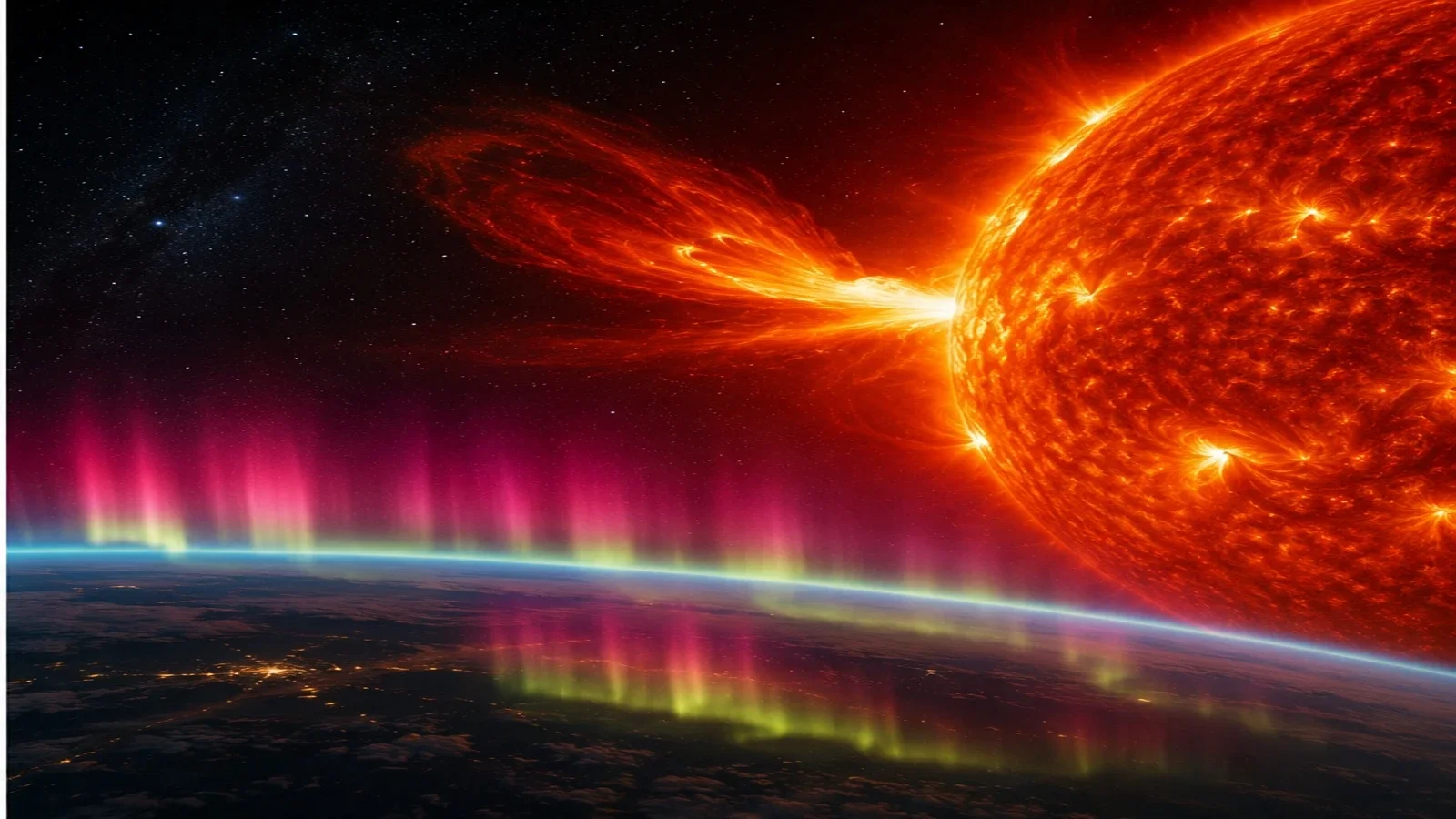
Nowadays, auroras are usually limited to polar regions because the Earth's magnetic field acts as a shield. But when solar activity is very intense, those particles manage to reach further and create the luminous spectacle in unexpected regions.
Proton explosions and unusual cycles
Solar flares and coronal mass ejections release large amounts of charged particles. In the 13th century, these events were especially strong, possibly even during a solar minimum, something scientists are still trying to explain.
The curious thing is that it did not occur at the peak of the cycle, but seems to have happened near a period of lower activity, raising new questions about the Sun's behavior during that medieval stage.
The carbon-14 present in the trees allowed not only precise dating of the moment but also measurement of the event's magnitude. Plants incorporate this isotope during photosynthesis, and when the trees die, it is recorded in their rings as a trace of cosmic bombardment.
This type of study demonstrates how seemingly disconnected sources, such as ancient poetry and dendrochronology, can come together to reveal secrets of the solar past.
Current solar cycles are more stable and predictable, but understanding these extreme episodes helps scientists anticipate possible impacts on modern technology, such as satellites or power grids.
The Sun of the 13th century was especially active, and thanks to a poet and some trees that remained buried for centuries, we can better understand that history today.