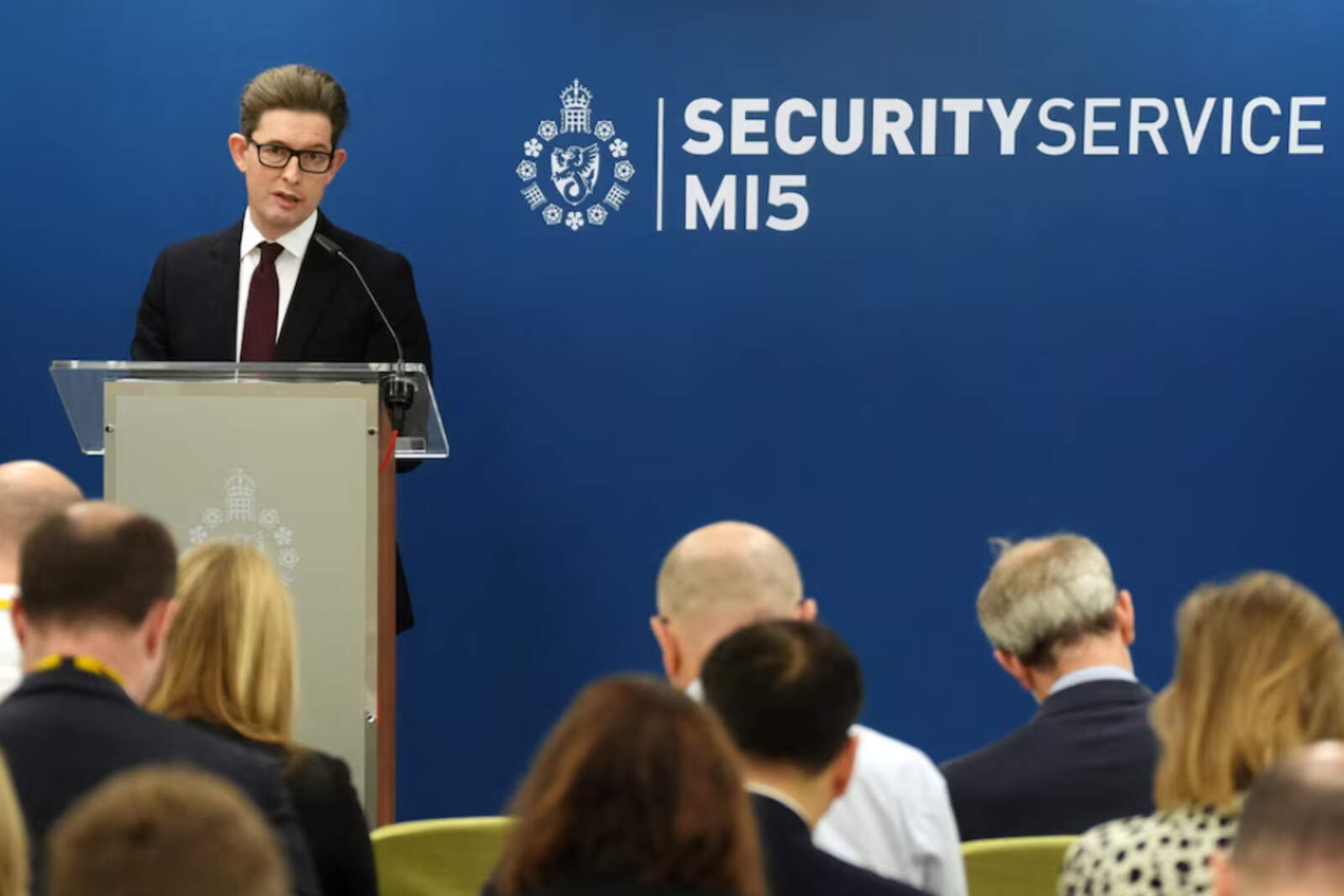
The British intelligence agency issued a formal warning to Parliament regarding Chinese espionage maneuvers that sought to recruit lawmakers
Compartir:
British MI5 issued an espionage alert directed at parliamentarians and legislative staff after detecting that Chinese agents attempted to recruit individuals with access to sensitive information through covert headhunter profiles. The warning, communicated by Security Minister Dan Jarvis in the House of Commons, reflects the growing fear of Beijing's intelligence operations on British soil.
According to Jarvis, security agencies identified activities carried out by Chinese intelligence officers who used front companies and supposed professional recruiters to contact their targets. The alert mentions two active profiles on platforms such as LinkedIn that, although they present themselves as legitimate headhunters, actually report to intelligence officials of the Chinese regime.
The issuance of the warning came weeks after charges were dropped against two men—one of them a parliamentary researcher—accused of spying for China, a case that caused tension in Parliament and strong criticism of the Government.
Concern over Chinese influence in universities and British politics
In addition to recruitment attempts within Parliament, MI5 indicated that China keeps systematic efforts to influence British universities, intervene in academic research, and operate within campuses through organizations close to the Chinese Communist Party. In response, the Government will convene a closed-door meeting with university chancellors to assess risks and strengthen protocols.
El MI5 alerta que China intentó reclutar parlamentarios británicos mediante espías disfrazados de cazatalentos
Jarvis also announced additional measures to "disrupt and deter" threats from hostile states, including China, among them increased scrutiny of political funding, security briefings for parties, and a comprehensive strategy to protect digital infrastructure against cyberattacks. London accuses Beijing of enabling the development of an "offensive cyber ecosystem" that threatens Western institutions.
A challenge for Keir Starmer's Labour Government
The forceful intervention by the Security Minister seeks to dispel suspicions about an alleged soft stance by Keir Starmer's Government toward China in order to attract investment to revive the British economy. However, the complaint could place the Prime Minister in an uncomfortable position: in the coming weeks, it must be decided whether Beijing will be allowed to build its new and controversial embassy in London, a project opposed by neighbors, human rights activists, and sectors within Parliament itself.
Pressure on the Government is mounting as Western warnings about espionage practices, digital surveillance, and political interference promoted by the Chinese regime multiply. The United States, Canada, Germany, and Australia have already reported similar operations, as well as global hacking campaigns attributed to groups backed by Beijing.
El MI5 alerta que China intentó reclutar parlamentarios británicos mediante espías disfrazados de cazatalentos
Espionage, cyberattacks, and a tense bilateral relationship
Beijing has repeatedly denied the espionage accusations, but the new MI5 alert confirms that the United Kingdom considers China one of the main actors threatening national security. The case also reinforces the broader Western approach that calls for protecting democratic institutions, scientific research, and strategic systems in the face of the growing influence of authoritarian powers.
The MI5 warning underscores that infiltration maneuvers are not isolated: they are part of a sophisticated network that combines traditional espionage, digital manipulation, economic pressure, and the building of influence networks. In Westminster, the message was clear: the British Parliament remains a top target for Beijing, and the Government promises to use "all available tools" to stop it.