The president defended capitalism and maintained that politics must not choose between ethics and efficiency
Nuevo
Agregar La Derecha Diario en
Compartir:
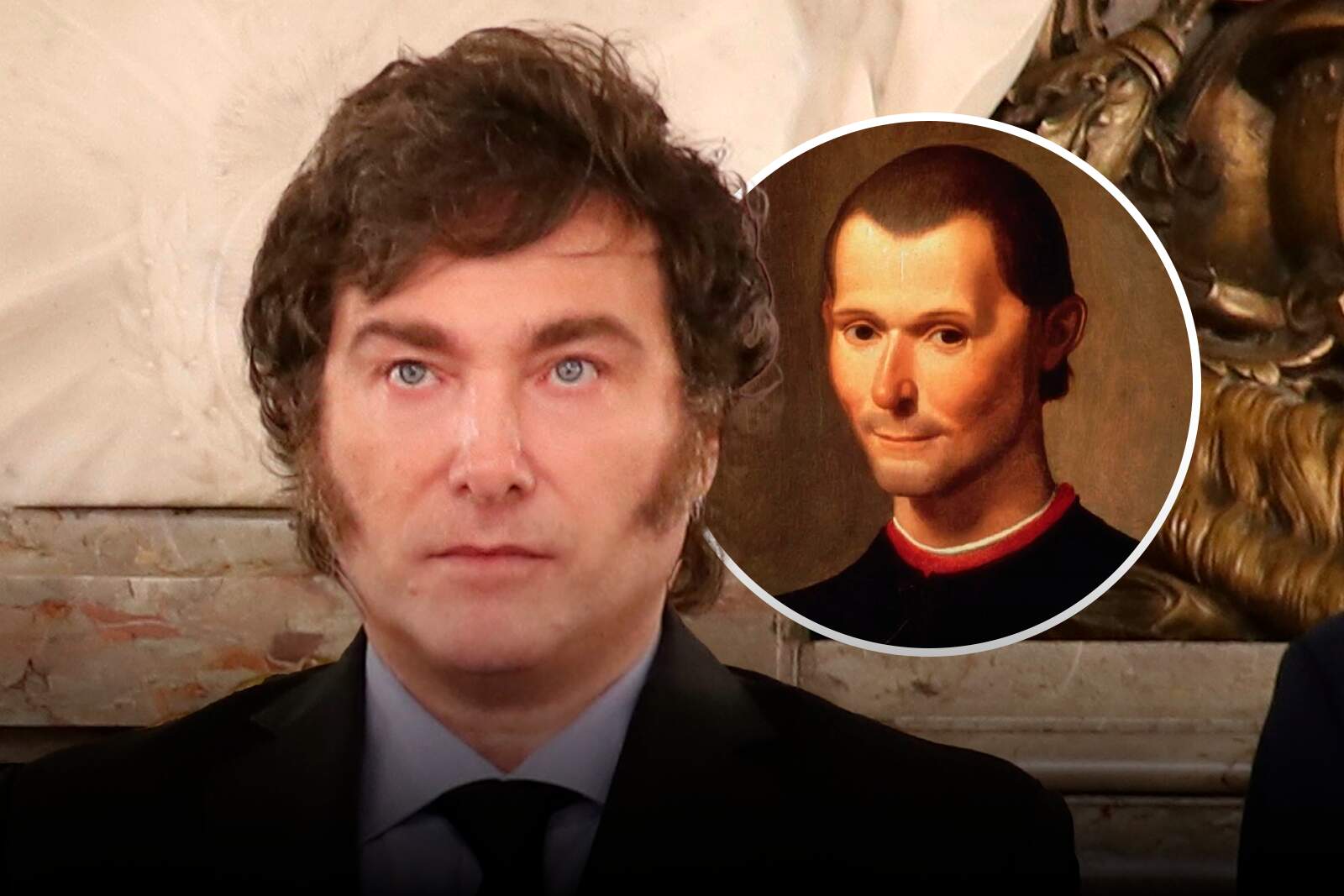
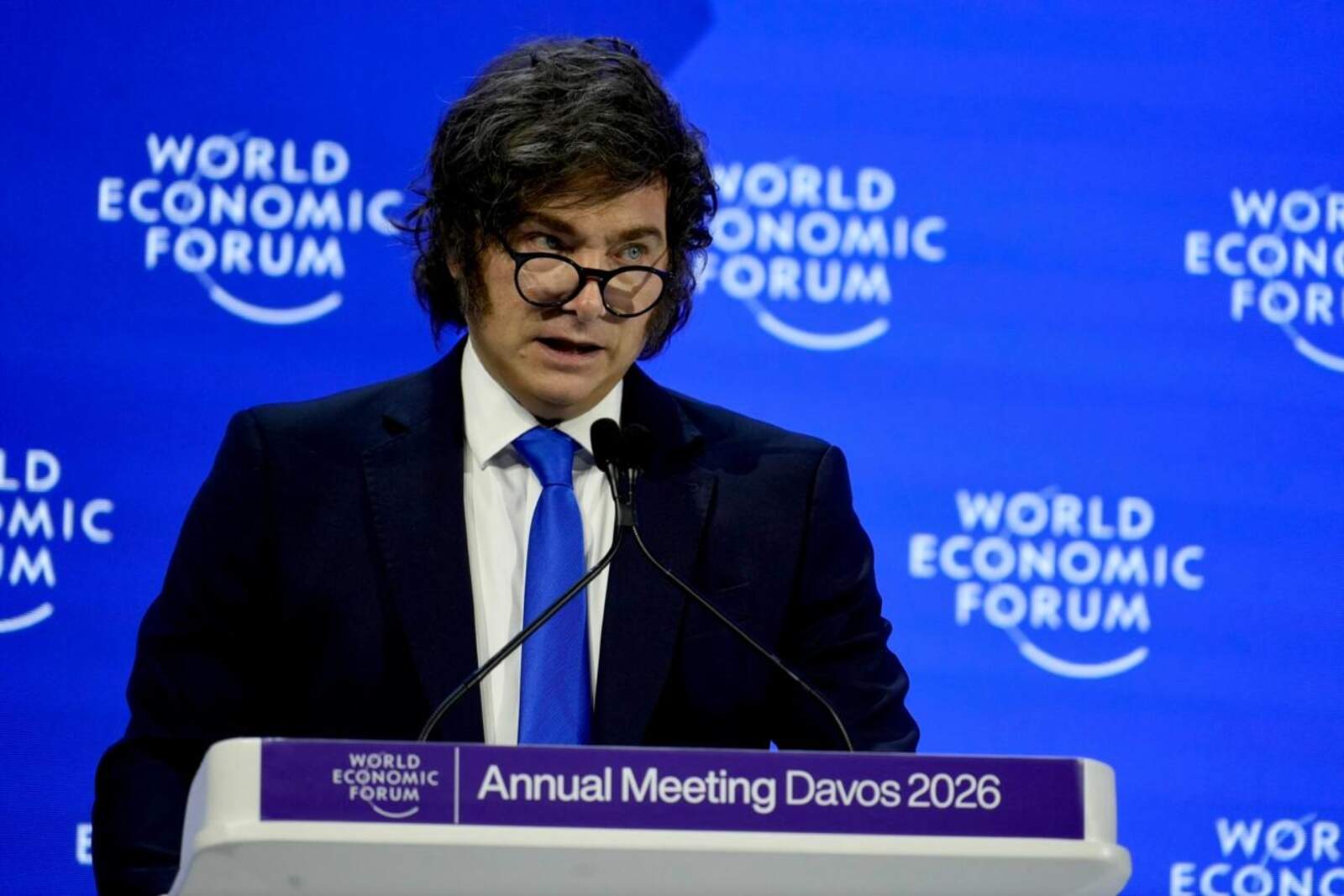
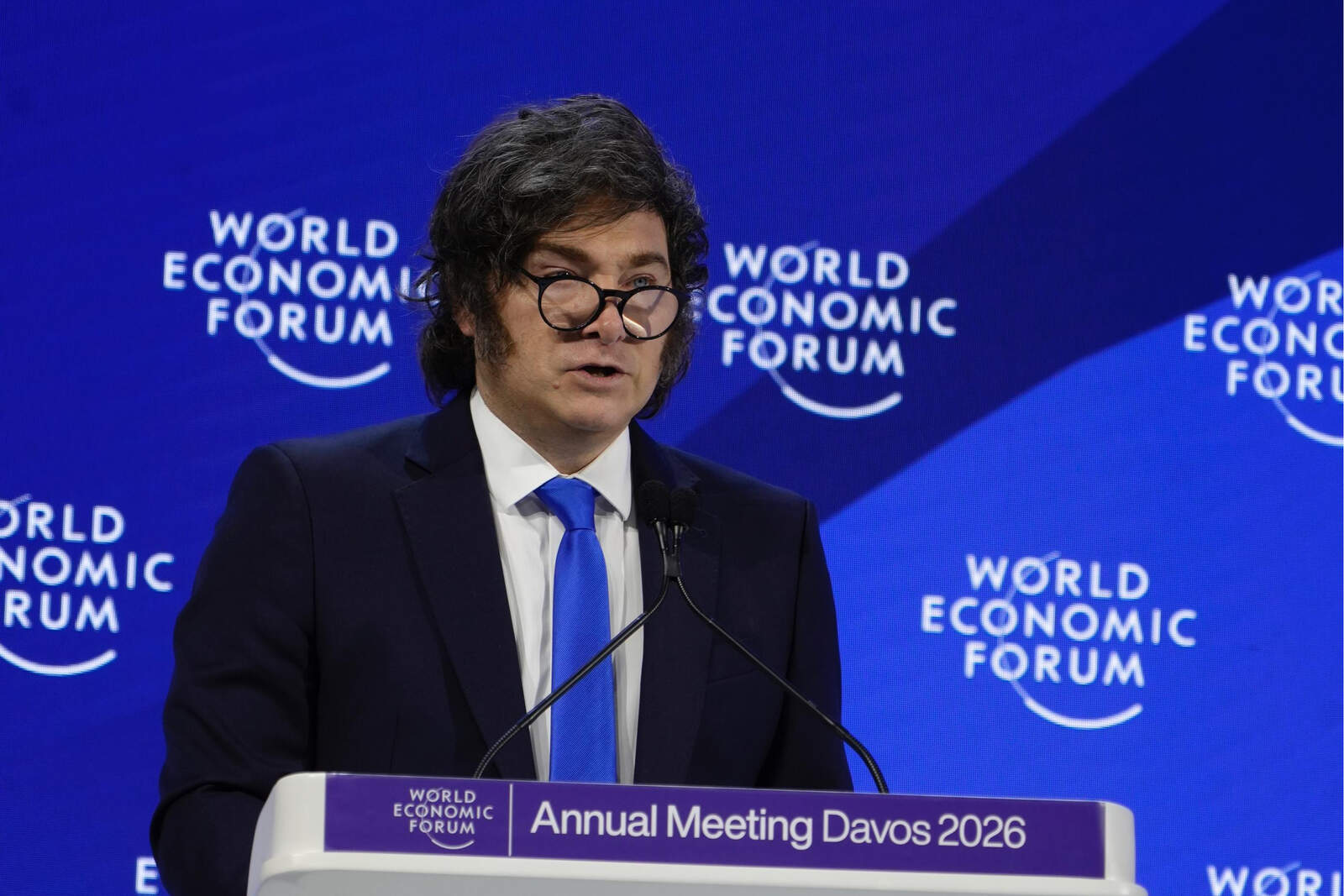
President Javier Milei spoke on Wednesday at the World Economic Forum in Davos, where he delivered a speech focused on the defense of capitalism and stated emphatically that "Machiavelli is dead", as he rejected the idea that politics must choose between economic efficiency and moral principles.
From the beginning of his presentation, Milei argued that for decades a mistaken view had taken hold in the formulation of public policies. "I am here before you to tell you categorically that Machiavelli is dead", he stated, as he questioned the belief that efficiency requires abandoning ethics.
According to his explanation, that approach created a "false dilemma" between efficiency and justice, when both dimensions, he stated, not only do not contradict each other, but complement each other.
In this context, the President cited liberal economists such as Jesús Huerta de Soto and Murray Rothbard, whom he mentioned to support the idea that economic efficiency can only arise within a system that respects private property, entrepreneurs, and the moral values of the West. In that sense, he summarized his position by stating: "What is just can't be inefficient, and what is efficient is just".
El presidente Javier Milei.
During his address, Milei returned to criticisms that he had already made in previous editions of the forum. He pointed out that many policies promoted by international organizations respond to "socialist agendas", which end up generating serious negative consequences. At that point, he recalled a phrase by economist Thomas Sowell, when he warned that socialism "always ends badly".
As a recent example, the President mentioned the case of Venezuela, which he described as an extreme example of the effects of those policies. According to his argument, the problem is not limited solely to economic collapse, but also includes institutional, social, and moraldeterioration. For Milei, this ethical degradation of the West is directly related to the abandonment of the ideas of freedom.
Capitalism is the only just system
One of the central themes of his speech was the defense of capitalism not only as a mechanism for generating wealth, but as a morally just system. Milei maintained that it is not enough to demonstrate that capitalism produces better economic results if its ethical foundation is not also demonstrated. In that sense, he stated that "free enterprise capitalism is not only more productive, but it is also the only system that is just".
The President linked this conception to natural law, Roman law, and Judeo-Christian values. He explained that essential rights, life and liberty, give rise to acquired rights such as private property, all sustained by the non-aggression principle. At that point, he emphasized: "No human being has the right to exercise coercion over another".
El presidente Javier Milei.
In another part of his presentation, Milei strongly questioned state intervention in the economy. He asserted that regulating markets that arise from voluntary exchanges implies violating property rights and harming growth. "Regulation kills growth", he stated, and he defended the course adopted by his administration since 2023.
As support for his position, the President listed achievements of his administration. He mentioned the elimination of a fiscal deficit equivalent to 15 points of GDP, the reduction of inflation from 300% to 30%, the reduction of country risk, and a significant drop in poverty. According to his argument, these advances were made possible thanks to public policies guided by ethical and moral values.
Toward the end, Milei stated that the West is going through a decisive moment. He recalled that in Davos 2024 he had warned that "the West is in danger", and that in 2026 he brought a different message: the world, especially the Americas, had begun to wake up and to recover the ideas of freedom.
"Machiavelli is dead, therefore, it is time to bury him", the President concluded, as he called for a return to the philosophical and moral roots that made the West great.