
La Derecha Diario logo
ESX logoInstagram logoYouTube logoTikTok logoFacebook
ARGENTINABOLIVIAECUADORISRAELMEXICOURUGUAYDERECHA DIARIO TV
  • ES
    XInstagramYouTubeTikTokFacebook
  • DERECHA DIARIO TV
  • Secciones
  • ARGENTINA
  • BOLIVIA
  • ECUADOR
  • ISRAEL
  • MEXICO
  • URUGUAY
  • Países
  • La Derecha Diario logoLA DERECHA DIARIO
  • La Derecha Diario México logoLA DERECHA DIARIO MÉXICO
  • La Derecha Diario Uruguay logoLA DERECHA DIARIO URUGUAY
  • La Derecha Diario Ecuador logoLA DERECHA DIARIO ECUADOR
  • La Derecha Diario Israel logoLA DERECHA DIARIO ISRAEL
  • La Derecha Diario Estados Unidos logoLA DERECHA DIARIO ESTADOS UNIDOS
  • Temas
  • GUERRA EN IRÁN
  • El Diario
  • QUIENES SOMOS
  • AUTORES
  • PUBLICIDAD
  • DONAR

Milei conquers Paris and leaves Kirchnerism trapped in its own past

Milei conquers Paris and leaves Kirchnerism trapped in its own past
Imagen de Editorial Team
porEditorial Team
Argentina

As the world acknowledges the Argentine results, the old politics is once again exposed for its privileges, its scandals, and its economic failure

NuevoAgregar La Derecha Diario en
Compartir:

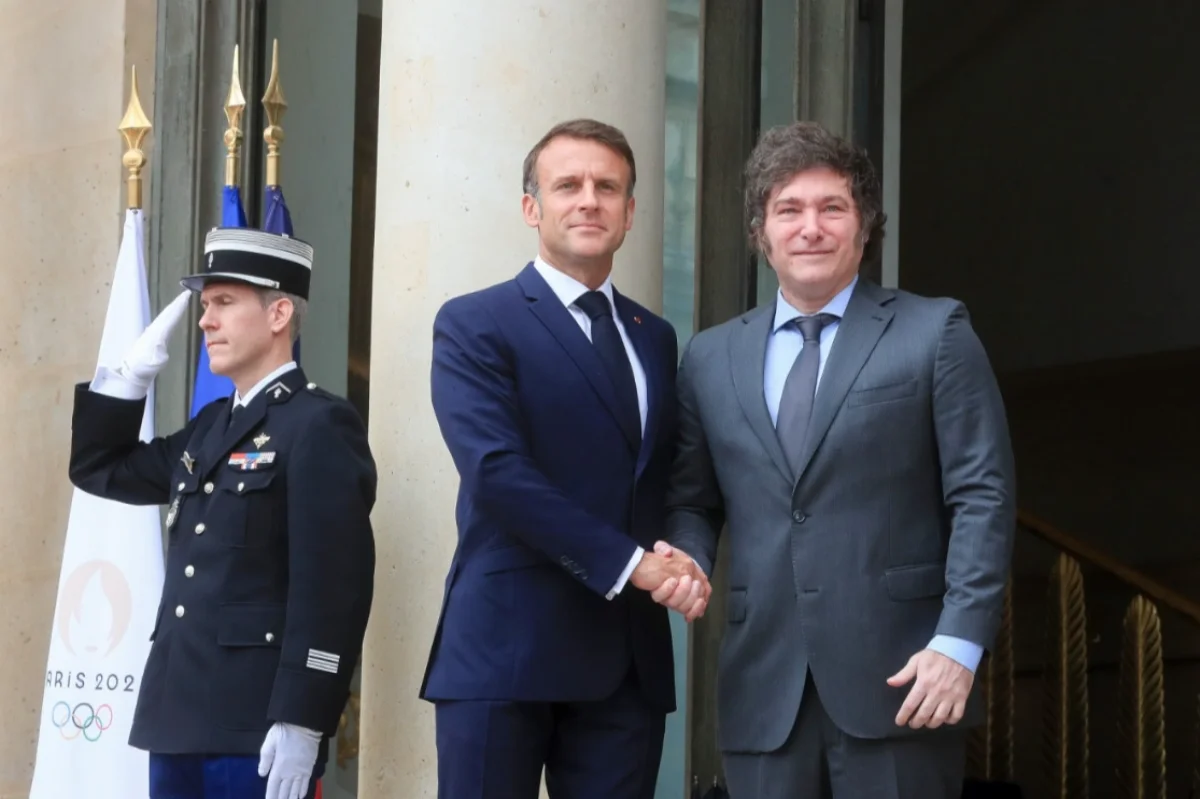
The Argentine politics is going through one of those moments when reality begins to challenge narratives that have been established for years. While much of the opposition continues to defend the same recipes that left inflation, deficit, and stagnation, Javier Milei will be honored in France during Argentina Week 2026 for his influence on the global economic debate. The news carries a significance that transcends any personal recognition: the world is starting to pay attention to an economic experience that many had dismissed before it could show results.

Just a few years ago, Milei was presented by numerous leaders, analysts, and international media as a political anomaly destined for failure. Social crises, external isolation, and an inevitable economic collapse were anticipated. However, reality ended up taking a different turn. His reform program went from being viewed with skepticism to becoming a case study within a broader discussion about stability, growth, and economic transformation.

For decades, Argentina was seen from the outside as a recurring example of chronic inflation, permanent fiscal deficit, currency controls, and successive crises. Today, the conversation is starting to incorporate other concepts: fiscal balance, inflationary deceleration, reduction of public spending, and recovery of confidence.

The indicators support this change. The country risk has fallen to levels not seen in years, public accounts maintain a surplus, and economic expectations show sustained improvement. While some leaders continue to announce catastrophic scenarios, the economy is beginning to exhibit signs that contradict much of those forecasts.

There lies the real problem for the opposition. It is not about Milei's figure or his political style. The challenge arises when the results force a revision of claims that were presented as indisputable certainties for years. It was argued that it was impossible to reduce the deficit without causing an immediate collapse. It was claimed that ordering public accounts would destroy economic activity. It was also asserted that markets would never trust Argentina again. Today, those claims coexist with a reality that is much more complex than what their defenders anticipated.

That is why the international recognition has an evident political weight. It is not simply a photograph in Paris or a ceremonial event. It represents the external validation of a process that began facing enormous resistance and is now starting to generate interest beyond Argentine borders.


This recognition also enhances the contrast with the previous stage. While the current administration showcases fiscal balance as its main banner, there are constant reminders of how the old political model functioned. The questions regarding the use of public resources, the privileges accumulated by leaders, and the multiple episodes of corruption associated with the Kirchner years continue to be part of a recent memory that much of society does not seem willing to forget.

This contrast helps explain much of the current political climate. On one side, a government trying to build legitimacy based on concrete economic results. On the other, opposition sectors seeking to regain centrality without having yet conducted a deep self-critique of the causes of the crisis inherited by the current administration.

The discussion also exceeds Argentina. The criticisms made by regional leaders like Gustavo Petro reflect a broader dispute between different development models that are currently competing in Latin America. While some governments continue to bet on higher levels of state intervention, Argentina is moving in a different direction. Over time, the comparison between both paths will become increasingly difficult to avoid.

Naturally, the challenges remain enormous. The economic recovery is far from complete, and millions of Argentines continue to face daily difficulties. No one can seriously claim that all problems have been resolved. But it is also becoming increasingly difficult to deny that the direction of change is very different from what those predicting an inevitable failure had forecasted.

For years, Argentina was presented to the world as an example of economic decay. Today it is beginning to be observed for a different reason. A government decided to tackle problems that for decades seemed politically untouchable, and the results are starting to support that process.

While Kirchnerism continues to try to justify the past, Milei is starting to contest the future. And when results begin to impose themselves over narratives, excuses often find themselves without refuge.


La Derecha Diario logo
TwitterInstagramYouTubeTikTokFacebook
Derecha Diario TV

Nosotros

  • Quienes Somos
  • Autores
  • Donar

Privacidad

  • Protección de datos
  • Canales
  • Sitemap
  • RSS

Contacto

  • info@derechadiario.com.ar
PUBLICIDAD

Noticias relacionadas

Israel and Hezbollah agreed to a ceasefire in Lebanon following pressure from the US and Iran

Israel and Hezbollah agreed to a ceasefire in Lebanon following pressure from the US and Iran

Cuban perestroika: the regime announced the deepest pro-market reforms since the Revolution

Cuban perestroika: the regime announced the deepest pro-market reforms since the Revolution

A woman who had been wanted in Buenos Aires for 11 years has been found in Chaco

A woman who had been wanted in Buenos Aires for 11 years has been found in Chaco

Documents have been declassified that prove Fauci funded the laboratory in Wuhan where the coronavirus outbreak began

Documents have been declassified that prove Fauci funded the laboratory in Wuhan where the coronavirus outbreak began

Decisive day in the Agostina Vega case: Andreani is declared and they await the lifting of the confidentiality of the case

Decisive day in the Agostina Vega case: Andreani is declared and they await the lifting of the confidentiality of the case

Tim Payne confirmed that after the 2026 World Cup he will be the new reinforcement for Olimpia of Paraguay

Tim Payne confirmed that after the 2026 World Cup he will be the new reinforcement for Olimpia of Paraguay