
A recent national survey revealed that labor unions, far from being seen as a tool for the defense of rights, are going through a deep legitimacy crisis, where eight out of ten Argentines believe that unions do not represent workers and associate them directly with their own interests rather than with the defense of work.
The information comes from the latest report by DC Consultores, carried out between December 6 and 8, 2025, on a sample of 1,710 cases throughout the country. The study, titled "The Nuisance-State: The End of Social Patience," reveals that the vast majority of society questions the role of unionism and leans toward a more pragmatic approach, oriented toward modernization and economic growth.
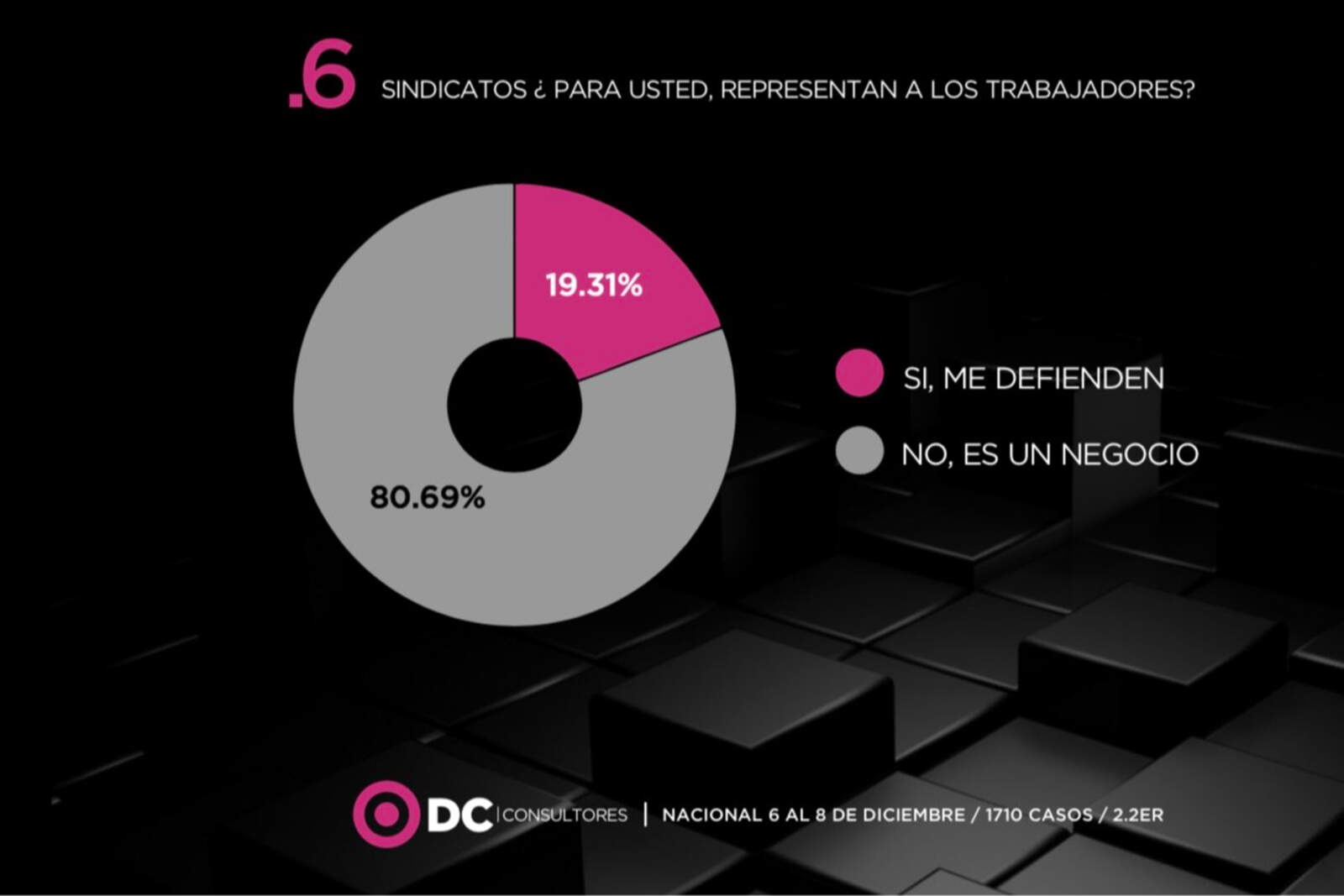
The most striking figure from the survey indicates that 80.69% of respondents state that unions "DO NOT represent workers" and link them to a "business." In contrast, only 19.31% feel that these organizations still defend them. This loss of representativeness marks a turning point for traditional unionism, which for decades occupied a central place in Argentine working life.
The crisis is not limited to trust, but also to the everyday relevance of unions. For 59.18% of Argentines, unions are not important in their working life, a figure that carries particular weight in a labor market with a greater presence of self-employed taxpayers, freelancers, and platform workers, where the classic union model appears out of step with reality.
Strong support for labor reform
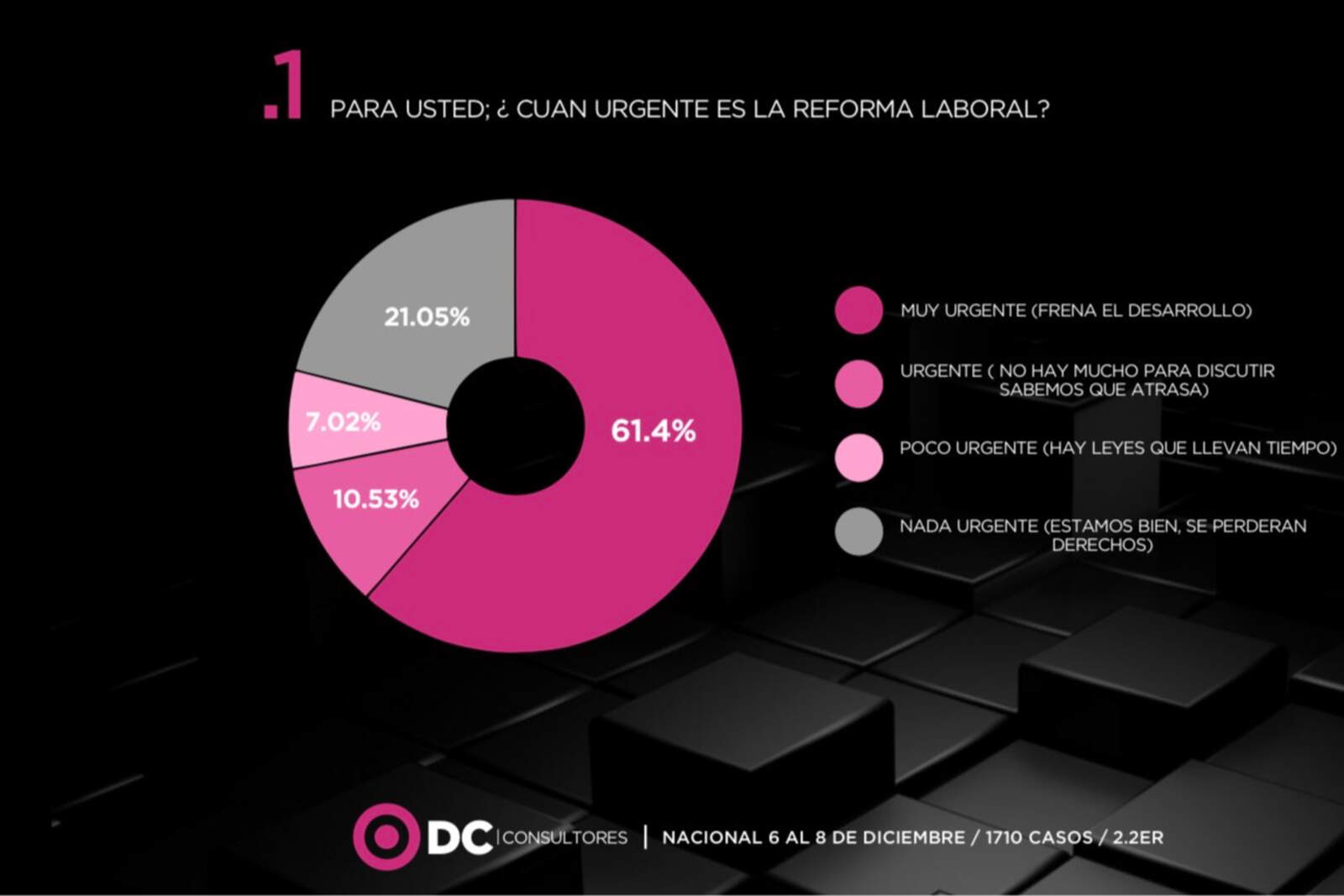
This deterioration in the image of unions translates directly into broad social support for labor reform. The survey shows that seven out of ten Argentines consider it urgent to move forward with structural changes.