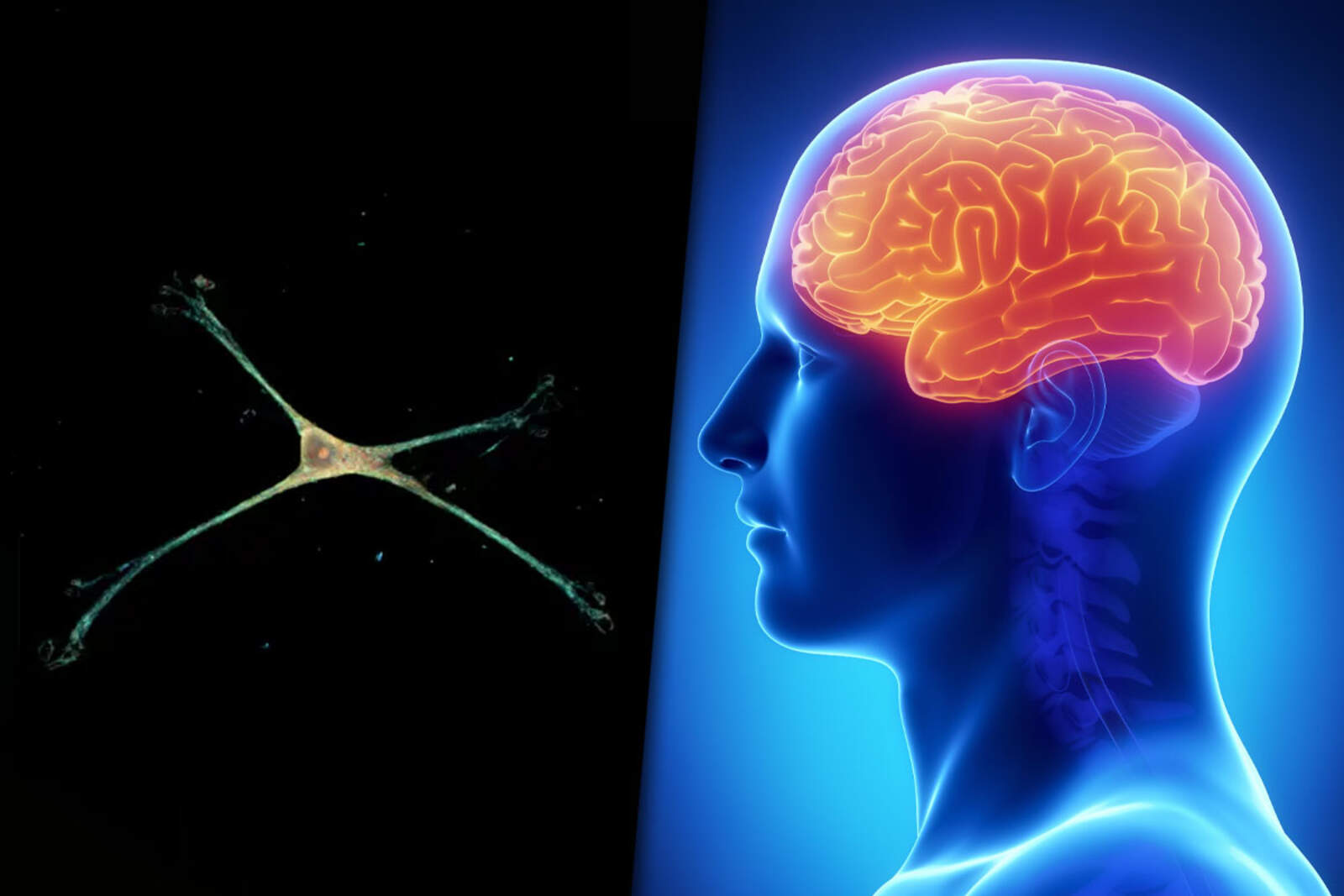
Researchers reveal how astrocytes regain their true shape in the laboratory and why they are vital for understanding the brain
Compartir:
Astrocytes are essential cells for the functioning of the human brain, although for decades they were a true mystery for science. At first glance, they look like neurons, but they perform very different and essential tasks to keep the nervous system healthy.
One of their particularities is that they can change shape, a process that's difficult to reproduce in the laboratory. For this reason, researchers are working to develop new methods that allow them to be studied just as they function within the organism.
A simple vista parecen neuronas
A laboratory can fool many cells, but not astrocytes
In cell biology laboratories, scientists grow cells in incubators that mimic body conditions, such as temperature, nutrients, and CO₂ concentration. Most tissues adapt well, but astrocytes require extreme precision.
These cells, which exist by the billions in the brain, often lose their star-shaped form when cultured in vitro. Without that morphology, researchers can't study how they act under real conditions.
"Stars" of the brain: what they do and why they're so important
Astrocytes get their name from their appearance: multiple arms extend from a central body and embrace neurons. Thanks to that structure, they nourish them, remove waste, and help repair brain tissue.
Los astrocitos reciben su nombre por su aspecto
However, that same shape is their greatest challenge for science. "We understand very little about their diversity and the mechanisms that regulate their shape changes", explained bioengineer Ishan Barman from Johns Hopkins University.
The technique that revolutionized the study of astrocytes
To solve this problem, a team of researchers developed glass nanowire sheets that mimic the brain's neuronal network. When astrocytes are cultured on this material, they regain their star-shaped form and mature just as they do inside the body.
Un equipo de investigadores desarrolló láminas de nanocables de vidrio que imitan el entramado neuronal del cerebro
"They branch out as they do in vivo", said Annalisa Convertino from the National Research Council of Italy. This breakthrough will make it possible to understand how morphology affects their function.
A new way to observe the brain
To track their evolution, the team used a special microscope that allows 3D imaging without using stains. With this tool, they observed how the cells grew, expanded, and colonized the nanowires.
"We can finally quantify the shape of astrocytes precisely", celebrated Anoushka Gupta, a member of the team.