A study with Cassini data suggests that Titan could hide temperate liquid water beneath its icy surface
Nuevo
Agregar La Derecha Diario en
Compartir:
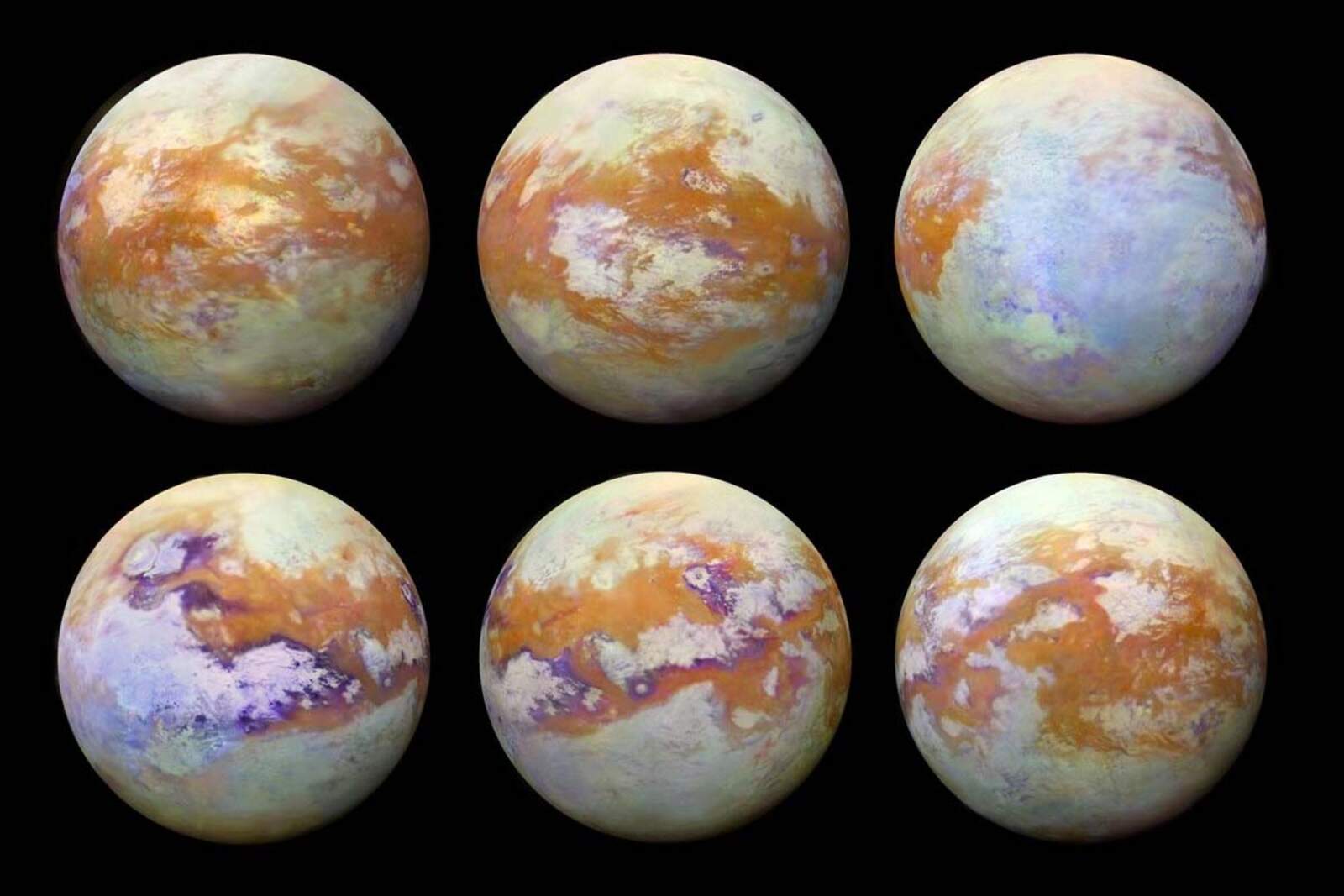
Titan, the largest moon of Saturn, has once again moved to the center of the scientific spotlight. A new study suggests that, beneath its icy surface, there could be pockets of temperate liquid water, with more hospitable conditions than previously thought.
The finding, based on data from the Cassini mission, opens an unexpected possibility.
Implicancias para la dinámica de Saturno
An interior very different from what scientists imagined
For years, scientists believed that Titan hid a global ocean of salty water beneath its frozen crust. However, the new research, published in Nature and led by scientists from NASA's JPL, calls that idea into question.
According to the analysis, the moon's interior doesn't behave like a free ocean. Instead, it would be a dense mixture of ice, trapped water, and frozen material, organized into isolated compartments.
Tidal friction and trapped heat
The key to the model lies in the tidal friction caused by Saturn's gravitational pull. That constant stretching produces internal heat, which can remain trapped in specific regions.
Los científicos creyeron que Titán escondía un océano global de agua salada bajo su corteza congelada
This process would make it possible to maintain reservoirs of liquid water at temperatures close to 20 °C (68 °F), far above the –180 °C (–292 °F) on the surface.
Why these "pockets" could favor life
Far from reducing the chances for life, this scenario could enhance them. Instead of a deep ocean where nutrients become diluted, localized pockets would facilitate the concentration of salts and organic compounds.
Por qué estas “bolsas” podrían favorecer la vida
In addition, this water would be relatively fresh, less extreme than that of other ocean worlds. The slow movement of these reservoirs would also allow the exchange of materials between the surface and the interior.
A Titan more like a sponge than an ocean
The study combines Cassini radio data with laboratory experiments on the behavior of water under high pressures. The result is a more "spongy" Titan, with hidden channels and pools where chemistry can be highly active.
This new scenario arrives just in time for Dragonfly, NASA's mission planned for 2028. The drone will explore Titan's surface and will now be able to prioritize regions where the ice and the interior are better connected.