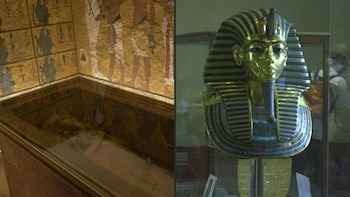

More than a hundred years after the discovery of Tutankhamun's tomb in the Valley of the Kings, new measurements have brought back one of the most persistent questions in Egyptology: what lies behind the walls of that monument. An archaeogeophysical study identified signs of constructed spaces and underground anomalies that point to a larger structure than the known tomb of the young pharaoh.
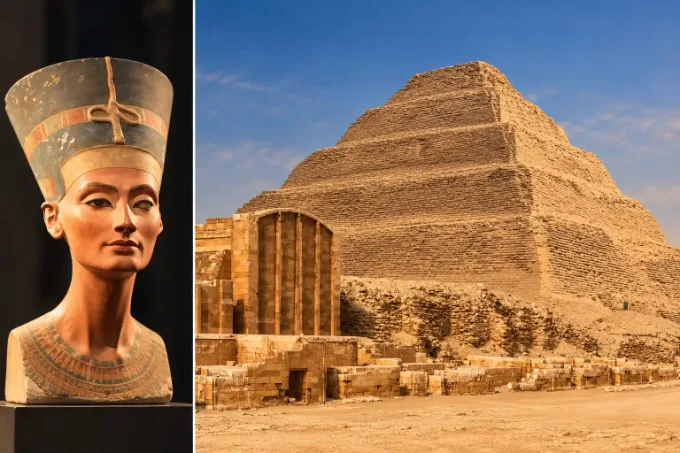
The hypothesis does not confirm the presence of Nefertiti, but reinforces the idea that the site could be part of an earlier and more extensive funerary complex. The work reviews the research initiated in 2015 and adds two campaigns conducted between 2023 and 2024 under the direction of Professor Mamdouh Eldamaty from Ain Shams University in Cairo.
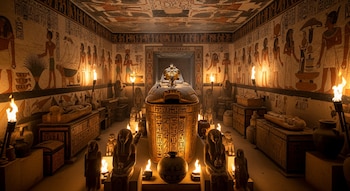
The GBG group from Cambridge, the National Institute for Astronomy and Geophysics in Cairo, and the Royal Tombs of Amarna Project participated, with authorization from the Supreme Council of Antiquities of Egypt. The novelty lies in the combination of non-invasive techniques to examine both the interior of the tomb and the rock of the hillside surrounding it.
The teams used ground-penetrating radar, electrical resistivity tomography, and microgravity measurements. Each method provides different information: radar recognizes contrasts beneath the surface, resistivity analyzes the electrical behavior of materials, and microgravity detects minimal variations that may reveal voids or buried constructions.
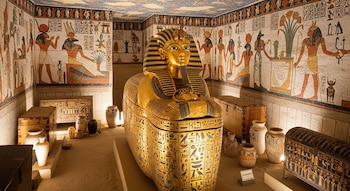
Coincidences between data and architecture
The researchers placed special emphasis on the coincidence between these records. Instead of relying on a single reading, they contrasted the results with the architecture of KV 62, the layout of its wall paintings, and the geology of the site. This correlation reduces the risk of interpreting a natural crack as a constructed enclosure.
The starting point dates back to 2015, when Egyptologist Nicholas Reeves pointed out visible marks on the decorated walls. According to his proposal, certain lines beneath the plaster could correspond to sealed doors. The theory gained traction because KV 62 has an unusual layout and size for the burial of a pharaoh from the XVIII dynasty.