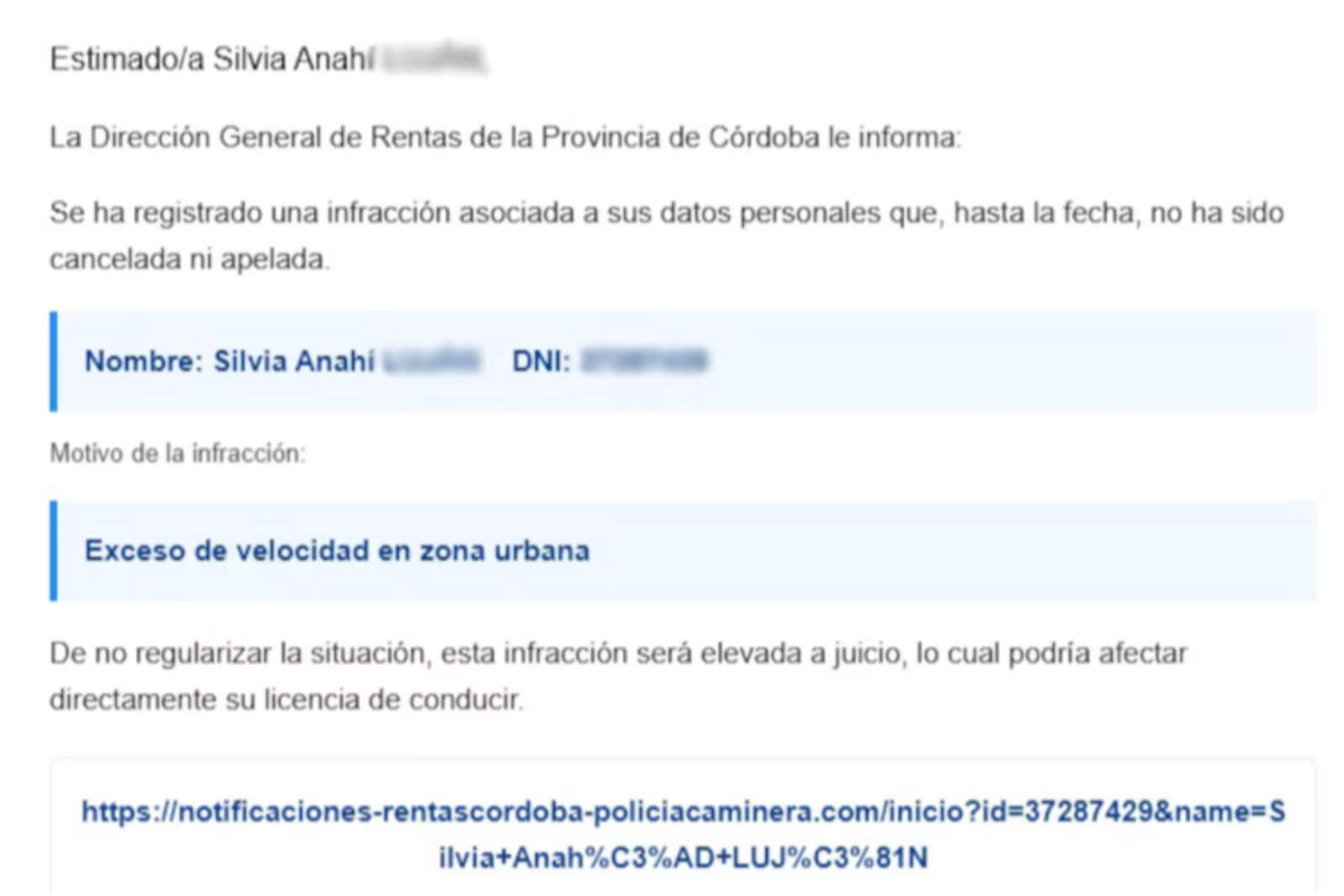
A new type of online scam has started circulating in Córdoba and is putting email users on alert. Criminals are sending fake messages that appear to be from the provincial General Directorate of Revenue. In these messages, they warn about alleged unpaid infractions from the Highway Police to induce the victim to click on a fraudulent link.
The email text aims to appear authentic by correctly using the recipient's name, national ID number, and other personal data. In addition, it includes threats about possible judicial sanctions or the loss of the driver's license if the fine is not paid. All of this is intended to create fear and urgency so that the user provides their information without verifying the source.
In one of the reported cases, a woman received the notification despite not having a driver's license or a registered vehicle. The message contained a link titled "Highway Police," which led to a fake Revenue website. The police force warned that no official agency requests payments or personal data by email.
La estafa virtual que actualmente circula por mail
How to recognize and avoid a digital scam
Experts recommend not responding to or clicking on links in emails that request private information or payments. In case of any doubt, it is essential to verify the authenticity of the message by going directly to the official website of the Revenue office or the Highway Police. It is also advisable to check the sender's address, since scammers often use fake domains that are very similar to the original ones.
Authorities indicate that the increase in digital fraud is related to the ease of accessing personal data on the internet. Social networks, public records, and online forms allow cybercriminals to craft credible messages. For this reason, prevention must begin with protecting one's own information and distrusting unknown sources.
Each scam attempt highlights the need for greater digital education and individual responsibility. Society still underestimates the risks of sharing personal data without control. Being cautious and skeptical of alarming messages can make the difference between staying safe or falling victim to an online scam.