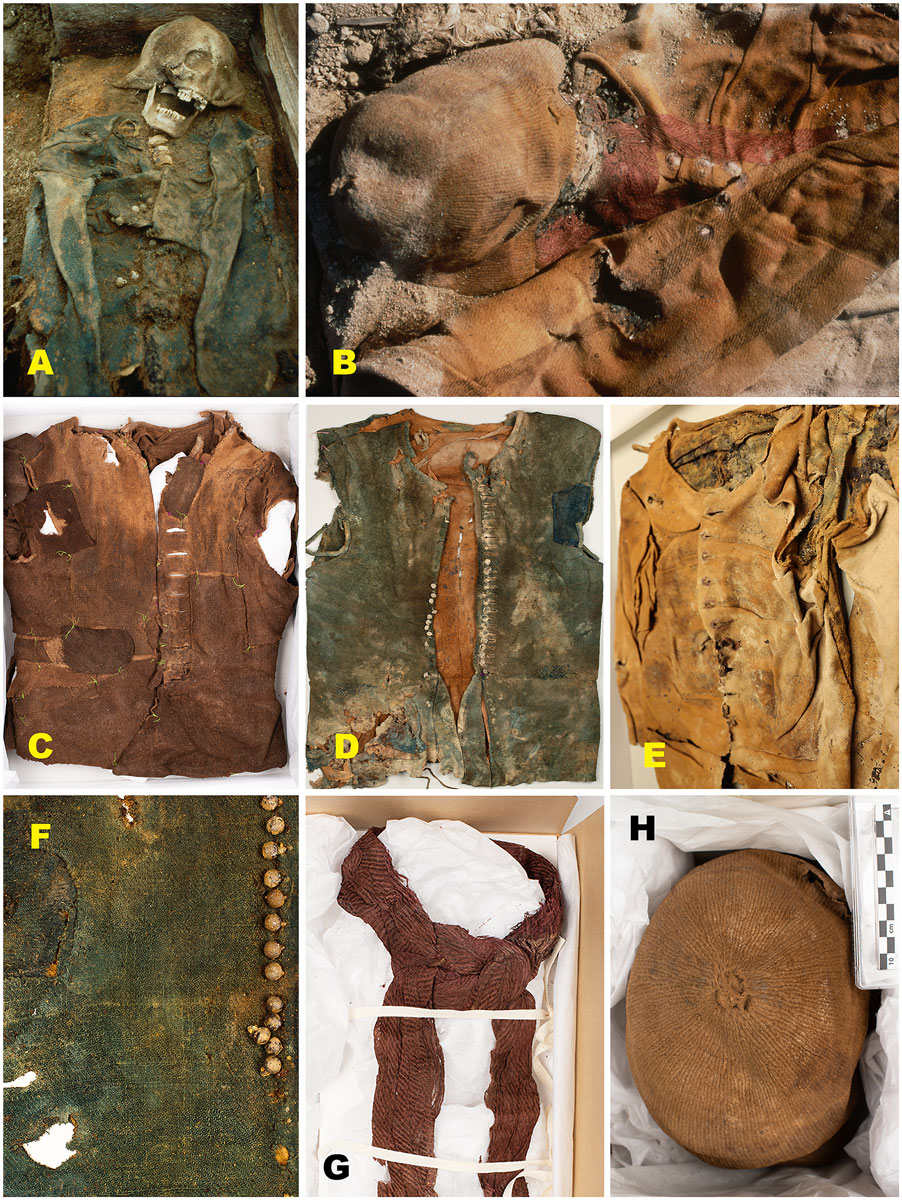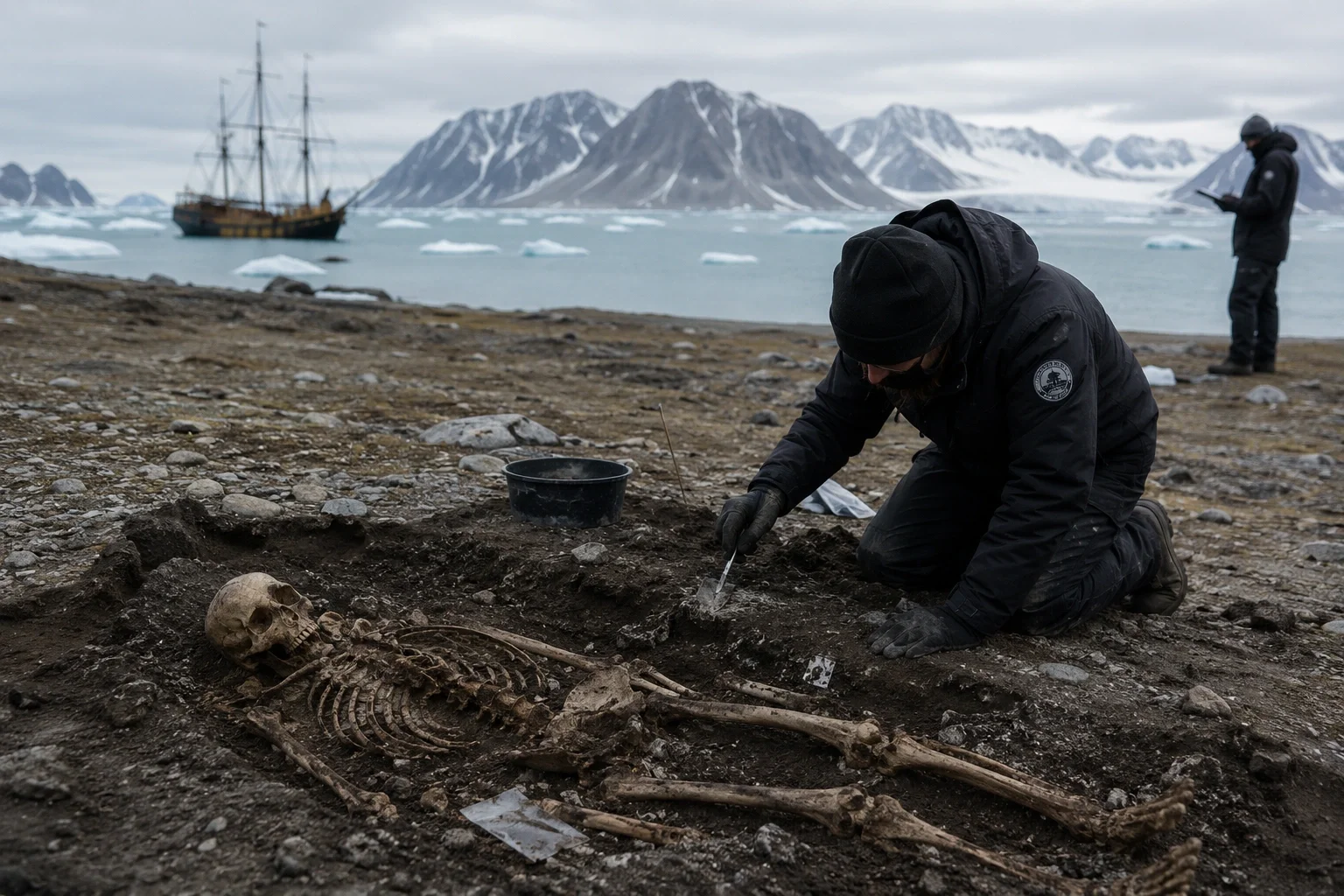

The rapid warming of the Arctic has unveiled a new chapter in European maritime history. Researchers discovered the remains of 20 whalers in a cemetery in Svalbard, an archipelago located between the North Pole and the northern coast of Norway. The site, known as Likneset —which in Norwegian means “Point of the Corpses”—, has suffered damage from the accelerated environmental changes in the region, allowing for the recovery of skeletons that show clear signs of a life marked by extreme physical effort.
The research was conducted by Lise Loktu from the Norwegian Institute for Cultural Heritage Research, and Elin Therese Brødholt from the Oslo University Hospital. The remains belong to men associated with whaling during the Modern Age, an activity that required strength, endurance, and long campaigns in hostile conditions. According to Loktu, “whaling in the early Modern Arctic was among the first large-scale extractive industries in Europe, and the work was highly manual.”
A cemetery in the High Arctic: Svalbard and the history of whaling
Likneset is located on an island in the Svalbard archipelago, an area of extreme climate that for centuries was the scene of European whaling expeditions. The cemetery preserves the remains of workers who participated in an industry fundamental to the economy of the time, when whale oil was processed and used for lighting, lubricants, and other products. The discovery allows us to view this activity not from the ships or commercial records, but from the bodies of those who carried it out.
The skeletons reflect an exhausting work routine. The researchers detected damage in shoulders, upper chest, spine, hips, knees, and feet, consistent with repetitive and heavy tasks. Among these tasks were rowing boats, dragging live whales, towing animal bodies, processing fat, and working long hours aboard whaling ships.
The most striking fact is that the deterioration is not only found in older individuals. “Several very young adults already show advanced wear and degeneration normally associated with much later stages of life,” Loktu noted. This observation shows that the work could accelerate physical aging and leave deep marks even on workers who were still at the beginning of their adult lives.
Injuries, wear, and scurvy: what the bones tell about life on board
The analysis of the remains showed signs of degenerative joint disease, injuries, and bone damage consistent with intense physical activity. In simple terms, the bodies show the accumulated cost of working in an industry that relied almost entirely on human strength. Whaling required heavy maneuvers, exposure to cold, repetitive movements, and little rest, conditions that ultimately affected joints and bones.