

Nvidia has taken steps to strengthen controls over the international distribution of its artificial intelligence chips and has ordered its manufacturing partners to suspend shipments of servers equipped with its advanced processors to four Southeast Asian countries. The decision affects Malaysia, Singapore, Thailand, and Indonesia and comes amid growing concerns in Washington about China's maneuvers to access restricted U.S. technology.
According to the Financial Times, manufacturing companies like Dell and Supermicro have informed their customers in those markets that Nvidia will not authorize the release of orders. The measure was announced just a week after the U.S. government introduced new requirements to control exports of advanced semiconductors to those destinations.
Although it is still unclear how long the suspension will last, the decision reflects the tightening of control mechanisms over a strategic industry for technological competition between the United States and China.
The United States has tightened controls to prevent China from accessing Nvidia chips
On November 19, the U.S. Department of Commerce published a new provisional regulation titled Addressing Remote Access to Advanced Semiconductors. The regulation states that exports of certain advanced chips to Indonesia, Malaysia, Singapore, Thailand, and Brazil will require specific licenses.
Washington has identified these countries as markets with a higher-than-usual risk of technology diversion. The goal is to prevent companies linked to China from using intermediaries, data centers, or foreign suppliers to access processors that they are restricted from purchasing directly.
The regulation does not impose an automatic ban on exports but requires applications to be evaluated on a case-by-case basis. It also includes exceptions for certain companies based or headquartered in the United States that meet the information and oversight requirements set by the authorities.
One of the central points is that the restrictions also apply to data centers located outside the United States that lease large amounts of processing capacity to Chinese companies or those linked to jurisdictions subject to technology sanctions.
In this way, Washington seeks to close one of the possible alternative routes that Beijing could use to access Nvidia's cutting-edge chips.
China seeks to indirectly access U.S. processors
The tightening of controls responds to a specific concern of U.S. authorities: Chinese artificial intelligence companies cannot directly acquire certain advanced chips from Nvidia, but they could access its processing capacity through cloud computing services installed in third countries.
According to Reuters, this method is considered a possible way to circumvent the trade restrictions imposed by Washington. Instead of purchasing the processors, Chinese companies could lease computing capacity from foreign data centers that use U.S. hardware.
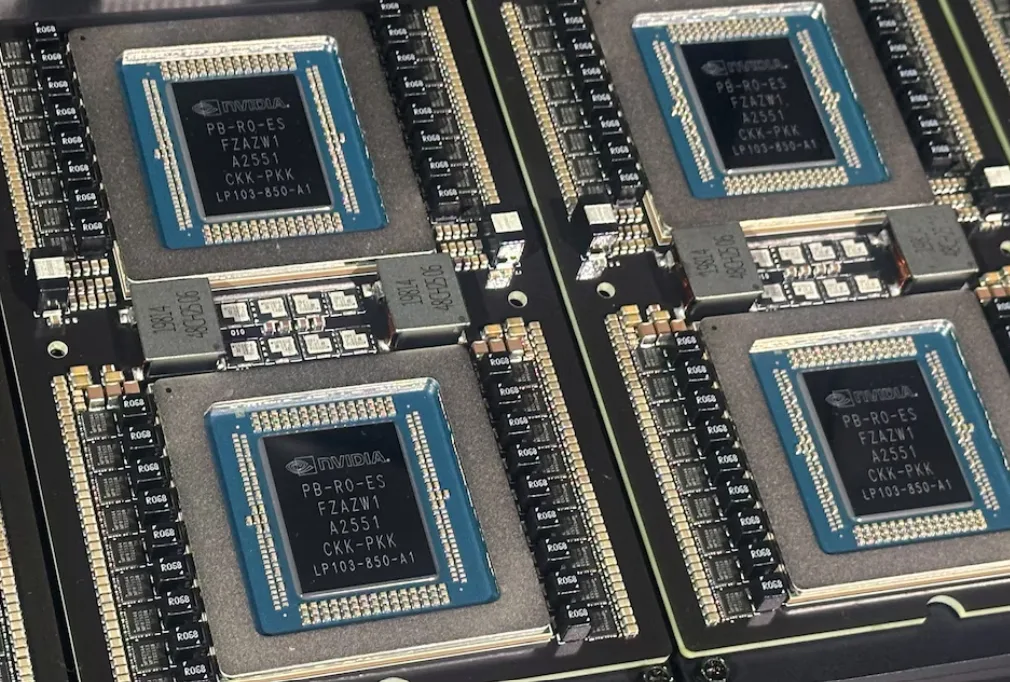
Southeast Asia has become a particularly relevant region for this type of operation due to the expansion of its technological infrastructure and the growth of data centers.