The European market remains demanding, and the Argentine businesspeople who accompanied the Argentine Beef Promotion Institute (IPCVA) were present. There were 32 meatpacking plants
Nuevo
Agregar La Derecha Diario en
Compartir:
Anuga 2025, the most important food fair in the European Union, in Cologne, Germany, and still in an unstable global context, confirmed the positive outlook for Argentine beef.
The European market remains demanding, and the Argentine businesspeople who accompanied the Argentine Beef Promotion Institute (IPCVA) had a hectic schedule of meetings and business with buyers from Europe and other markets around the world.
The European market demands Argentine beef
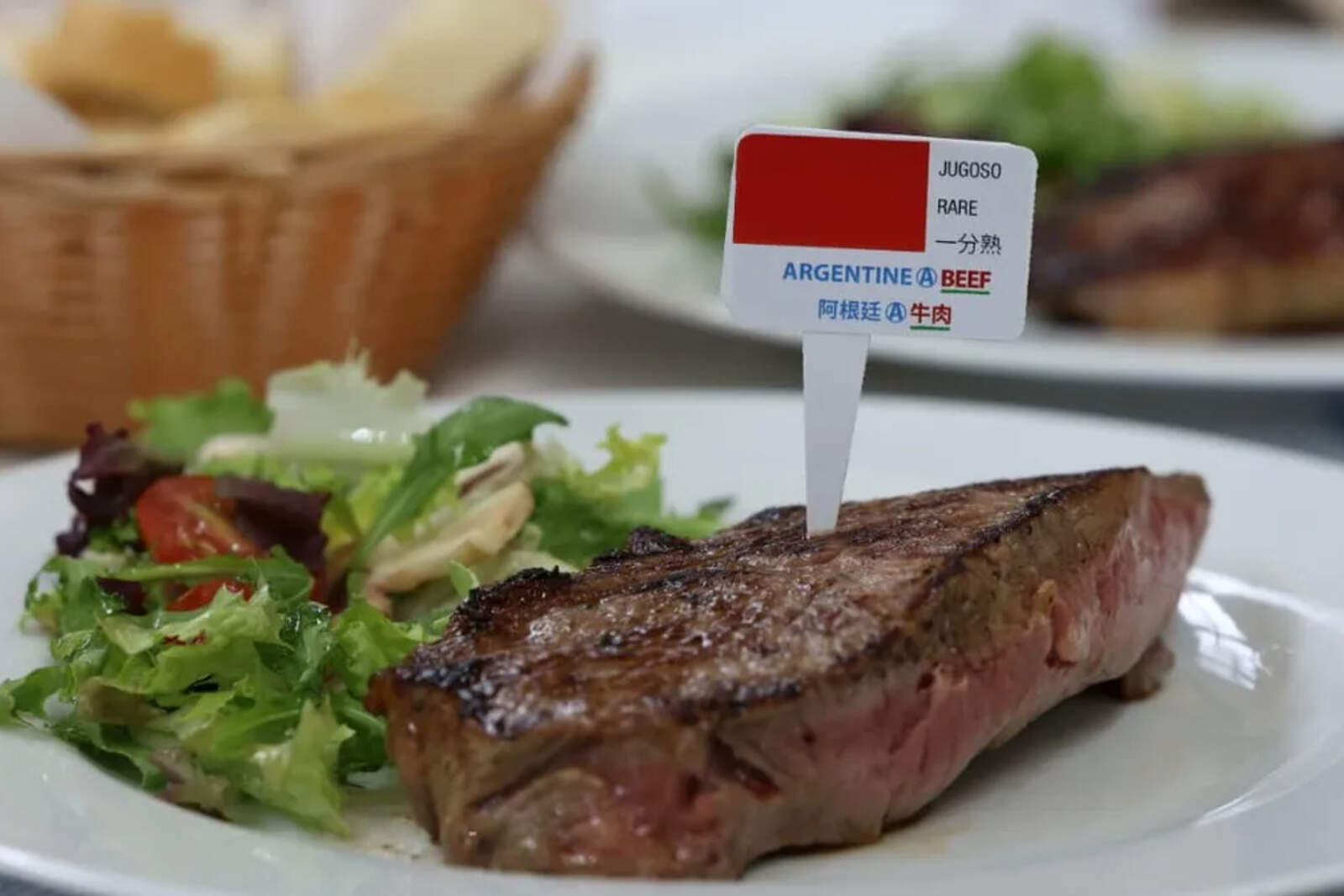
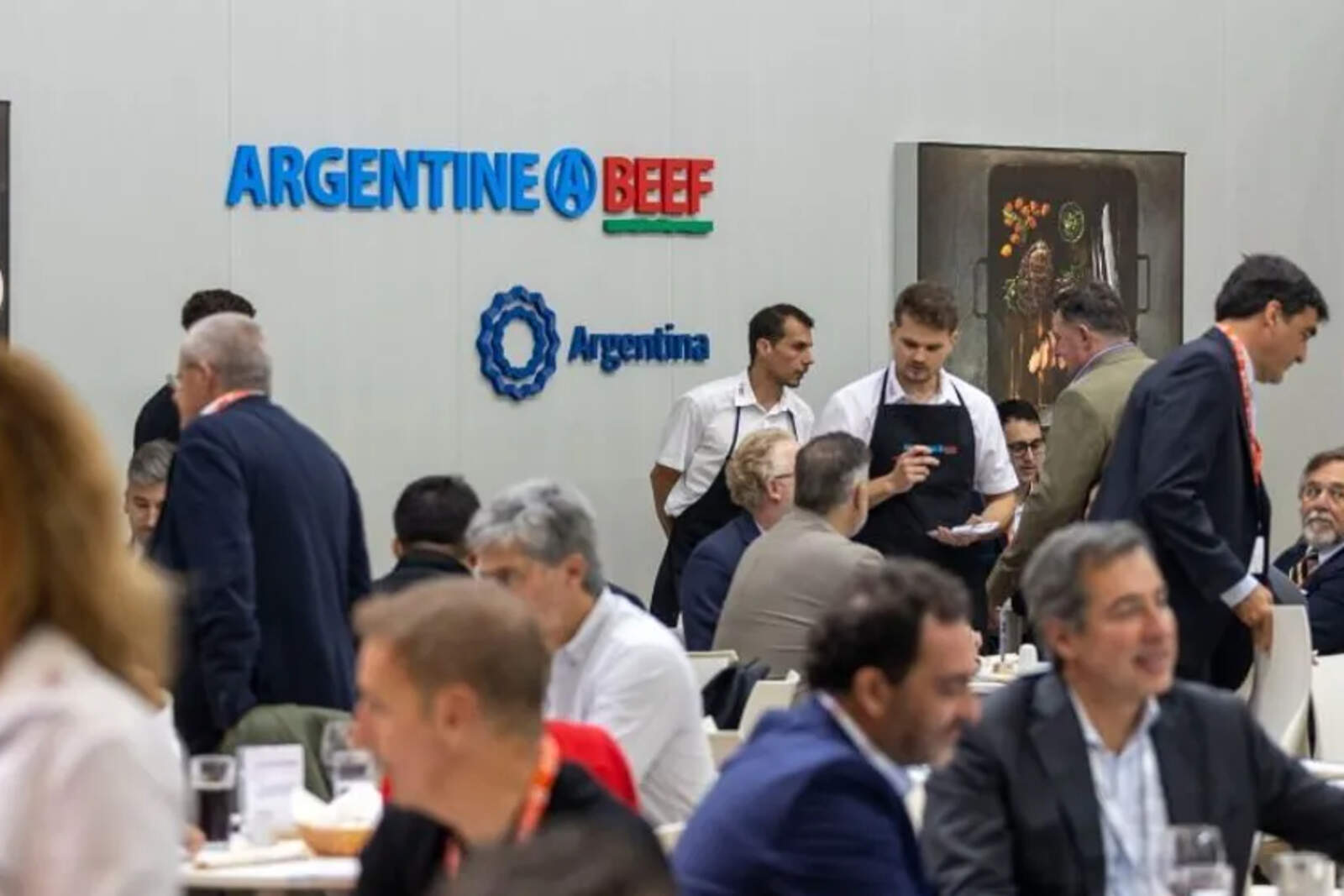
The Argentine Beef pavilion, specially developed by IPCVA, stood out once again in the gigantic meat hall, built on a total area of 850 square meters (9,149 square feet), with a large restaurant where businesspeople could invite their clients to taste grilled ribeye and striploin.
Anuga 2025 ratificó las buenas perspectivas para la carne vacuna argentina.
Meanwhile, although Regulation 1.115 of the European Union for the shipment of deforestation-free food was postponed for one year, IPCVA was able to present, together with national authorities, the system by which Argentina will guarantee deforestation-free beef shipments.
"There were five very intense days at the fair, with 32 meatpacking plants operating at full capacity," said Georges Breitschmitt, president of IPCVA.
Argentine beef exports
"We were also able to see what our competitors are doing, who have organizations similar to IPCVA, working and being financed in the same way, such as the institutes of Uruguay, Brazil, Australia, Ireland, Canada, the United Kingdom, or Spain, which were exhibiting very close to our stand," he added.
"We leave with a lot of work ahead because everything we are seeing will have an impact on the meatpacking industry and production, and we have to grow in order to supply a global market that is demanding beef," he concluded.
Meeting with German buyers of Argentine beef
Meanwhile, Mario Ravettino, vice president of the Institute, expressed satisfaction at having "been able to fully carry out the agenda we had prepared at IPCVA to meet with German buyers, with Dutch, French, Spanish, and Italian buyers, to show them that we are ready to supply them with deforestation-free products."
"We have managed to get beef buyers excited and to request pilot tests that we will be developing throughout the year," he added.
"I would like to highlight that it was also made clear, through Argentine authorities, that our country is not satisfied with the standard risk categorization that the European Union gave us regarding deforestation, and bilateral meetings are being held to recategorize the issue so that Argentina is considered low risk, as all the scientific and technical evidence we have demonstrates," he said.