The chancellor Pablo Quirno warned in the Security Council that the UN risks losing relevance if it does not reduce its bureaucracy, improve its responsiveness, and once again defend Western values, while supporting the Argentine candidacy of Rafael Grossi to become the next Secretary General of the organization.
The Argentine proposal directly addressed one of the major problems of the multilateral system: the accumulation of bureaucratic structures, overlapping mandates, and agendas increasingly detached from results. Quirno called for progress towards a multilateralism that respects the sovereignty of States, manages their resources responsibly, is accountable, and focuses its energy on realistic objectives.
The stance is framed within the principles that President Javier Milei presented to the General Assembly in 2025: preserving peace as a central priority, limiting international action to problems that exceed the capacity of States, evaluating the real utility of each program, and simplifying regulations to promote freedom, trade, and the prosperity of nations.
In this vein, the chancellor linked the Argentine position with the UN80 Initiative and called for a review of redundant mandates and structures disconnected from reality. Quirno also supported a reform of the Security Council aimed at expanding non-permanent membership and improving its reaction capacity.
At the same time, the Argentine government renewed its push for Grossi's candidacy, the current Director General of the International Atomic Energy Agency, to lead the UN during the 2027-2031 period. The nomination had been officially announced by the Milei administration in November 2025 and could make Grossi the first Argentine to hold the highest position in the multilateral system.
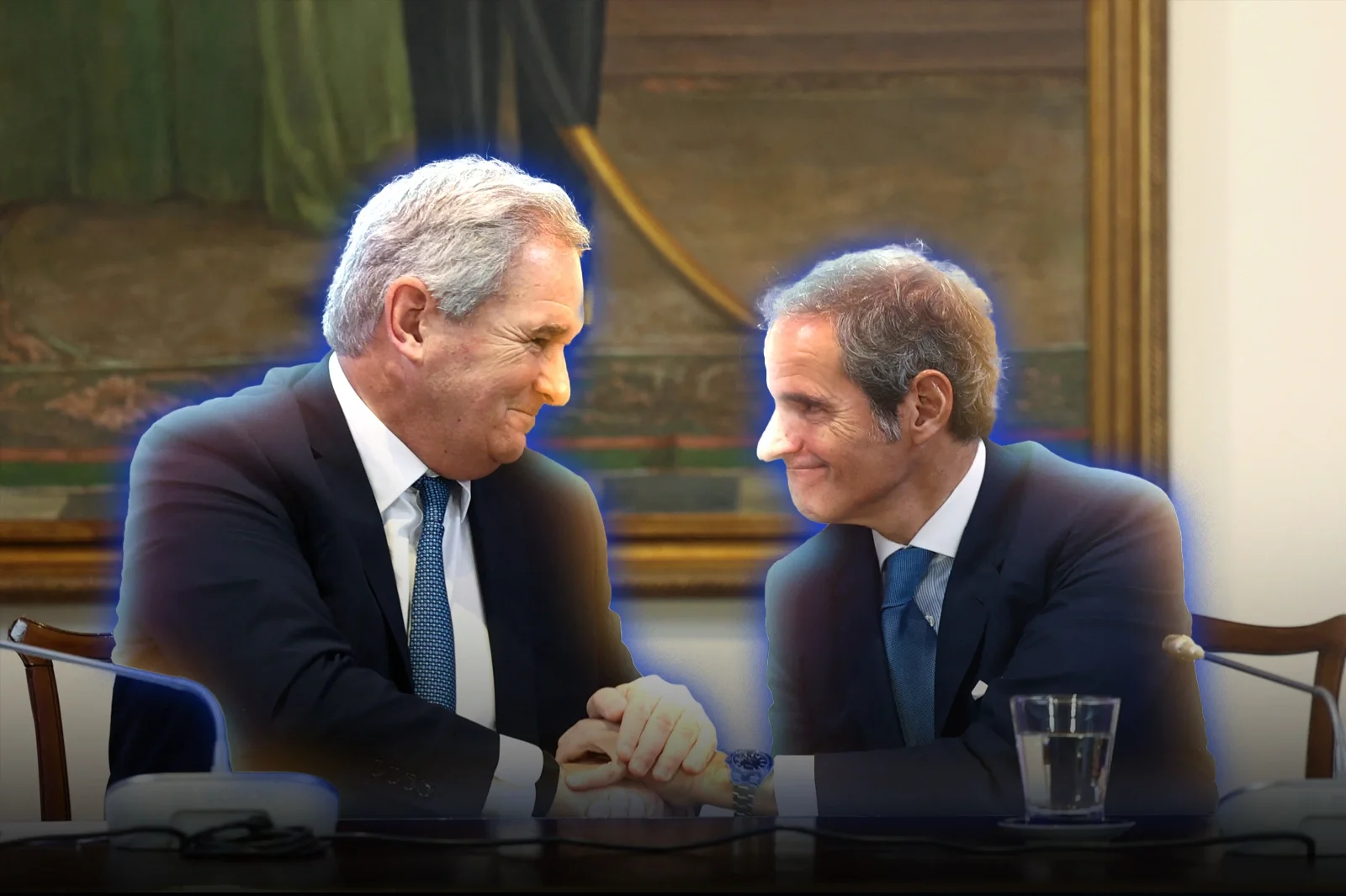
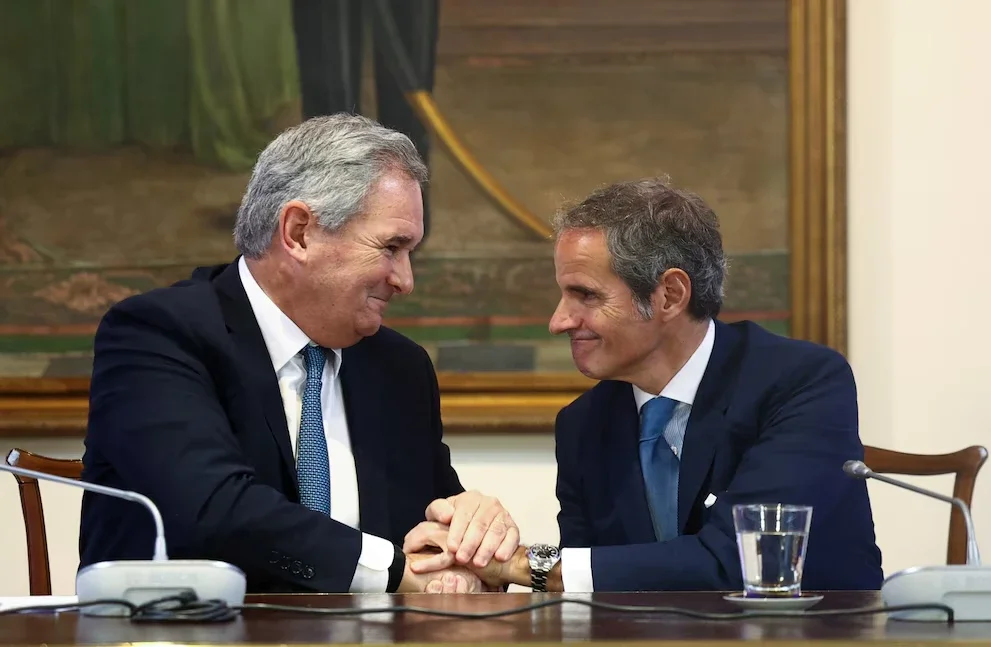
Pablo Quirno alongside Rafael Grossi.
Quirno emphasized that the selection of the next Secretary General must be guided by merit, experience, independence, and proven management capability. In this context, he defended Grossi's profile as a leader with technical authority, political solvency, and results orientation, attributes especially necessary for a UN questioned for its lack of effectiveness.
The intervention also sought to anchor the Argentine position in its own diplomatic tradition. Quirno cited Carlos Saavedra Lamas, former Argentine chancellor and the first Latin American to receive the Nobel Peace Prize, to advocate for a foreign policy based on leadership, moral clarity, and defense of international coexistence.