
The latest report from Universidad Torcuato Di Tella confirms a historic drop in poverty during the April-September 2025 semester
Compartir:
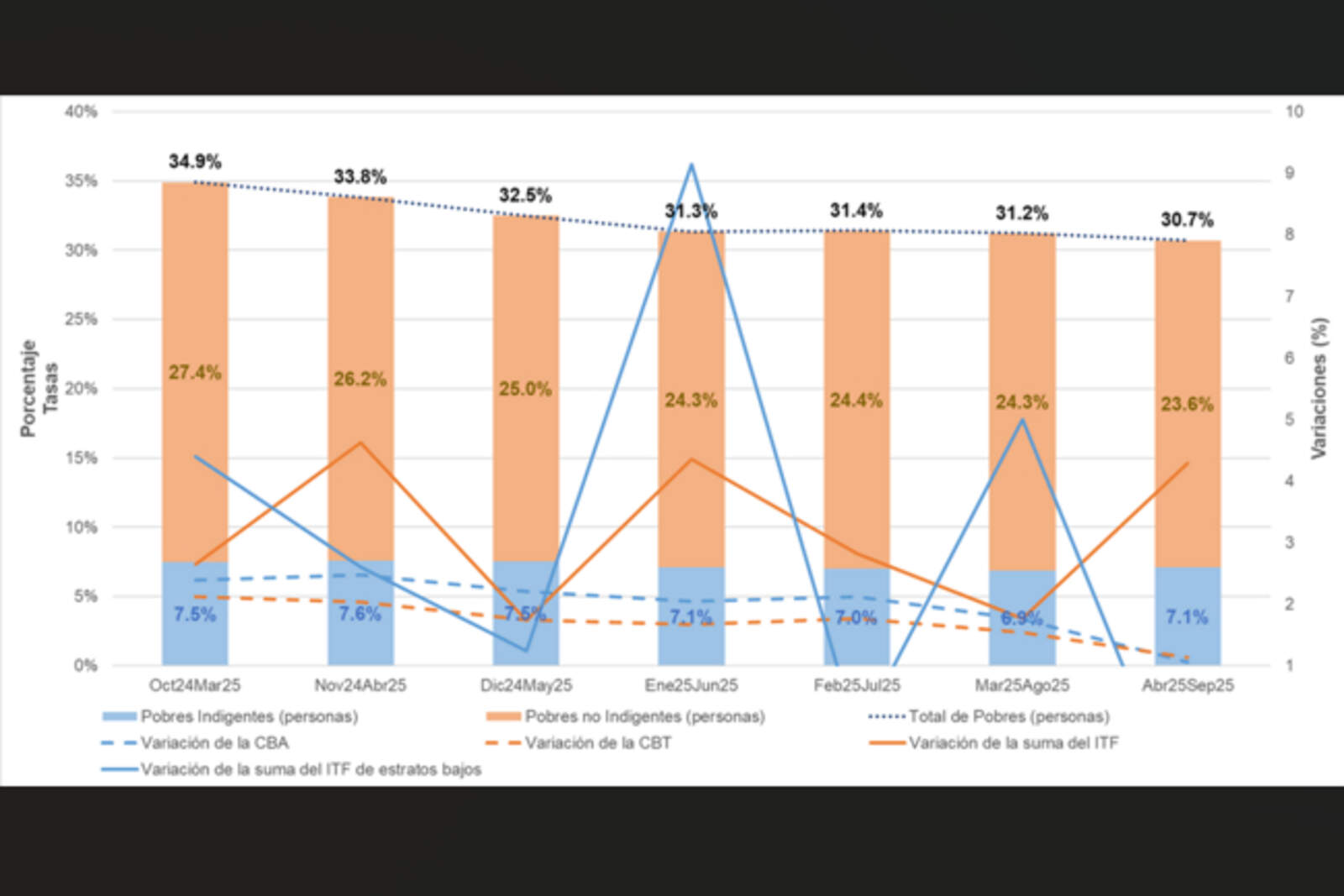
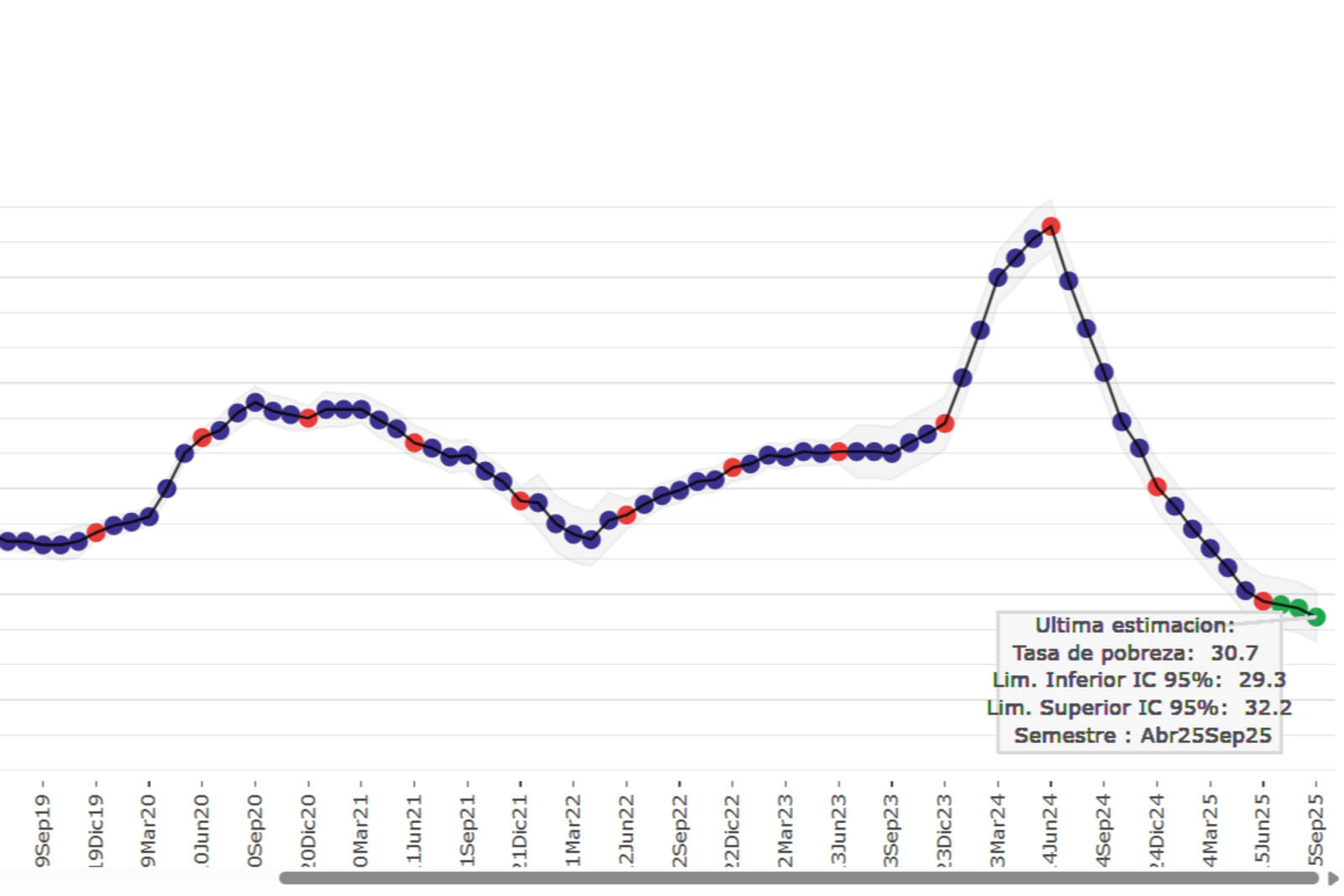
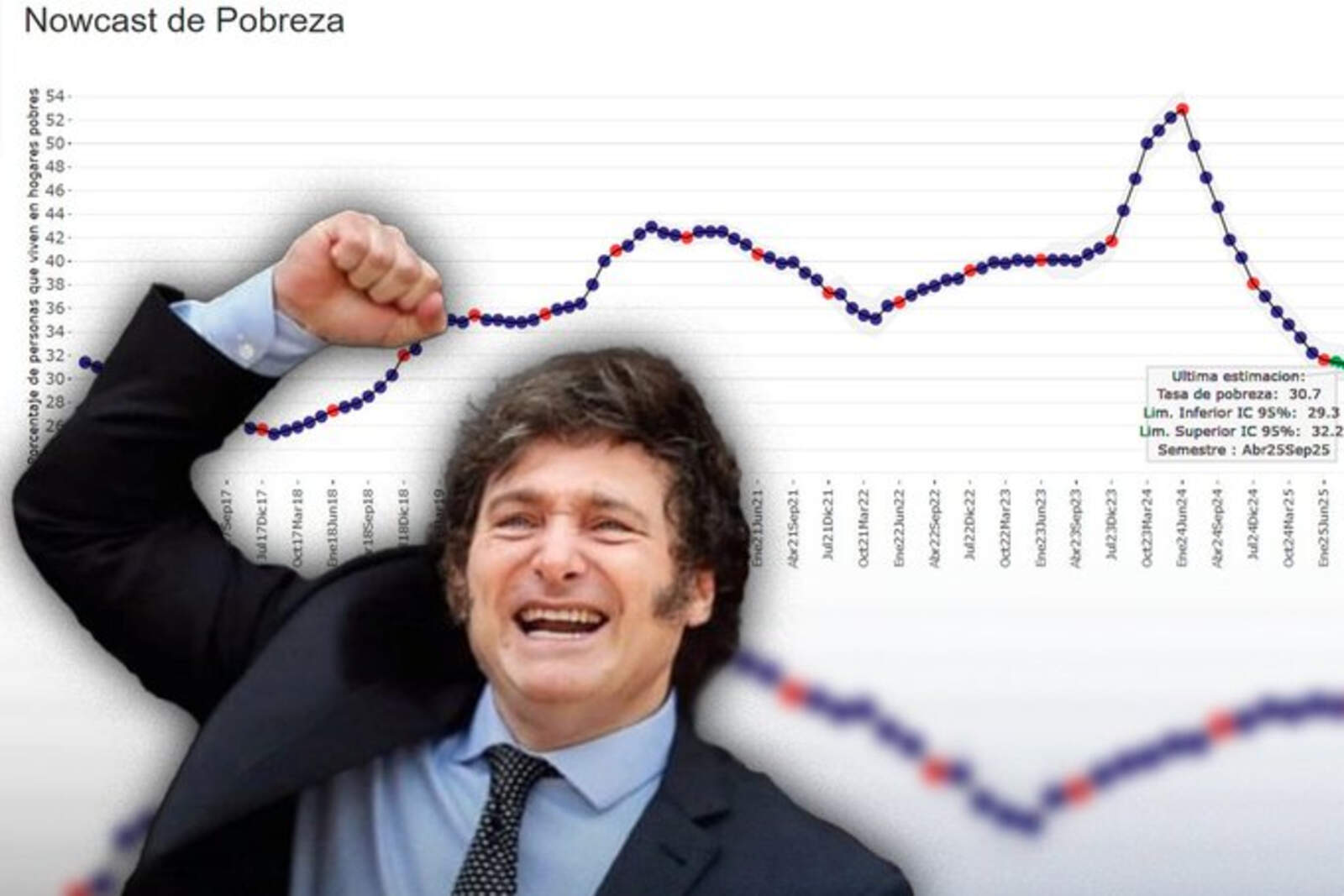
Argentina records its best social data in more than a decade: according to the Nowcast of Poverty measurements prepared by Universidad Torcuato Di Tella (UTDT), the poverty rate fell to 30.7% in the April-September 2025 semester, with a 95% confidence interval placing the figure between 29.3% and 32.2%. In other words, the country is once again below the 30% poverty threshold, a symbolic mark that seemed unattainable before the economic shift driven by Javier Milei.
The projection is based on microdata from the Permanent Household Survey (EPH) of INDEC and reflects a structural change in social dynamics: household incomes grew by 64.8% year-on-year, well above the increase in the cost of living measured by the Total Basic Basket (CBT), which rose 27.6% in the same period. The average CBT in Greater Buenos Aires (GBA) was estimated at $368,720 per equivalent adult, consolidating an unprecedented slowdown in inflation compared to the jump in real income.
La pobreza se desplomó hasta el 29,3% en el en el semestre abril-septiembre según UTDT
UTDT details that the decline was widespread: poverty dropped from 44.9% in the same semester of 2024 to 30.7% in 2025, that is, a reduction of 14.2 percentage points in just one year. Indigence also plummeted, falling from 12.8% to 7.1%, showing that the purchasing power of the most vulnerable sectors is improving with the return of economic stability.
In absolute terms, the projection estimates that around 9.2 million people live in poor urban households out of a total urban population of 29.7 million, while indigence affects just over 2 million.
The report highlights that during the first semester of 2025, the gaps between the increase in the baskets and incomes had reached critical levels —with poverty at 52.9% and indigence at 18.2%—, as a result of the lag from inherited inflationary adjustment. However, since February 2024, a change in trend has been observed: inflation in the basic baskets began to moderate and real incomes grew steadily.
La pobreza se desplomó hasta el 29,3% en el en el semestre abril-septiembre según UTDT
"During the April-September 2025 semester, household incomes grew above the cost of the baskets, inducing a drop in the measurement of poverty and indigence," the academic document concludes.
In the year-on-year comparison, the basic baskets rose between 24% and 26%, while total family incomes of the lower sectors increased by more than 60%. That differential allowed poverty to fall to levels not seen since the early part of the last decade.
The UTDT report confirms what consumption and employment indicators had already anticipated: the "Milei effect" not only stabilized the economy, but began to generate tangible results in daily life. With inflation declining, the recovery of real wages, and the restoration of credit, the country is witnessing a phenomenon that few believed possible after years of populism and uncontrolled monetary issuance.
In the words of economists from the university itself, the results "reveal a process of economic normalization that translates into social improvement."