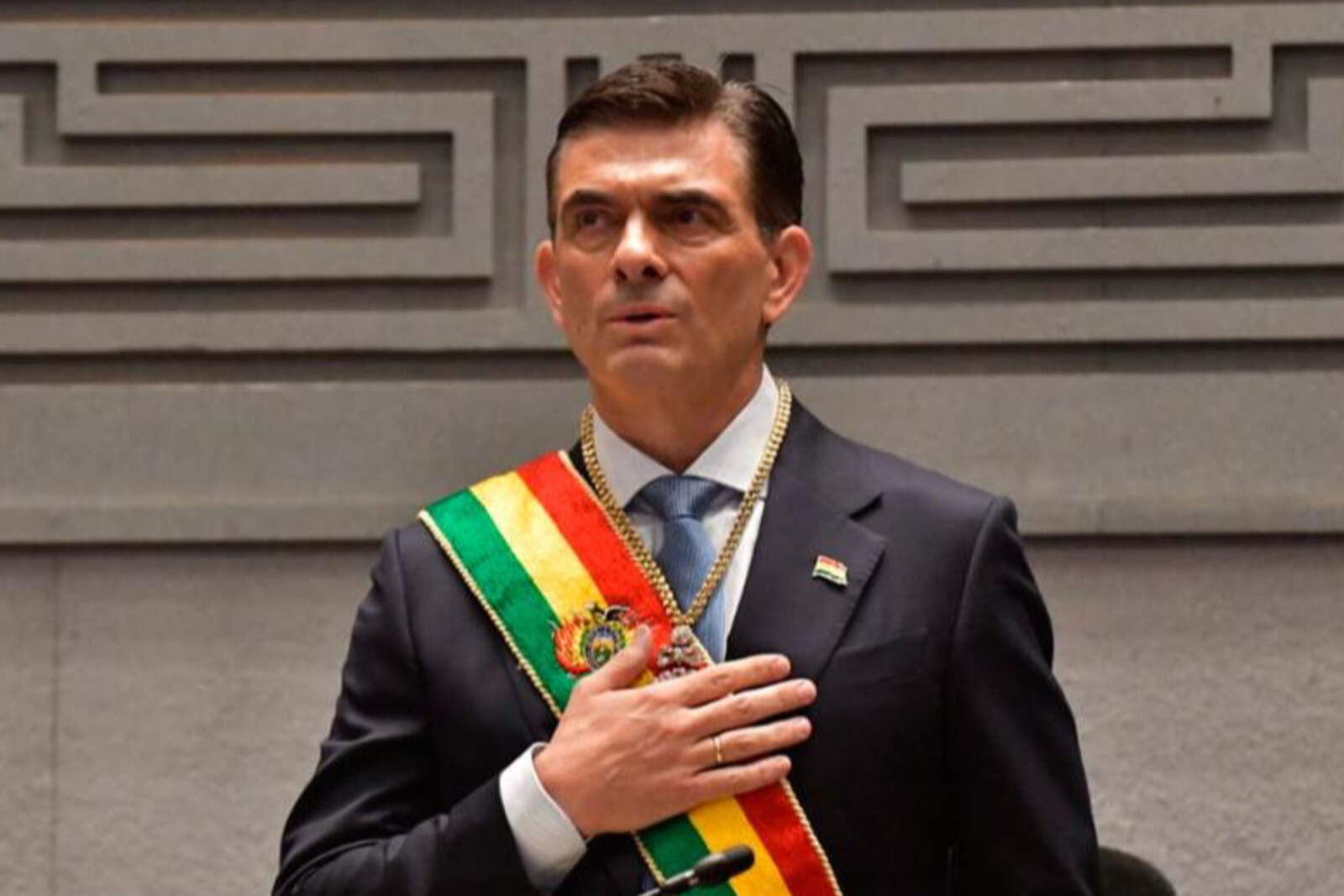
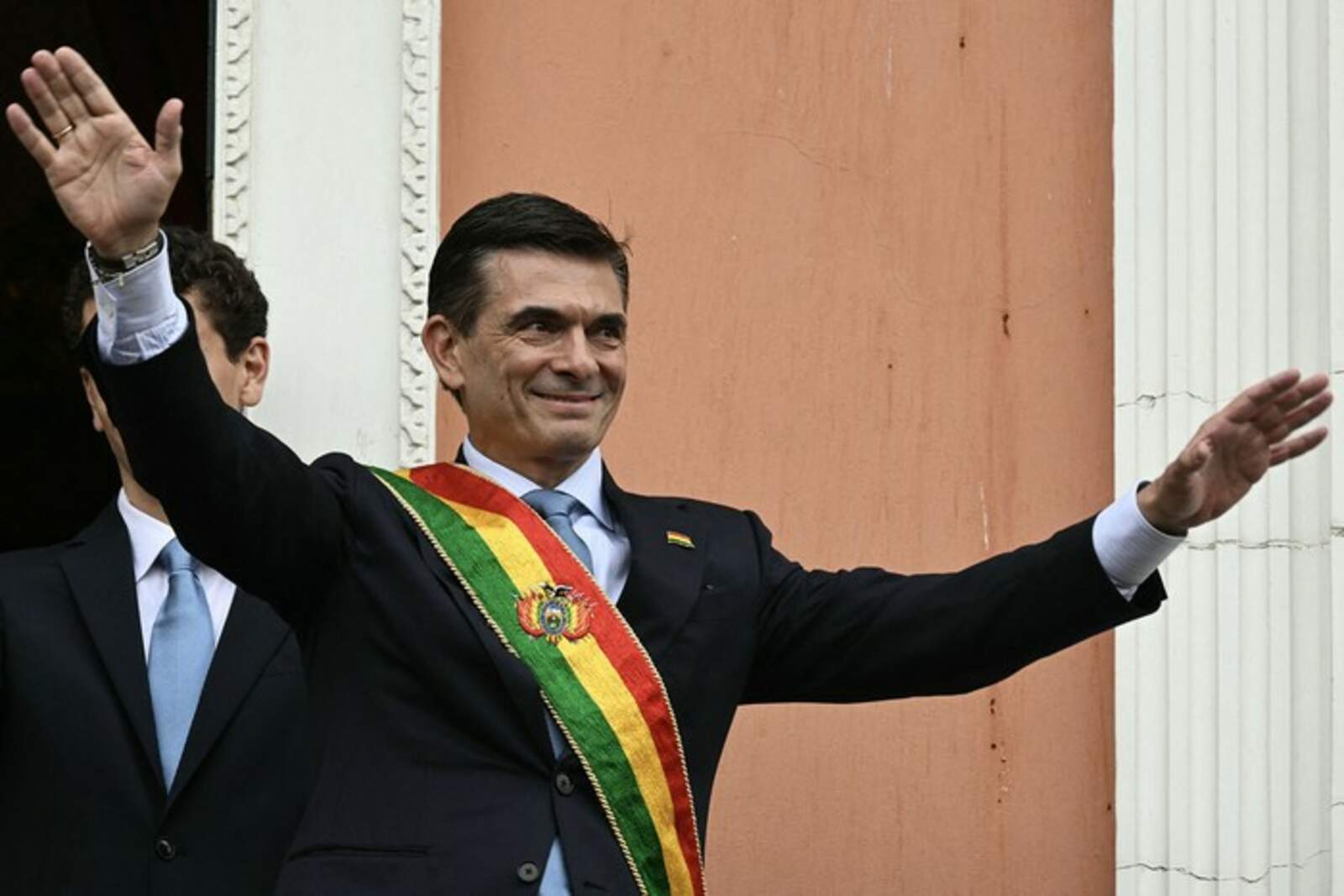
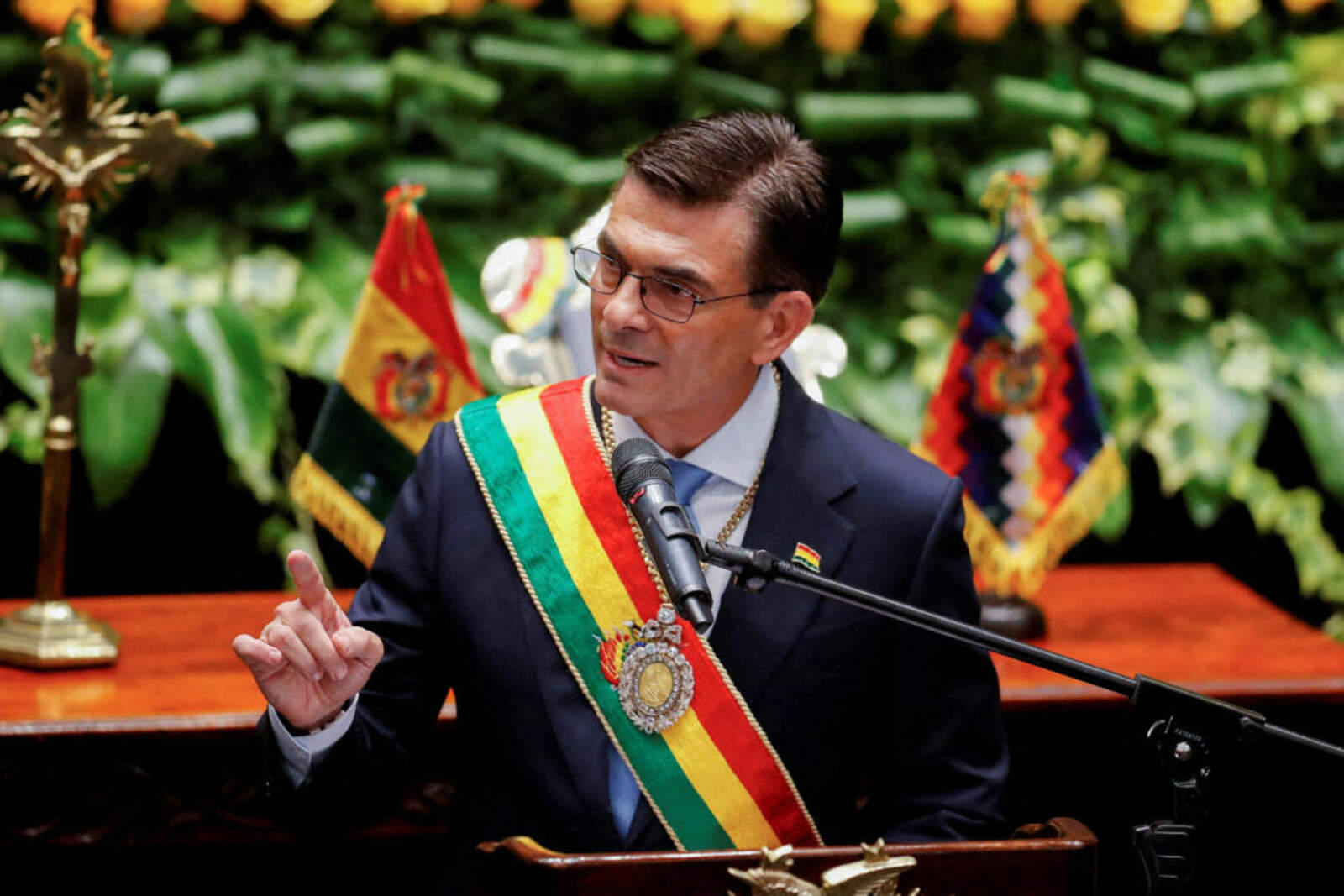
The president of Bolivia, Rodrigo Paz, presented the members of his cabinet of ministers this Sunday, made up exclusively of technicians and professionals, without including any representative of socialism.
The president emphasized that the selection criteria were professional background and meritocracy, pillars with which he seeks to address the country's difficult economic situation and attract foreign investment that will bring foreign currency to the national economy, with the goal of moving toward a model of "capitalism for all."
During the swearing-in ceremony, held at the old Government Palace in La Paz, the Bolivian president addressed his new collaborators, highlighting the sense of responsibility and public service he expects from them.
El presidente de Bolivia, Rodrigo Paz
"The first message to the ministers: you are good men, you are capable, you are trained, you have knowledge of your areas, you have knowledge of the homeland, but your merits themselves are not what matter. It is the will of the people expressed through the faith of the State," he stated.
The new president stressed that Bolivia is at a turning point and that his administration is committed to a "transformation of the State" based on efficiency and technical management.
Rodrigo Paz's cabinet
Among the main appointments are figures with extensive experience in public administration and international organizations. The new foreign minister is Fernando Aramayo, an expert in international relations with a background in multilateral institutions and non-governmental organizations.
José Luis Lupo was appointed to head the Ministry of the Presidency, an economist who has already held five ministerial positions during the governments of Jaime Paz Zamora, Hugo Banzer, and Jorge “Tuto” Quiroga.
In the economic area, José Gabriel Espinoza stands out, a close collaborator of Paz in the transition team, and Mauricio Medinaceli, who took over the Ministry of Hydrocarbons and is internationally recognized for his experience in the sector.
El presidente de Bolivia, Rodrigo Paz
The cabinet is completed by Marco Antonio Oviedo in Government, Raúl Salinas in Defense, José Romero Pinto in Development Planning, and Mauricio Zamora in Public Works. Freddy Vidovic (interim Justice and Cultures), Édgar Morales Mamani (Labor), Marcela Flores (Health and Sports), and Beatriz García (Education) were also appointed.
The development area will be temporarily headed by José Luis López in Rural Development and Óscar Justiniano in Productive Development, while Cinthya Yañez Eid was appointed minister without portfolio in charge of Tourism.
Paz explained that this composition corresponds to a "first stage of ministerial reorganization," in which the public administration will be gradually restructured. The president called on his ministers to work with humility and dedication: "We need promptness. Bolivia is about to receive a large amount of resources from abroad and the willingness to invest in the homeland. It only depends on us to give access to those dollars that want to come from outside."
Finally, the president reaffirmed his commitment to open Bolivia to the world and move toward a model of "capitalism for all," eliminating bureaucratic obstacles that hinder production and development. With a cabinet without the presence of socialist figures, Paz thus marks a clear break with previous governments and opts for a pragmatic approach focused on economic efficiency.