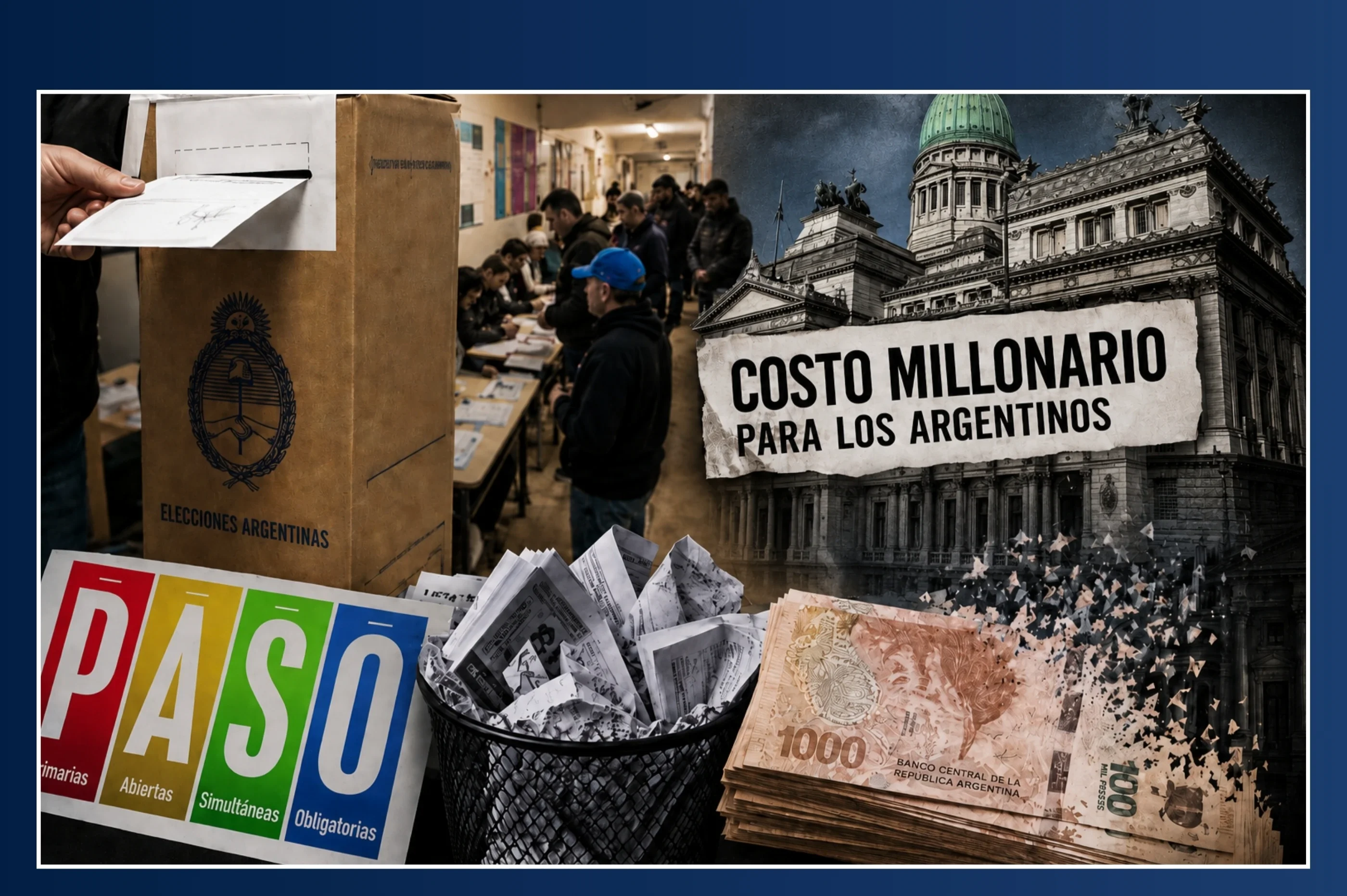

Since taking office, President Milei has attempted to end the PASO three times: with the Bases Law, in the Extraordinary Sessions of 2024, and in February 2025. He only managed to suspend them, because his parliamentary representation was not enough to overcome the inertia of the old politics, accustomed to loading citizens with all kinds of expenses, always with the worn-out argument of a 19th-century style democracy.
In 2026, the government proposes a broad electoral reform that includes the repeal of this illegitimate exaction, replacing the PASO with endorsements from affiliates: 0.1% of the national registry for presidents and 0.5% of the provincial registry for senators and deputies.
Thus, it will be civil society and not the State that supports candidates without the economic cost being borne by the people and left to those who claim to have genuine support.
Milei promised an electoral reform and people voted for him in 2023 and 2025, so that change in the political system has full democratic legitimacy. Those who oppose it will make their disdain for the will of the people they invoke every time they speak evident, but whose interests they rarely truly take into account.
The PASO were one of the various instruments of Kirchner to benefit himself, and therefore, the 15 years of PASO show only a huge waste of people's money, violated freedoms, and weakening of the economy due to the inherent instability of every election.
The suspension of 2025 was the first official recognition that the system did not work. The definitive repeal is the step that should be taken now.
The State, that is, the people should not continue financing the structures of political parties. Argentines must regain the freedom for our money to be for us, not for the internal competitions of politicians.
The open and simultaneous primaries funded by the State are a rarity. In countries like the U.S., France, Germany, Spain, Italy, and the United Kingdom, each party chooses its candidates through its own mechanisms (congresses, delegates, affiliates) or holds primaries that are organized and financed internally, without obligation for citizens to participate. Uruguay is the only comparable case: it has mandatory open and simultaneous primaries for parties, but citizen voting is voluntary, which is reflected in low participation.
Let us be free, for the PASO do not matter at all, San Martín would tell us.