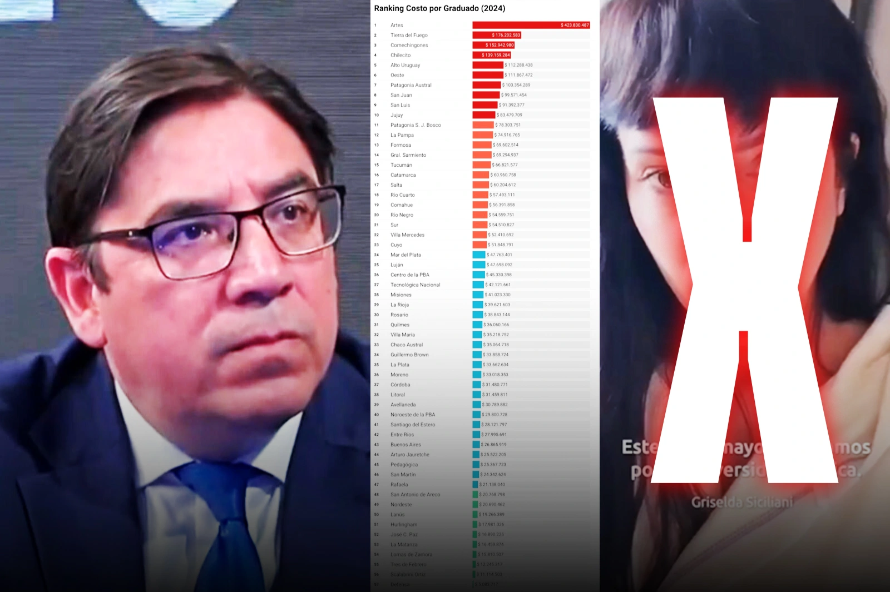
The National University of the Arts published a disastrous video demanding to march for the University Financing Law, and the government responded by showcasing the scandalous operating expenses of this university.
The management of President Javier Milei marked a turning point in public administration, prioritizing fiscal responsibility, transparency, and the efficient use of taxpayer resources. A clear example is the work of the Undersecretary of University Policies, Professor Alejandro Álvarez, who presented data on the scandalous spending of the National University of the Arts (UNA, formerly IUNA) in response to a video published by the university filled with actors demanding to go to a march that boils down to more funds for universities.
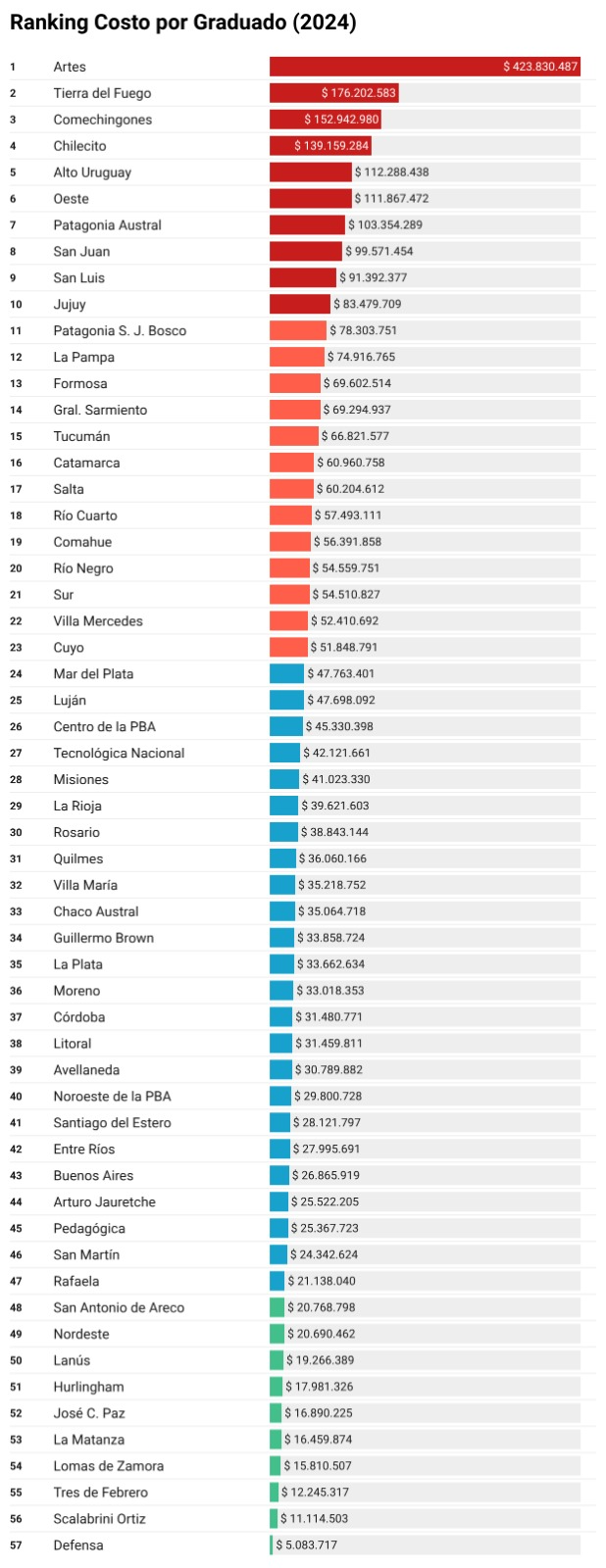
In a recent post on X, Álvarez revealed stunning figures about the cost per graduate in national universities during 2024. While the average for national universities stood at $52,368,000, the UNA recorded a shocking figure of $423,830,487 per graduate. This difference is not a coincidence, but the result of years of mismanagement, politicization, and lack of efficiency criteria.
It is "the worst-managed university in the entire country," stated Professor Álvarez, and one does not need to be a genius to know he is right. The expenses are visible and speak for themselves.
What the video published by UNA is about
The video shows a cascade of Kirchnerist actors demanding a law that the judiciary itself has rendered ineffective. For failing to meet the basic requirements necessary for a law to be applied, which is to stipulate where the funds will come from to finance the new expenditure.
In this context, the video appeals to a dramatic and emotional tone to lie with statements such as the failure to comply with the University Financing Law jeopardizes the continuity of artistic careers, educational quality, and access to culture.
The cost of university waste
The UNA issues dozens of degrees in artistic fields (Bachelor's in Audiovisual Arts, Acting, Scenic Direction, Folklore, Musical Arts, Visual Arts, Conservation and Restoration, Art Criticism, Curatorship, among many others). While art and culture are valuable, taxpayers cannot indefinitely finance inefficient structures that multiply the national average cost by eight.
These numbers demonstrate the urgent need for the adjustment initiated by Milei. It is not about cutting for the sake of cutting, but about eliminating unproductive spending, auditing resources, and demanding accountability. Thanks to this policy, progress has been made in detecting anomalies that previously went unnoticed, promoting a culture of merit and responsibility in higher education institutions.
Concrete results of Milei's management
The chainsaw applied intelligently allowed for the reallocation of resources towards real priorities, dismantling entrenched corruption and privileges. Universities like UBA demonstrate that it is possible to offer quality education at reasonable costs, while other examples like UNA highlight the urgency for deep reforms: greater auditing, incentives for efficiency, and eventually, mechanisms for intelligent tuition for low economic impact careers or those with high capacity for private self-financing.
Milei's vision is not to destroy public university, but to rebuild it on solid foundations of excellence, transparency, and fiscal sustainability. The work of Álvarez's team, with hard data and without euphemisms, is a fundamental pillar of this transformation.